A mood tracker for kids: what to record and when to stop
Keep a mood tracker for two weeks, not forever. Record a color or face, the time, sleep, and what came before. Then read the pattern and change one thing at a time.

A mood tracker for kids is a two-week experiment, not a permanent project. You are looking for a pattern in your child's day, not a diagnosis. The tracker is a tool you use, read, and then put away.
A mood tracker is a two-week experiment
Start with a clear window: two weeks. That is enough time to see a pattern without turning your child into a research subject. A mood tracker for kids works best when it has a beginning, a middle, and an end.
The point is to spot a pattern, not to label a child. You are looking for what happens before a hard moment, not for a medical answer. If you want a diagnosis, you need a doctor, not a chart.
Who fills it in matters. For a child under 8, you fill it in together. For a child 9 or older, they can do it themselves if they want. The child should never feel watched.
This tracker makes no claims about health or behavior disorders. It is a simple record of what you see. Use it to have a better conversation, not to prove a point.
What to record
Keep the record small. Five columns on a sheet of paper or a printable is plenty. If you try to track too much, you will quit by day three.
Each entry takes less than a minute. You are recording a snapshot, not writing a diary. Here is what to put down.
| Record | How | Why |
|---|---|---|
| The feeling | Color or face | Quick for the child |
| The time | Morning, noon, night | Shows a daily pattern |
| Sleep | Good or rough night | Mood often follows sleep |
| What came before | One word, like school | Shows the trigger |
| One word from child | Their own word | Gives them a voice |
That is it. Do not add chores, meals, or weather. The fewer boxes, the more likely you will fill them in.
If your child cannot name a feeling, point to a face or a color. The word can come later. You are building a habit, not testing them.
Using the color wheel as the tracker
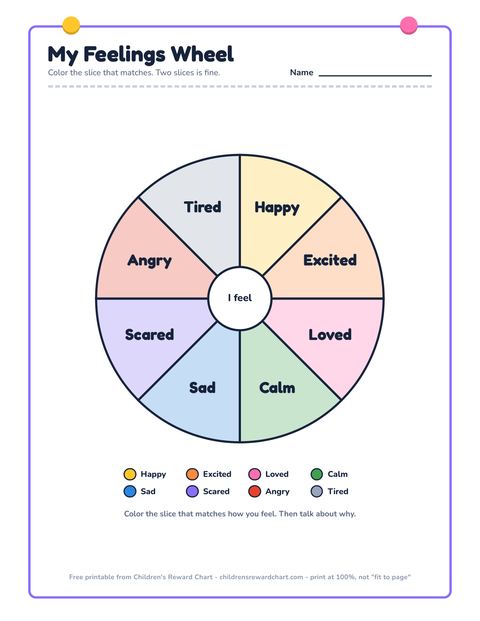
For a child under 8, a color wheel beats a form every time. Print one wheel per day and stick it on the fridge. The child colors one slice of the wheel when they feel something big.
Coloring is a physical act. It does not require reading or writing. A child can point to red for mad, blue for sad, or yellow for happy without explaining a thing.
At the end of the week, take a photo of the five wheels. Now you have a week of data without a single written word. The photo is easy to look at later.
The act of coloring is the tracker. The child does not need to talk about it. You just look at the colors together at the end of the week and say, "I see a lot of red on Tuesday. What was that?"
A simple grid for older kids
For a child 9 or older, a grid is more private and more honest. Take the habit chart printable and turn it into a mood grid. Days go across the top, and the child fills in a color for each day.
The child keeps this grid in their own room. They do not have to show it to you. The point is for them to see their own pattern, not to perform for you.
A grid feels less babyish then a wheel. It also gives a longer view. After two weeks, they can look at the row of colors and say, "I see it. Fridays are hard."
If they do not want to do it, do not push. A mood tracker only works if the child is willing. You can always go back to the fridge wheel.
Reading the pattern after two weeks
After two weeks, sit down with the tracker and look for a pattern. You are not looking for a single bad day. You are looking for a repeat.
Read the tracker like a map. Where do the dark colors cluster? What time of day shows up most? Here are six things to look for.
- Same time each day, like every morning
- Right after school, before the wind-down
- In the hour before bed
- After a long stretch of screens
- The day after a rough night of sleep
- A clear gap between weekdays and weekends
Circle the pattern you see. Do not try to fix all six. Pick the one that shows up the most, and start there.
If you see no pattern at all, that is useful too. It means the mood is not tied to a time or an actviity. That is worth mentioning to your child's doctor if you are worried.
What to change first
Make one change at a time. If you see the same low mood after school, change the snack or the transition. If you see it before bed, move the bedtime earlier by 15 minutes.
Do not overhaul the whole day. One change is enough to see if it matters. Keep the tracker running for another two weeks after the change.
The bedtime reward chart can help if sleep is the issue. A consistent wind-down routine often shifts a mood pattern faster than anything else.
One change, two weeks, then read it again. That is the whole method. If the change helps, keep it. If not, try a different single change.
When to stop tracking
Stop at two weeks. The tracker is not a habit to build. It is a temporary lens to look through, and then you put it down.
Do not make it a daily ritual forever. A child should not feel like their mood is being scored every single day. That will make them hide how they feel.
The tracker ends. The conversation does not. When you stop, say, "We did this for two weeks, and I learned a lot. Now we can just talk."
Keep a feelings chart on the wall if it helps. That is a permanent tool for naming emotions. The tracker is a temporary tool for spotting a pattern. The feelings chart stays, the tracker goes.
When to show it to someone
If the pattern worries you, show the tracker to your child's doctor or the school. The tracker is a useful thing to bring because it is concrete. It shows days, times, and what came before.
You do not need a diagnosis to ask for help. You can say, "I tracked for two weeks, and I see a hard time every day after school. Can we talk about it?"
The tracker is a conversation starter, not proof of anything. It does not diagnose, and it does not replace a professional opinion. It just gives you a clear way to describe what you see.
Bring the photo of the color wheels or the grid. A teacher or doctor can look at it in seconds. That is often more useful than a long description of your week.
Charts that go with this guide
Free one-page PDFs with a blank name line. Pick paper and ink once, every button changes.
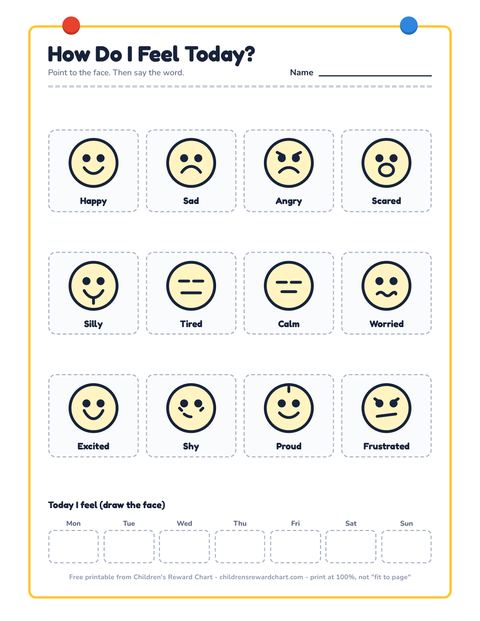
How Do I Feel Today?
12 feeling faces with words, plus a week of 'today I feel' boxes.
Download letter PDF

My Feelings Check-In
Weekly feelings check-in: 3 moments a day, 7 days, circles to draw a face in.
Download letter PDFStickers and paper for the chart
The reinforcer has to be in the drawer before the first star is earned. Links go to Amazon and we may earn a commission.
Questions parents ask
What is a mood tracker for kids?
A mood tracker is a simple record of how a child feels over time. It can be a color wheel, a grid, or a chart. You record a feeling, the time, and what came before. You use it for two weeks to spot a pattern.
How long should I track my child's mood?
Track for two weeks. That is long enough to see a repeat pattern, but short enough that it does not become a burden. After two weeks, read the results and stop. If you change one thing, run another two weeks.
What age can use a mood tracker?
Children as young as 3 can use a color wheel with your help. Children 8 and under color a slice on a wheel. Children 9 and older can use a private grid. The child must be willing, or the tracker will not work.
What should a mood chart record?
Record the feeling as a color or face, the time of day, whether the night before was rough, and one word about what came before. Keep it to five items. Do not add chores or meals. Less is more.
Is a mood tracker the same as a feelings chart?
No. A feelings chart is a permanent tool for naming emotions. A mood tracker is a temporary record for spotting a pattern. You keep the feelings chart on the wall. You use the tracker for two weeks and then stop.
Read next
Short guides that end at a chart you can print tonight.

The 'how are you feeling today' chart: how to use a daily check-in
Use a daily check-in chart to help your child name feelings, and know what to do with the answer.
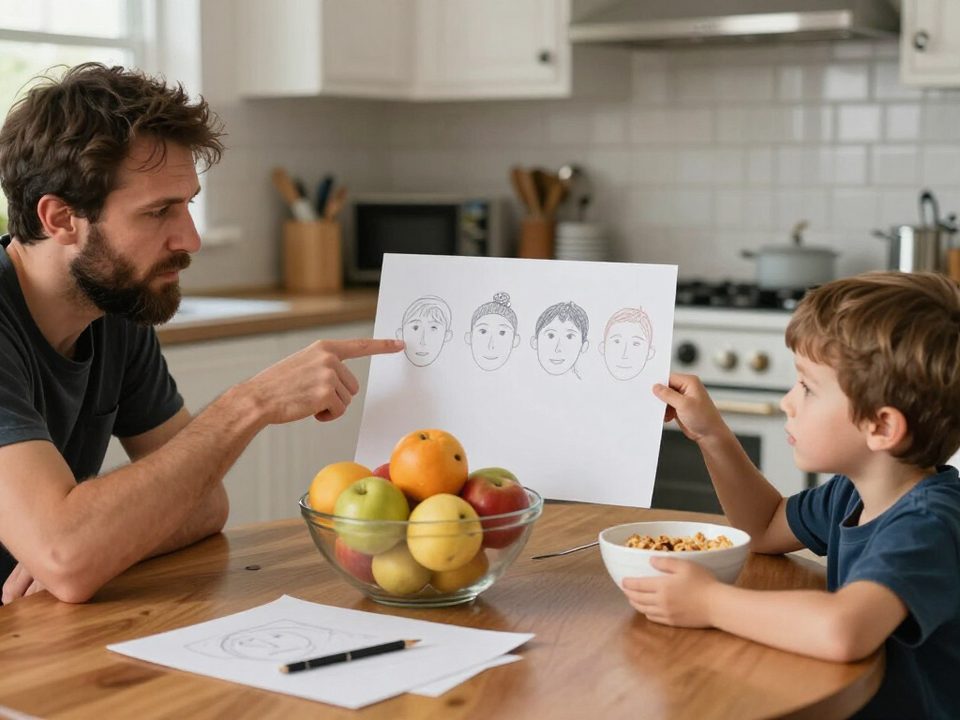
'What emotion am I feeling?' Helping a child name it
Help your child name what they feel, using a simple chart that turns big feelings into words.

Calm down corner ideas for home and the classroom
Set up a calm down corner at home or in class, with ideas that give a child a place to reset.