'What emotion am I feeling?' Helping a child name it
A child can only name a feeling they have heard named in someone else. For one week, name your own feelings out loud, then use a faces chart as the shared vocabulary. This simple method helps a child identify feelings without pressure.
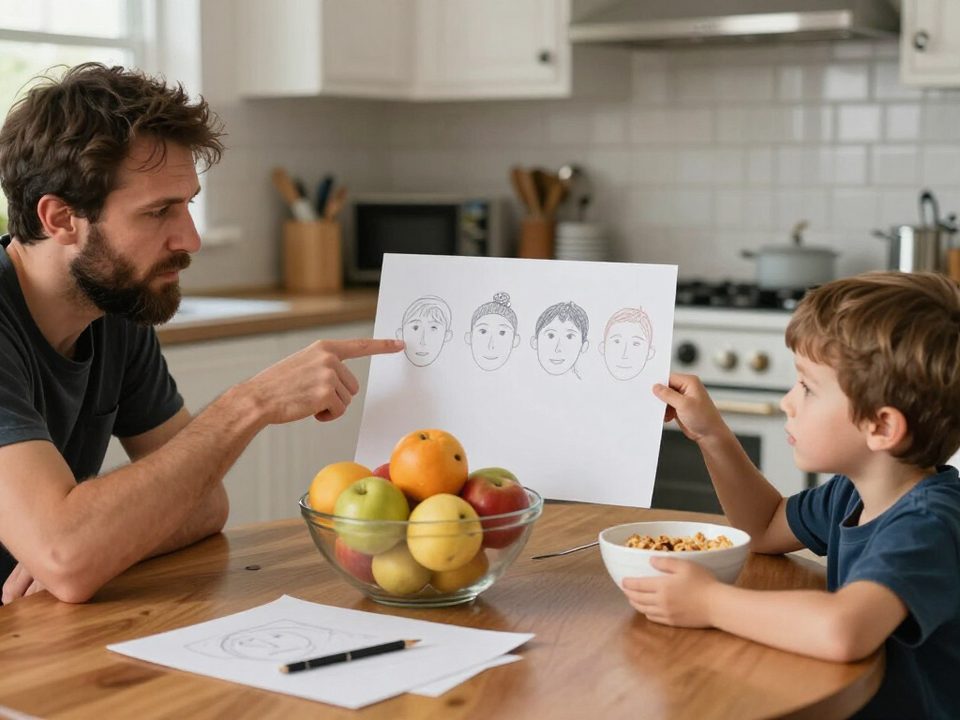
If you have asked 'what emotion am I feeling' and gotten a shrug, you are not alone. The question is too big for a small child. The body knows before the mouth does, so the work starts with you, not with them.
Why 'how do you feel' gets a shrug
A child hears 'how do you feel' and has to do three hard things at once: notice a body state, find a word for it, and speak it. That is a lot for a three year old, and even a ten year old can freeze. The shrug is not defiance. It is a child who does not have the word yet.
Feelings live in the body first. A tight tummy, a hot face, fists that clench. The mouth is the last step. So the question 'what emotion am I feeling' is really asking a child to translate a body signal into a word they may have never heard spoken out loud.
The fix is not to ask more. The fix is to give the child a vocabulary by using it yourself. When a parent names their own feelings, the child hears what emotions sound like in real life. That is the foundation for everything else.
Week one: the parent names their own
For seven days, do not ask your child how they feel. Instead, narrate your own feelings out loud, in plain sentences, as they happen. You are not performing. You are showing that feelings have names and that naming them is normal.
The goal is ten small moments a day. You do not need to be dramatic. You just need to be honest. Here are ten sentences you can say tonight, starting with the first one that fits.
Say them in the kitchen, in the car, or at bedtime. The child does not need to respond. They just need to hear the words.
- I feel frustrated because the lid is stuck.
- I feel happy when you show me your drawing.
- I feel tired after a long day, and my shoulders feel heavy.
- I feel worried about being late, and my tummy feels tight.
- I feel proud when I finish a hard task.
- I feel sad when I miss my friend.
- I feel calm when I take a deep breath.
- I feel excited about the weekend.
- I feel annoyed when the phone rings during dinner.
- I feel grateful when you help me set the table.
The key is to say these sentences without a lecture. You are not teaching a lesson. You are simply talking to yourself, and the child is listening. After a week, they will have heard more feeling words than in the whole previous month.
The faces chart as a shared vocabulary
A faces chart gives you and your child a shared set of names for feelings. The free feelings charts on this site have 12 faces, each with a clear expression and a word. Put the chart on the wall at child height, in the kitchen or the playroom, where both of you can see it.
Before a child can say 'I am frustrated', they need to know what frustration looks like. The chart gives them a way to point. Pointing is easier than speaking, and it is a real answer. When your child points to the angry face, you can say 'You feel angry' and they will feel heard.
The chart works best when you use it too. Point to your own face on the chart and say 'I feel tired today'. The child sees that adults use the chart as well. That makes it a tool, not a test.
From two feelings to twelve
Do not introduce all 12 faces at once. Start with two feelings that are easy to see: happy and sad. Then add mad and scared. After that, the rest can come slowly, one or two at a time, as the child shows they are ready.
The table below shows a rough guide for which feelings to name at which age. Every child is different, so use this as a starting point, not a rule. The goal is to build a feelings vocabulary for kids that grows with them.
| Age | Feelings to name | Example |
|---|---|---|
| 3 | happy, sad | I feel sad when my block tower falls. |
| 4 | mad, scared | I feel mad when you take my toy. |
| 5 | frustrated, excited | I feel frustrated when I cannot tie my shoe. |
| 6 | worried, proud, calm | I feel proud when I ride my bike. |
When your child uses a new feeling word, say it back to them. 'You feel frustrated. That makes sense.' This confirms the word and connects it to the feeling. Over time, they will add more words on their own.
Where it shows in the body
Feelings show up in the body before the mind has a word. A child may not know they are anxious, but they can tell you their tummy hurts. That is why asking 'where is it' works better than 'what is it'.
Ask your child: 'Where do you feel it in your body?' They might point to their tummy, their fists, or their face. Then you can name the feeling: 'A tight tummy can be worry. I feel worry in my tummy too.' This is not a medical claim. It is a way to connect a body signal to a feeling word.
The calm down corner ideas guide has more ways to help a child notice body signals. The more a child can notice where a feeling lives, the easier it is to name it.
What to do after the name
The name is enough. When a child says 'I am sad', you do not need to fix it. You do not need to make it better. You just need to be with them. Naming a feeling takes the edge off, because the child feels understood.
After the name, you can offer one of these simple helps. But only if the child wants it. The goal is not to stop the feeling. The goal is to let the child feel it and know it has a name.
Here are six things that help after a feeling is named:
- Take three slow breaths together.
- Give a hug or a pat on the back.
- Sit quietly and say nothing.
- Ask 'Do you want to talk about it?'
- Offer a glass of water.
- Go for a short walk outside.
If your child is having a hard time, you can use a reflection sheet to help them think it through later. But in the moment, the name is enough.
Showing emotions is not the problem
Crying and shouting are showing emotions, and that is not a problem. The goal is not to stop the tears. The goal is to get a word before the shout. When a child can say 'I am mad' instead of hitting, that is a win.
You are not teaching your child to hide feelings. You are teaching them to name feelings so they can handle them. A child who can say 'I am frustrated' is a child who can ask for help. That is the whole point.
Using the check-in chart
A check-in chart is a simple way to make naming felings a daily habit. You can use the free how are you feeling today chart guide to set it up. Put the chart somewhere you will see it twice a day.
At morning and bedtime, you go first. Point to the face that matches your feeling and say the word. Then ask your child if they want to point to theirs. No pressure. If they skip a day, that is fine.
The mood tracker for kids guide has more ideas for making this a routine. The check-in chart is not a test. It is a way to practice naming feelings together.
Charts that go with this guide
Free one-page PDFs with a blank name line. Pick paper and ink once, every button changes.
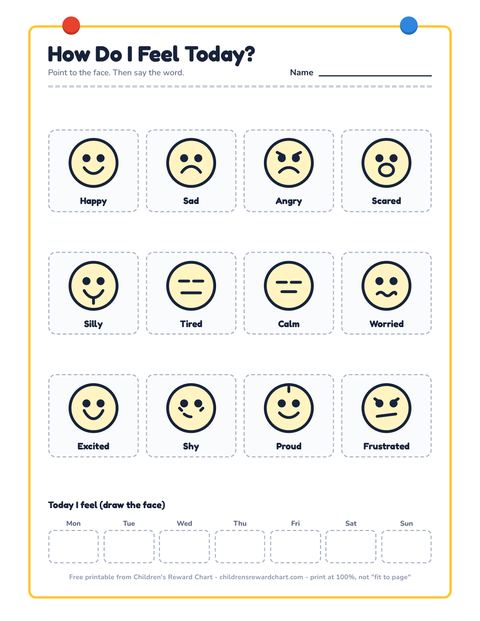
How Do I Feel Today?
12 feeling faces with words, plus a week of 'today I feel' boxes.
Download letter PDF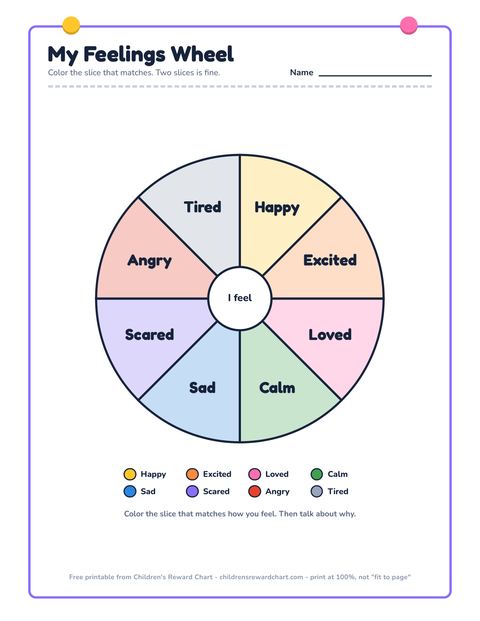

My Feelings Check-In
Weekly feelings check-in: 3 moments a day, 7 days, circles to draw a face in.
Download letter PDFStickers and paper for the chart
The reinforcer has to be in the drawer before the first star is earned. Links go to Amazon and we may earn a commission.
Questions parents ask
How do I help my child identify their emotions?
Start by naming your own feelings out loud for a week. Then use a faces chart as a shared vocabulary. Point to your own feeling and say the word. Ask your child to point to theirs. The name is enough. Do not fix the feeling.
What emotions should a 4 year old be able to name?
A 4 year old can usually name happy, sad, mad, and scared. They may also say excited or frustrated. Do not push for more. Let them grow into the words. Use the chart to add one new feeling at a time.
Why does my child say 'I don't know' when I ask how they feel?
The question is too big. A child may feel something but not have the word. Or they may not have heard the word used for that feeling before. Try asking 'where is it in your body?' or point to the chart. The 'I don't know' is a sign they need more vocabulary, not that they are hiding something.
Is a feelings chart good for toddlers?
Yes, but keep it simple. Start with happy and sad. Point to the face and say the word. Toddlers can point before they can speak. The chart gives them a way to show you what they feel. Use it for a few minutes a day, not all day.
How do you show emotions to a child?
You show emotions by naming them out loud in your own life. Say 'I feel frustrated' when you are stuck in traffic. Say 'I feel happy' when you see a friend. Your child learns that feelings are normal and that words exist for them. That is the best lesson.
Read next
Short guides that end at a chart you can print tonight.

The 'how are you feeling today' chart: how to use a daily check-in
Use a daily check-in chart to help your child name feelings, and know what to do with the answer.

A mood tracker for kids: what to record and when to stop
Know what to record on a mood tracker, how long to keep it going, and when to stop before it becomes a chore.

Calm down corner ideas for home and the classroom
Set up a calm down corner at home or in class, with ideas that give a child a place to reset.