Calm down corner ideas for home and the classroom
A calm down corner works when your child goes there before the meltdown, not after. Make it the best spot in the room with a good cushion and the only fidgets, and put a feelings chart on its wall.

A calm down corner is a small spot where a child can go to feel better before tears or anger take over. The goal is to make it so inviting that your child chooses it on their own. These calm down corner ideas help you build that space at home or in a classroom tonight.
What a calm down corner is for
A calm down corner is for the moment before a meltdown, not after it. The child walks over, sits on the cushion, and uses the tools to settle down. This is a choice, not a punishment.
It is not a time-out. A time-out sends a child away because of bad behavior. A calm down corner invites a child to come because they feel big feelings. The difference is who decides to go there.
For kids aged 3 to 10, the corner works best when it feels like their own space. A 3 year old may need you to walk them over. A 10 year old may just need the quiet spot to exist. Keep the purpose the same: the child chooses to go, and you stay neutral.
You can pair the corner with a feelings chart so the child can point to what they feel. That small act of pointing often slows the spiral down enough to talk.
Where to put it
Pick a corner that lets the child see the rest of the room. A child who feels hidden or trapped will not use the space. They need to watch what is happening so they feel safe coming back out.
Do not put it in the bedroom. The bedroom is for sleeping, and sending a child there can feel like exile. The corner should live in the main living area or the classroom, right where life happens.
In a classroom, choose a spot away from the door and away from the busy traffic. A corner near a bookshelf or a low window works well. Make sure the teacher can see the child, and the child can see the teacher.
The corner should be visible but not in the middle of the action. A small rug or a classroom divider can mark the edge. You want the child to feel calm, not on display.
What goes in it
Keep the corner simple. Too many items make it a play area, not a calm spot. These 12 things cover the basics for most kids, and you can swap them out as your child grows.
The cuhsion is the anchor. Make it the most comfortable seat in the house. The soft light and blanket add warmth. The fidgets give little hands something to do.
The feelings chart is the sign on the wall. The breathing card and glitter jar teach the child how to slow down. The timer shows that this is a short pause, not a long stay.
Here is the full list of what goes in it:
- A cushion
- A soft light
- A basket of 3 fidgets
- A breathing card
- The feelings chart
- A timer
- A book
- Headphones
- A stuffed animal
- A glitter jar
- A blanket
- A mirror
The basket of 3 fidgets is the secret. Put the fidgets only in the corner, not in the toy bin. When the child wants a fidget, they have to go to the corner to get it. That is the pull that brings them there before the meltdown.
You can print a feelings chart for the wall in minutes. The mirror helps a child see there own face, which can be a surprise that snaps them out of a spiral.
The sign on the wall
The feelings chart is the sign on the wall. Hang it at the child's eye height, not yours. The child should be able to stand in front of it and point to a face without stretching or looking up.
Add a feelings ladder next to the chart. The ladder goes from calm at the bottom to furious at the top. The child points to where they are, then points to where they want to be.
Ask the child to point before they talk. Words are hard when feelings are big. Pointing is faster and does not need a vocabulary. A child who points to the angry face can then point to the calm face, and you both know the goal.
This works at home and in a classroom. The chart gives the child a way to say what is wrong without a lecture. Keep the chart simple, with faces for happy, sad, angry, scared, and tired.
How to introduce it
Introduce the corner when everyone is calm. Do not wait for a bad day. A child needs to know the corner is a friend before they need it.
Follow these steps to introduce it:
- Build it together. Let the child pick the cushion color and the stuffed animal.
- Practice going there calm. Sit on the cushion and show how the glitter jar works.
- Name it. Call it the cozy corner or the calm spot, and use that name often.
- Use it yourself. When you feel frustrated, say I am going to the calm spot for a minute.
- Never send a child there. Always invite, and let the child choose to go.
The last step is the hardest. If you send a child to the corner as a punishment, it becomes a time-out. The magic is in the choice. The child goes because they want to, not because you made them.
You can use a behavior chart to track when your child uses the corner well. A sticker for choosing the calm spot is a reward, not a bribe. It shows the child that self-regulation is a skill you value.
Calm down corner in a classroom
A classroom calm down corner works best when it is one per room. Two corners split attention and make the space feel less special. One corner, clearly marked, is enough for a class of 20 to 30 kids.
Give the corner a pass. A child takes a pass from a hook and puts it on their desk. This tells you where they are without a shout across the room. The pass also limits the corner to one child at a time.
Set a two-minute timer. Two minutes is enough to reset without losing the lesson. When the timer rings, the child comes back to the group. If they need more time, they can take the pass again.
What the teacher says matters. Say, I see you need a break. Go use the corner, and I will check on you. Do not ask what is wrong in front of the class. Do not make the child explain.
The reflection sheet comes after the corner, not in it. A child who is upset cannot write about it yet. After they are calm, they can fill out a reflection sheet to say what happened and what they will do next.
Calm down corner ideas by age
The corner changes as the child grows. A 3 year old needs more help and more movement. A 10 year old needs privacy and a way to save face. Use this table to match the corner to the child.
| Age | What works | What does not |
|---|---|---|
| 3 to 4 | Glitter jar, stuffed animal | Long talks, too many toys |
| 5 to 6 | Breathing card, timer | Sending them away, loud noises |
| 7 to 8 | Headphones, book | Lectures, public attention |
| 9 to 10 | Mirror, journal | Babyish items, forced apologies |
For the youngest kids, keep the corner very simple. One fidget, one stuffed animal, one chart. Too many choices make a 3 year old more overwhelmed, not less.
For older kids, the corner should feel more private. A mirror and a small notebook give them a way to process without a parent hovering. The feelings chart still works, but they may point faster and talk less.
What to buy and what to make
You do not need to buy much. A calm kit basket can hold three or four items you already own. The key is to keep those items in the corner and nowhere else.
Make a homemade glitter jar with a clean jar, warm water, glue, and glitter. Shake it and watch the glitter settle. That is the whole lesson: feelings settle too. It takes two minutes to make and costs nothing.
The free printables on this site are the easiest place to start. Print a feelings chart and a behavior chart for the wall. You can also use the how are you feeling today chart to check in each morning.
For the cushion and the soft light, check your house first. A pillow from the couch and a small lamp work fine. If you want to buy a few new items, look for a round cushion and a battery light. Keep it simple.
The calm down kit for kids can be a small basket with the breathing card and the fidgets. You do not need a fancy kit. You need a consistent spot where the tools always live.
Charts that go with this guide
Free one-page PDFs with a blank name line. Pick paper and ink once, every button changes.
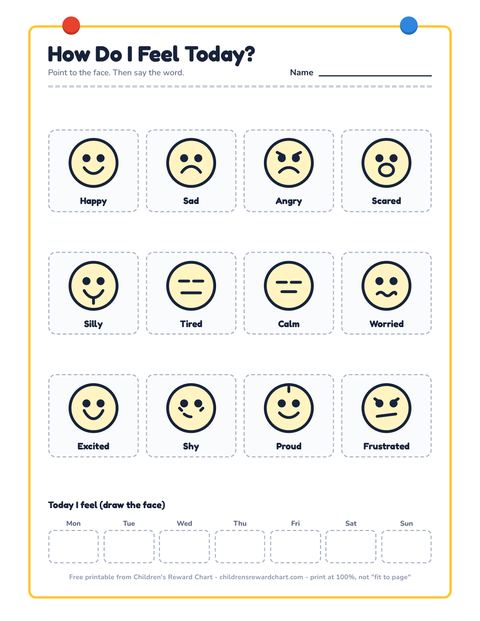
How Do I Feel Today?
12 feeling faces with words, plus a week of 'today I feel' boxes.
Download letter PDF
My Feelings Ladder
Five-step feelings ladder from Calm to Angry, with a clip or a finger.
Download letter PDF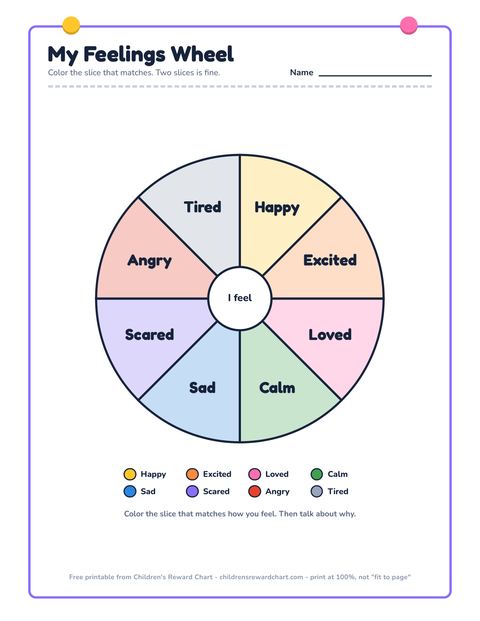
Stickers and paper for the chart
The reinforcer has to be in the drawer before the first star is earned. Links go to Amazon and we may earn a commission.
Questions parents ask
What is a calm down corner?
A calm down corner is a small, quiet space where a child can go to settle big feelings before a meltdown. It has a cushion, a feelings chart, and a few calming tools. The child chooses to go there, and it is not a punishment.
What should be in a calm down corner?
Keep it simple. A cushion, a soft light, a basket of 3 fidgets, a breathing card, a feelings chart, a timer, a book, headphones, a stuffed animal, a glitter jar, a blanket, and a mirror. The feelings chart is the sign on the wall.
Is a calm down corner the same as time out?
No. A time out is a punishment where an adult sends the child away. A calm down corner is an invitation the child chooses to accept. The child goes to feel better, not to pay for a mistake. That choice is the whole difference.
How do I set up a calm down corner in a classroom?
Pick one corner away from the door. Add a cushion, a feelings chart, and a basket of fidgets. Use a pass so one child goes at a time. Set a two-minute timer. The child fills out a reflection sheet after they are calm, not while upset.
What age is a calm down corner for?
A calm down corner works for kids aged 3 to 10. A 3 year old needs help finding it and using it. A 10 year old needs privacy and a simple space. Adjust the tools by age, but keep the same idea: the child chooses to go before the meltdown.
Read next
Short guides that end at a chart you can print tonight.

The 'how are you feeling today' chart: how to use a daily check-in
Use a daily check-in chart to help your child name feelings, and know what to do with the answer.

A mood tracker for kids: what to record and when to stop
Know what to record on a mood tracker, how long to keep it going, and when to stop before it becomes a chore.
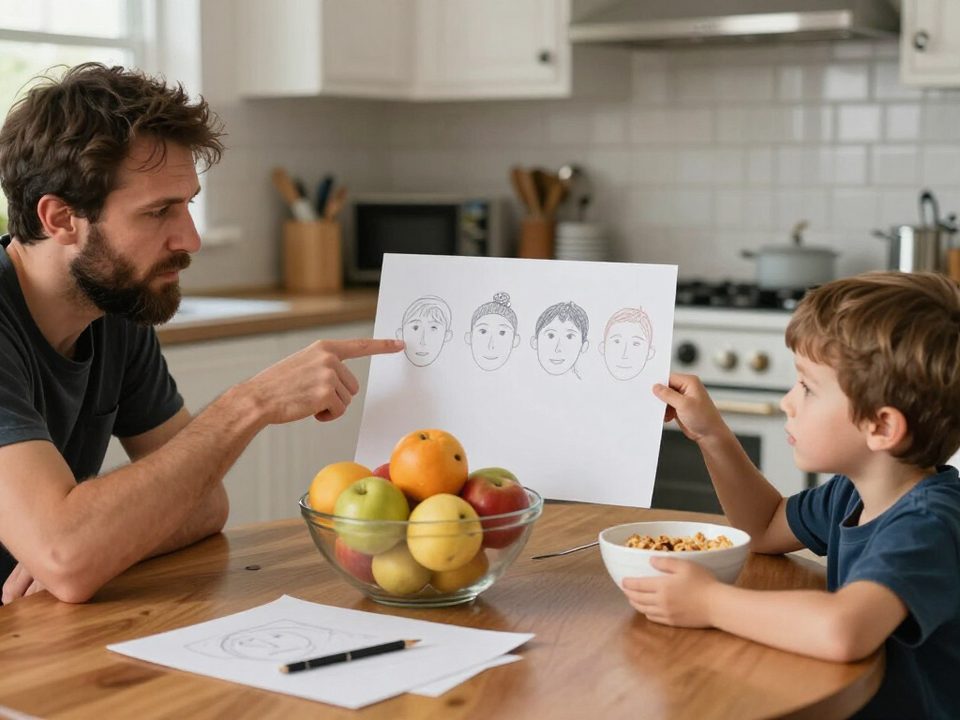
'What emotion am I feeling?' Helping a child name it
Help your child name what they feel, using a simple chart that turns big feelings into words.