- Home
- Behavior charts for kids
Free printable behavior charts for kids
A behavior chart helps a child learn one clear behavior. Name the behavior you want to see, not the thing you want to stop.

Download the charts
One-page PDFs with a blank name line. Pick paper and ink once, every button changes.


What a behavior chart is for
A behavior chart makes one wanted behavior visible for 2 to 6 weeks. It is not a score of the child, it is a clear reminder of what you want to see.
Hang the chart where the behavior happens: the kitchen table, the bathrom door, or the playroom wall. Let the child or a grown up put the sticker on the chart, whichever fits your routine. See our printable charts and one page PDFs for quick printing and use printable charts.
For more on this, read Is rewarding good behavior bribery?.
Writing the four goals
Give each chart four wanted behaviors. Short, specific goals work best. Avoid a naughty column. Make each row say what to do.
Use the small table below to swap vague or negative lines for clear, positive actions.
| Instead of | Write | Why |
|---|---|---|
| no hitting | kind hands | Shows the action to use with others |
| be good | listened first time | Names the exact behavior to repeat |
| stop yelling | use inside voice | Gives an easy replacement skill |
| don’t interrupt | wait your turn | Teaches the timing the child should use |
| no whining | ask for help | Shows a polite way to get needs met |
| room messy | pick up toys | Breaks a big task into one action |
Keep the language short. Put the child’s name on the blank name line so the chart feels personal. Use the same four goals for the whole 2 to 6 weeks unless one is met and you replace it with a new wanted behavior.
Daily or weekly behavior chart
A weekly chart works well when the rows name specific goals. Use a sticker per day to mark success, then a small reward at the end of the week.
Use a daily chart for children under 5. A sticker within a minute keeps the connection clear. For a simpler look try the smiley circle approach for quick, visual feedback, and see sample layouts on the smiley face page.
Behavior charts by age and need
Choose a chart style that fits your child’s stage and needs. Below are the common pages that give ready to print options and examples.
- Toddlers and preschool: short tasks, big stickers. See age friendly layouts.
- Kindergarten: simple school and home targets for early learners.
- Smiley face: visual marks that younger children read easily.
- Color coded: rows or days in color for quick scanning.
- ADHD: short spans and immediate rewards to match attention needs.
- Autism: predictable steps and clear pictures for routines.
- Tracking sheets: longer records for patterns and progress.
- Adults: behavior charting for routines and habit building.
- Christmas: seasonal goals and holiday chores with themed stickers.
If you are not sure which page fits, start simple. Pick four clear goals and a small, soon reward.
Rewards and what happens on a bad day
Keep rewards small and soon. A toy or privilege that comes after many days will not keep a young child focused. Write the reward on the chart before the first sticker so the child knows what they are working toward. For more reward ideas see our reward suggestions page at reward ideas.
A bad day earns nothing and loses nothing. Do not remove stickers the child already earned. If a chart no longer works, fade it: give stickers less often or swap to a new goal.
Printing and hanging it
Every chart here is a one-page PDF in letter and A4. Each chart has a color version and an ink saving black outline version, with a blank name line. Print at 100 percent, not "fit to page" for correct sticker sizing.
The reward boxes on every chart fit a 1.5 inch round sticker or a 1/2 inch star sticker. Laminate the page for dry-erase marks. Make one chart per child and hang it where the target behavior happnes.
Also in this section: Behavior chart for kids with ADHD, Behavior chart for adults: a habit chart that works, Reward chart for autistic children: visual token boards, Christmas behavior chart: a countdown to the 25th.
Behavior charts by age and need
Toddlers, kindergarten, smiley faces, color codes, ADHD, autism, tracking sheets and more.
ABC behavior chart (antecedent behavior consequence)
ABC data sheet + if/then chart
Free printableBehavior chart for kids with ADHD
Short-interval chart (half days)
Free printableBehavior chart for adults (habit and accountability)
Adult habit chart
Free printableReward chart for autistic children (visual, token board)
Token board 5 and 10
Free printableChristmas behavior chart (countdown to the 25th)
Countdown chart
Free printableColor coded behavior chart (and the clip chart debate)
Color chart + alternatives
Free printableKindergarten behavior chart
hub set
Free printableFree printable behavior chart templates
Blank + editable PDF
Free printableSmiley face behavior chart
Smiley chart, daily
Free printableBehavior chart for toddlers and preschoolers
Picture behavior chart
Free printableBehavior tracking sheets, logs, point sheets and frequency charts
Tracking sheet pack
Free printableGuides on behavior and rewards
Short guides that end at a chart you can print tonight.

Positive reinforcement examples for kids, at home and in class
See real examples of positive reinforcement at home and in class, then print a chart that puts one into action tonight.
Positive vs negative reinforcement: what each one looks like with a child
Learn what negative reinforcement actually looks like with a child, and how to tell it apart from punishment, so you can choose the right chart.
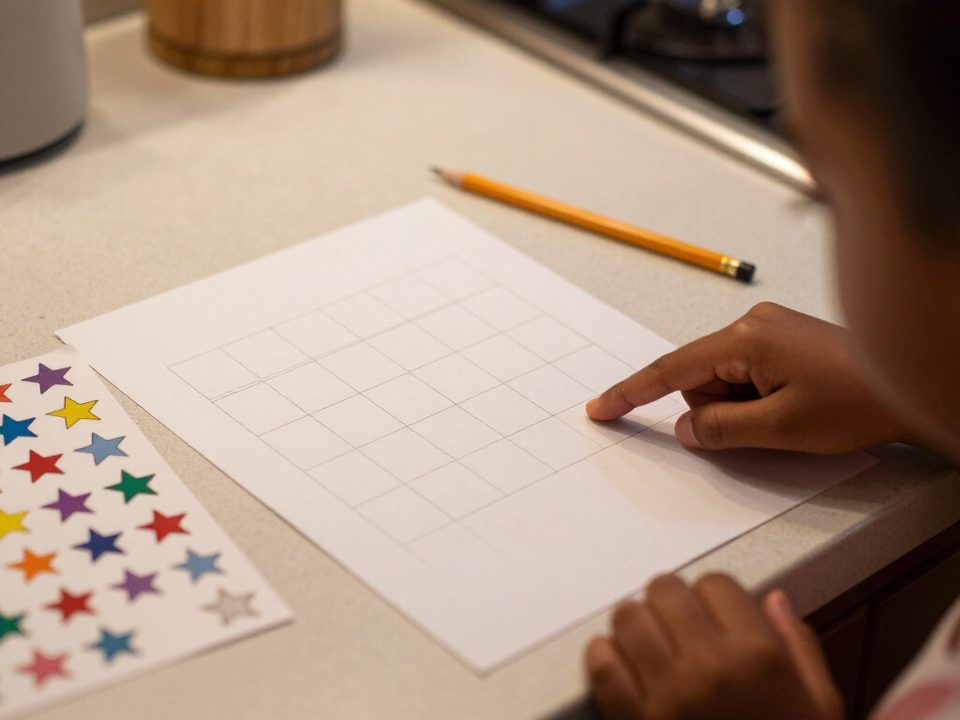
Behavior chart examples for home, with the goals that work
Browse behavior chart examples that work at home, with the goals that keep a child engaged past the first week.
Print it, then stick it to the fridge
Sticker paper that fits every chart on this site, and the bits that keep a chart up all week. Links go to Amazon and we may earn a commission.
Goes with a behavior chart
Smiley stickers, a timer for the short intervals and the magnets that keep it on the fridge.
Questions parents ask
Do behavior charts work?
Yes, when they focus on one clear, wanted behavior and stay simple. A chart should remind a child what to do, not label them. Use small rewards soon after the behavior, and keep the same goals for 2 to 6 weeks so the habit can form.
What should I put on a behavior chart?
Put four short, positive behaviors a child can do. Use action phrases like kind hands, listened first time, or pick up toys. Avoid negative words such as no or don’t. Make goals specific and age appropriate.
Should I take stickers away for bad behavior?
Do not remove stickers a child has already earned. A sticker shows a moment of success. On a bad day give no new stickers, and talk about the choice after the moment is calm. Keep consequences separate from earned marks.
How long should a behavior chart be used?
Use a chart for 2 to 6 weeks on one set of goals. That span gives time to practice the new action. If a goal sticks early, replace it with a new wanted behavior. Fade the chart gradually once routines hold.
What is the difference between a behavior chart and a reward chart?
A behavior chart names and tracks specific actions you want the child to do. A reward chart can be more general and focus on earning prizes. Keep a behavior chart short and skill focused, then add a small reward at the end of the period.