- Home
- Behavior charts
- Reward chart for autistic children: visual t
Reward chart for autistic children: visual token boards
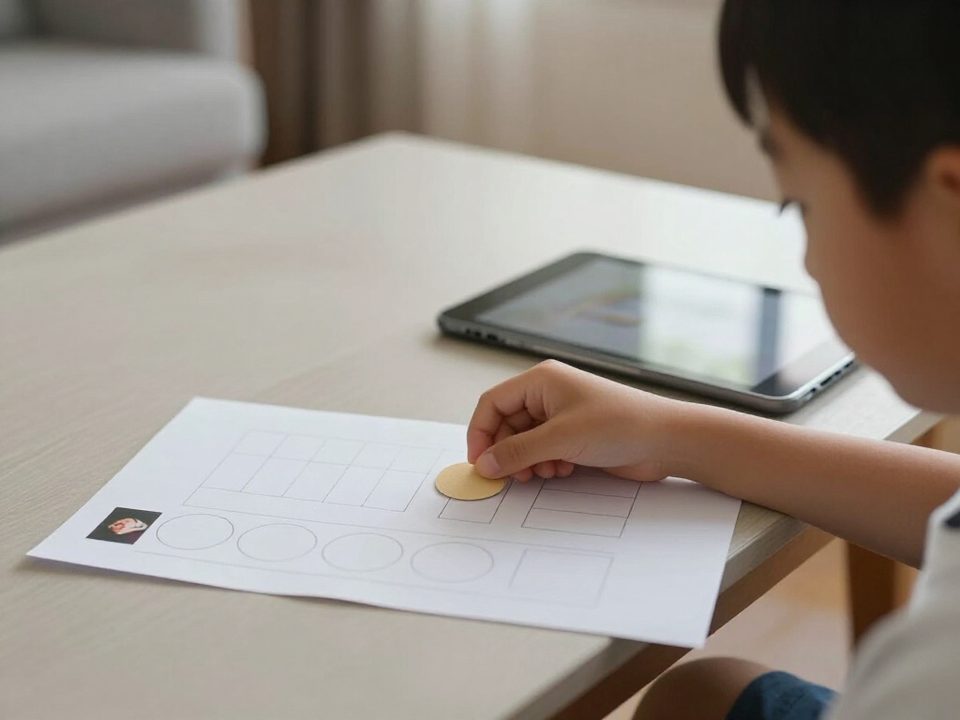
An autism behavior chart works best when it says the same thing every time. This token board does exactly that: five tokens, then the thing in the picture. No words for the child to read, just a clear visual reward.
Download the charts
One-page PDFs with a blank name line. Pick paper and ink once, every button changes.

What a token board is
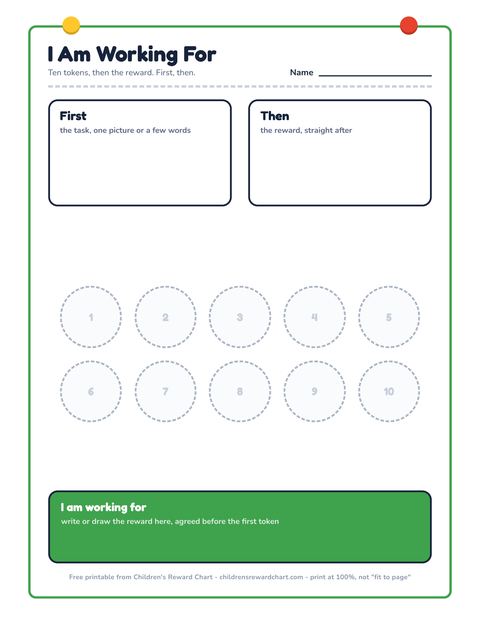
A token board is a strip with empty slots and a picture of the reward at the end. The child earns one token for each step or each minute of the task. When the strip is full, the child gets the thing in the picture.
The same routine happens every time. That sameness is what makes it work for an autistic child. A weekly chart with many boxes and rules can feel confusing. A token board has one rule: fill the strip, get the reward.
This is not a medical treatment. It is a simple visual tool many parents use at home. You are not diagnosing or changing behavior on your own. You are just making a task visible and the reward predictable.
The 5 token and 10 token boards
The printables here give you two boards. The 5 token board is for a first try or a short task like brushing teeth. The 10 token board works for a longer task like homework or getting ready for school.
Both boards have a fixed picture slot for the reward. You print the page, cut out the board, and laminate it. Then use a velcro dot or a magnet as the token. The child places the token on each empty slot.
Each board comes in letter and A4, in color and ink saving. Print at 100 percent, not fit to page. The boxes are sized for a 1.5 inch round sticker or a 1/2 inch star sticker if you prefer stickers over a velcro token.
You can print a new board whenever you need it. Keep a few copies in the kitchen and in the car. That way the board is always the same, even when you are not at home.
Choosing the reward picture
The reward must be the child's idea, not yours. What you think is motivating may not be what your child wants. Ask your child or watch what they choose on their own. Then take a photo of the real thing.
A photo works better than a drawing because it is concrete. The child sees the actual trampoline or the actual snack. Put that photo in the picture slot on the board.
Here are 8 rewards that often work for autistic children:
- A favorite object like a car or a stuffed animal
- A spin on a chair or a swing
- A video for 2 minutes
- A small snack like a cracker or a fruit piece
- A jump on a trampoline
- A specific toy that is only for after the task
- A hug or a high five, if your child likes touch
- A short walk outside
Pick one reward at a time. Change it only when it stops working. Keep the photo current so the child recognizes it.
Using the board the same way every time
The power of a token board is in the routine. Use the same words and the same steps each time. Your child learns what to expect, and that reduces anxiety.
Here is the routine that works for most families:
- Show the board and point to the reward picture.
- Say the reward name, like "trampoline" or "video".
- Give one token for each step or each minute.
- Let the child place the token on the board.
- Give the reward the moment the last token lands.
Keep your words short and the same every time. "One token for the toy," and then the token goes on. No extra praise or explanation, just the routine.
If the child does not finish the task, do not give the reward. The board stays empty until the next try. That is not punishment, it is just the rule.
Behavior tracking for autistic children
A token board shows what you want to see. A behavior tracking sheet shows what is happening before and after. This site has two free tracking sheets that work well with a token board.
The ABC chart tracks the Antecedent, Behavior, and Consequence. You write what happened right before the behavior, what the child did, and what you did after. The frequency chart counts how often a behavior happens in a day or a week.
These sheets are plain and simple. You can print them and share them with your child's teacher. That way home and school use the same lagnuage.
See the tracking sheets and the ABC chart for more. You can also look at the positive reinforcement examples to pair with the board.
More behavior charts
Every page hands out its own chart. All behavior charts.
ABC behavior chart (antecedent behavior consequence)
ABC data sheet + if/then chart
Free printableBehavior chart for kids with ADHD
Short-interval chart (half days)
Free printableBehavior chart for adults (habit and accountability)
Adult habit chart
Free printableChristmas behavior chart (countdown to the 25th)
Countdown chart
Free printableColor coded behavior chart (and the clip chart debate)
Color chart + alternatives
Free printableKindergarten behavior chart
hub set
Free printableFree printable behavior chart templates
Blank + editable PDF
Free printableSmiley face behavior chart
Smiley chart, daily
Free printableBehavior chart for toddlers and preschoolers
Picture behavior chart
Free printableBehavior tracking sheets, logs, point sheets and frequency charts
Tracking sheet pack
Free printableGuides on behavior and rewards
Short guides that end at a chart you can print tonight.

Positive reinforcement examples for kids, at home and in class
See real examples of positive reinforcement at home and in class, then print a chart that puts one into action tonight.
Positive vs negative reinforcement: what each one looks like with a child
Learn what negative reinforcement actually looks like with a child, and how to tell it apart from punishment, so you can choose the right chart.
Behavior chart examples for home, with the goals that work
Browse behavior chart examples that work at home, with the goals that keep a child engaged past the first week.
Print it, then stick it to the fridge
Sticker paper that fits every chart on this site, and the bits that keep a chart up all week. Links go to Amazon and we may earn a commission.
Goes with a behavior chart
Smiley stickers, a timer for the short intervals and the magnets that keep it on the fridge.
Questions parents ask
What is a token board for autism?
A token board is a visual tool with empty slots and a picture of a reward. The child earns a token for each step or minute, then gets the reward when the board is full. It is used to make tasks clear and give immediate positive feedback.
How many tokens should a token board have?
Start with 5 tokens for a short task or a first board. Use 10 tokens for a longer task like homework. If the child loses interest, drop to 3 tokens. The goal is to keep the task doable and the reward close.
What reward should go on a token board?
The reward should be something the child already loves, not something you think is good. Use a photo of the real item or activity. Common choices are a favorite toy, a video, a snack, or a physical activity like jumping.
Can a token board be used at school?
Yes. Print the board and send it to school with the child. The teacher can use the same routine and the same reward picture. Share the ABC chart or frequency sheet with the teacher so home and school stay consistent.