- Home
- Behavior charts
- Color coded behavior chart, and whether to u
Color coded behavior chart, and whether to use a clip chart
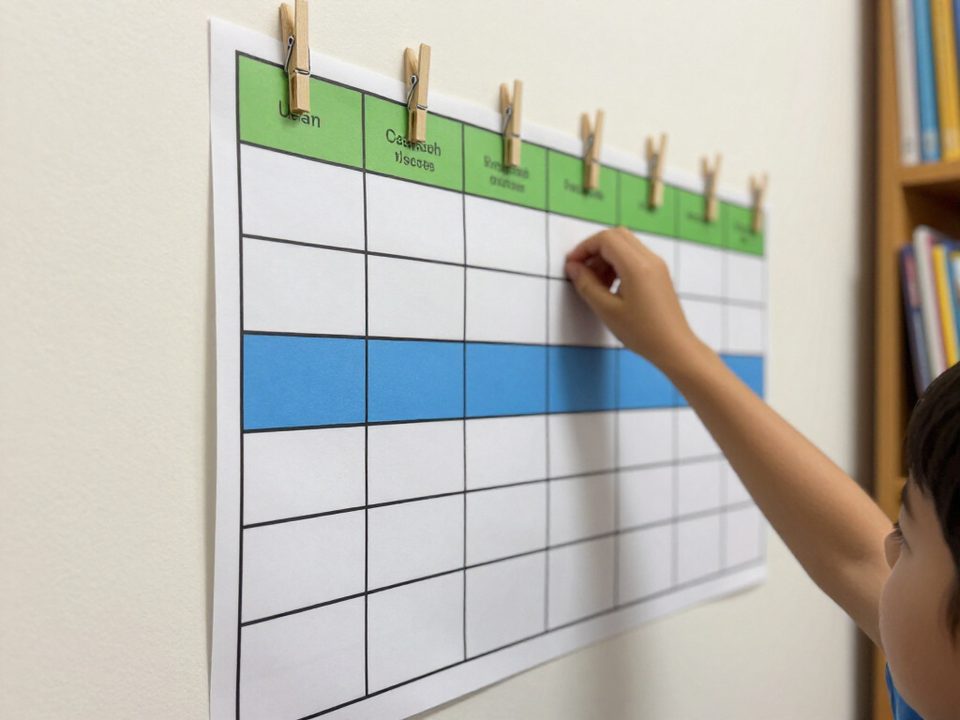
A behavior clip chart uses color coded behavior chart levels to show how a child is doing. The clip chart behavior system works best when every child starts on green each morning and can move back up after a slip. This free printable chart gives you that reset, which is the part most classroom clip charts leave out.
Download the charts
One-page PDFs with a blank name line. Pick paper and ink once, every button changes.


Color Chart for Home
Five-color home clip chart from Super day to Try again, starts on Ready.
Download letter PDFHow a color coded behavior chart works
A color coded behavior chart is a vertical ladder of colors. Each child has a clip or a magnet with their name on it. The ladder runs from outstanding at the top to parent contact at the bottom.
Every child starts on green in the middle. During the day, the clip moves up one color for a good choice. It moves down one color for a poor choice. The clip can always move back up after that, which is the key.
The chart resets every morning. No one carries yesterday's color into today. This gives every child a fresh start and keeps the focus on the next choice, not the last mistake.
The clip chart debate
The case against clip charts is real. Publicly moving a clip down can shame a child in front of peers. The same kids often end up on red day after day. And moving down does not teach a child what to do differently next time.
The case for clip charts is also real. They are visible and fast. Kids like the chance to move up, and a quick clip move takes less time than a long talk. The chart gives immediate feedback on a choice.
Two rules fix most of the problems. First, the clip must move up as often as it moves down. Look for good choices all day, not just bad ones. Second, in the middle grades, keep clips private. Use numbers instead of names, or have kids clip in a spot where only you can see.
The seven colors on this chart
This chart uses seven colors. The middle color is green, where eveyrone starts. Each color has a clear meaning and a clear way to earn it.
| Color | Means | What earns it |
|---|---|---|
| Purple | Outstanding | Going far beyond what was asked |
| Blue | Great job | Helping without being asked |
| Green | Ready to learn | Starting point each day |
| Yellow | Warning | A small reminder about a choice |
| Orange | Consequence | A break or a loss of a privilege |
| Red | Parent contact | A note or call home |
| Pink | Serious issue | Sent to office or principal |
The colors on this chart are a guide, not a verdict. A child on yellow can move back to green with one good choice. A child on blue can move to purple the same way. The point is movement in both directions, all day long.
Using it at home
Put one clip per child on the fridge. Use a clothespin or a small magnet with a name. The chart is for one choice at a time, not a mood or a whole day. Say, "You put your shoes away without a reminder, move up to blue."
The reset happens every morning. Before breakfast, move every clip back to green. This is not a reward. It is a fresh start. Your child should know that yesterday is over.
If your child finishes the day above green, that is a win. Give a small reward like picking the family movie or an extra bedtime story. For more ideas, see the reward ideas page. Keep the reward simple and immediate.
Using it in a classroom without the downsides
A classroom clip chart can work if you follow these six rules.
1. Reset daily. Every clip starts on green each morning, no exceptions.
2. Keep clips private for older grades. Use numbers or a hidden chart.
3. Never put colors on report cards or send them home as grades.
4. Pair the chart with a class points chart for group behavior.
5. Always give a way back up before lunch and before dismissal.
6. Tell parents the rules at the start of the year. Explain the reset and the up and down movement.
Alternatives to a clip chart
A clip chart is not the only tool. A smiley face chart tracks one behavior with a simple stamp or drawing. Individual sticker charts work well for younger kids who need a visual of their own progress. A class points chart rewards the whole group for working together.
Switch tools when the clip chart stops helping. If a child is stuck on red every day, the chart is not teaching. Try a tracking sheet to spot patterns, or use positive reinforcement examples to focus on what the child does right. The goal is behavior change, not a color.
More behavior charts
Every page hands out its own chart. All behavior charts.
ABC behavior chart (antecedent behavior consequence)
ABC data sheet + if/then chart
Free printableBehavior chart for kids with ADHD
Short-interval chart (half days)
Free printableBehavior chart for adults (habit and accountability)
Adult habit chart
Free printableReward chart for autistic children (visual, token board)
Token board 5 and 10
Free printableChristmas behavior chart (countdown to the 25th)
Countdown chart
Free printableKindergarten behavior chart
hub set
Free printableFree printable behavior chart templates
Blank + editable PDF
Free printableSmiley face behavior chart
Smiley chart, daily
Free printableBehavior chart for toddlers and preschoolers
Picture behavior chart
Free printableBehavior tracking sheets, logs, point sheets and frequency charts
Tracking sheet pack
Free printableGuides on behavior and rewards
Short guides that end at a chart you can print tonight.

Positive reinforcement examples for kids, at home and in class
See real examples of positive reinforcement at home and in class, then print a chart that puts one into action tonight.
Positive vs negative reinforcement: what each one looks like with a child
Learn what negative reinforcement actually looks like with a child, and how to tell it apart from punishment, so you can choose the right chart.
Behavior chart examples for home, with the goals that work
Browse behavior chart examples that work at home, with the goals that keep a child engaged past the first week.
Print it, then stick it to the fridge
Sticker paper that fits every chart on this site, and the bits that keep a chart up all week. Links go to Amazon and we may earn a commission.
Goes with a behavior chart
Smiley stickers, a timer for the short intervals and the magnets that keep it on the fridge.
Questions parents ask
Are clip charts bad for kids?
Clip charts are not bad by themselves. They become a problem when kids get stuck on the bottom colors and feel shamed. Use the chart with a daily reset and plenty of chances to move up. Keep clips private for older kids. The chart is a tool, not a judgment.
What do the colors mean on a behavior chart?
Colors usually follow a ladder from high to low. On this chart, purple means outstanding, blue means great job, green is the starting point, yellow is a warning, orange is a consequence, red means parent contact, and pink is for serious issues. The exact meaning is up to you.
Can a color behavior chart be used at home?
Yes. Put a clip on the fridge for each child. Start on green every morning. Move the clip up or down for one specific choice. Reset it the next day. Give a small reward for finishing above green. It works best for kids aged 3 to 10.
Should the clip reset every day?
Yes, reset it every morning. This is the most important rule. A daily reset gives every child a fresh start and prevents one bad day from ruining the week. It also keeps the focus on today's choices. Without a reset, the chart becomes a punishment, not a teaching tool.
What can I use instead of a clip chart?
Try a smiley face chart for one behavior, individual sticker charts for younger kids, or a class points chart for group work. You can also use a simple tracking sheet to see patterns. Pick the tool that fits your child's age and the behavior you want to encourage.