- Home
- Behavior charts
- Behavior charts, blank template
Free printable behavior charts, blank template
Free printable behavior charts start with a blank template. This one has six empty rows and seven blank day headers, so you decide what matters. Fill it in your browser, print it, and put it on the fridge.

Download the charts
One-page PDFs with a blank name line. Pick paper and ink once, every button changes.


Daily Behavior Chart
Blank daily behavior chart: 5 goal rows across morning, midday, afternoon, evening. Fillable PDF.
Download letter PDFThe blank behavior chart template
This free printable behavior chart is a one-page PDF with six blank rows for goals, seven blank day headers, a reward line, and a name line. You can type into every field before you print, or print it blank and write by hand. It comes in letter and A4, in a color version and an ink saving black outline version.
The boxes on the chart fit a 1.5 inch round sticker or a 1/2 inch star sticker. A check mark works too. Print at 100 percent, not fit to page, so the boxes stay the right size.
If you want the reasoning behind the layout, start with Behavior chart examples for home, with the goals that work.
What to type into the rows
The blank rows force the one conversation that matters: what exactly are we working on? Pick only 3 or 4 goals at a time. Too many rows filled means the chart fizzles. Write each goal as something your child can do, not something to stop doing.
- Ages 3 to 5: brush teeth, put toys in the bin, use a kind voice, sit at the table for dinner
- Ages 3 to 5: get dressed with help, wash hands before eating, say please and thank you, stay in bed at bedtime
- Ages 6 to 8: make the bed, finish homework before screens, feed the pet, clear your plate
- Ages 6 to 8: pack your school bag, put dirty clothes in the hamper, read for 10 minutes, do one chore without being asked
- Ages 9 plus: complete a homework block, do a load of laundry, take out the trash, practice an instrument for 15 minutes
- Ages 9 plus: organize your school supplies, help make dinner once a week, finish a chore list, turn off screens at the set time
Filling it in and printing
Here is how to get the chart ready in about five minutes. Open the PDF on your computer or phone. Type the child's name, the goals, and the reward. Leave the day headers blank if you want a weekend-only chart.
- Open the PDF in a browser or PDF reader.
- Type the child's name and up to six goals.
- Type the days of the week, or leave blank for a weekend-only chart.
- Type the reward on the reward line.
- Print at 100 percent, not fit to page.
Daily behavior chart or weekly
The same tmeplate works two ways. For a weekly chart, the columns are the days of the week. Each goal gets one box per day. This is best when your child needs to see progress across a whole week.
For a daily chart, the columns are parts of the day: morning, afternoon, evening. You type those instead of day names. This is better when your child needs a reset after lunch or strugles with one routine, like getting out the door.
Try the weekly version first. If the chart feels too big, switch to daily. The blank template lets you do either.
Other printable behavior charts
This blank template is a good starting place, but other charts fit different ages and goals. The smiley face chart works for young kids who respond to a simple face. The kindergarten chart uses pictures and short words. The picture chart for toddlers has no words at all. For older kids, the tracking sheets let them count their own stickers. See all behavior charts if you want to compare options.
More behavior charts
Every page hands out its own chart. All behavior charts.
ABC behavior chart (antecedent behavior consequence)
ABC data sheet + if/then chart
Free printableBehavior chart for kids with ADHD
Short-interval chart (half days)
Free printableBehavior chart for adults (habit and accountability)
Adult habit chart
Free printableReward chart for autistic children (visual, token board)
Token board 5 and 10
Free printableChristmas behavior chart (countdown to the 25th)
Countdown chart
Free printableColor coded behavior chart (and the clip chart debate)
Color chart + alternatives
Free printableKindergarten behavior chart
hub set
Free printableSmiley face behavior chart
Smiley chart, daily
Free printableBehavior chart for toddlers and preschoolers
Picture behavior chart
Free printableBehavior tracking sheets, logs, point sheets and frequency charts
Tracking sheet pack
Free printableGuides on behavior and rewards
Short guides that end at a chart you can print tonight.

Positive reinforcement examples for kids, at home and in class
See real examples of positive reinforcement at home and in class, then print a chart that puts one into action tonight.
Positive vs negative reinforcement: what each one looks like with a child
Learn what negative reinforcement actually looks like with a child, and how to tell it apart from punishment, so you can choose the right chart.
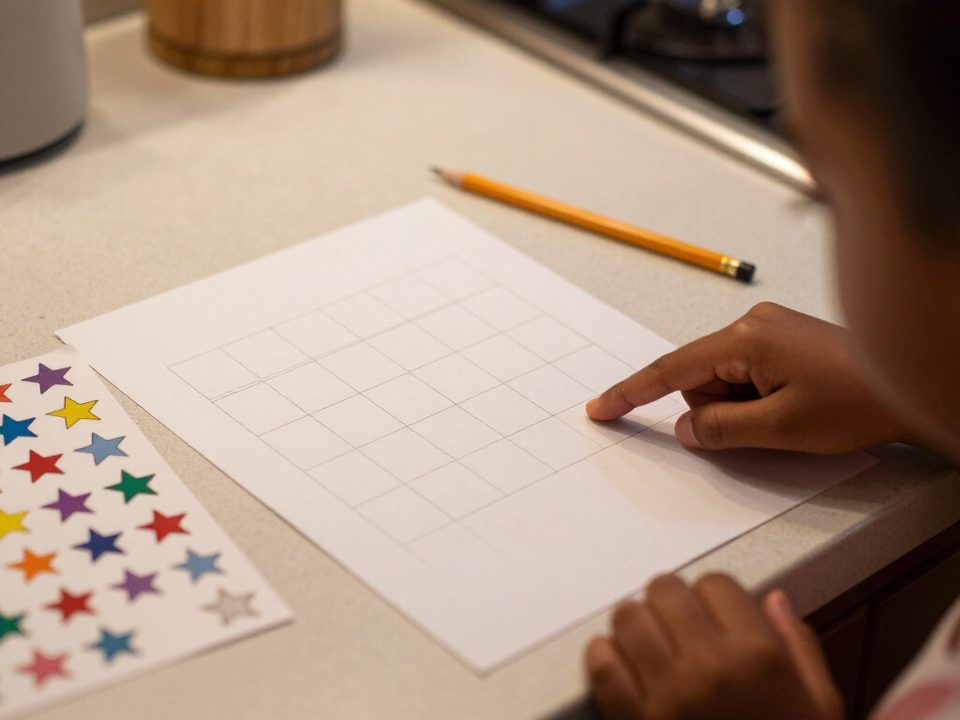
Behavior chart examples for home, with the goals that work
Browse behavior chart examples that work at home, with the goals that keep a child engaged past the first week.
Print it, then stick it to the fridge
Sticker paper that fits every chart on this site, and the bits that keep a chart up all week. Links go to Amazon and we may earn a commission.
Goes with a behavior chart
Smiley stickers, a timer for the short intervals and the magnets that keep it on the fridge.
Questions parents ask
Is the behavior chart template free?
Yes. The blank behavior chart template is free to download and print. You get a one-page PDF in letter and A4, in color and ink saving. No sign-up is needed for this page. You can print as many copies as you want.
Can I type into the behavior chart PDF?
Yes. The PDF has fillable fields for the name, six goals, day headers, and reward line. Open it in any browser or PDF reader, click a field, and type. Then print at 100 percent. You can also print it blank and write by hand.
What behaviors should I put on a chart?
Pick 3 or 4 behaviors that are specific and doable. Write them as positive actions, like brush teeth or put toys away. Avoid vague words like be good. Choose one area to work on at a time, such as the morning routine, and keep goals short.
Should I use a daily or weekly behavior chart?
Use a weekly chart for most kids. It shows the whole week at once and builds patience. Use a daily chart when your child needs a fresh start after lunch or when one routine is the problem. You can also start weekly and switch if it feels too much.