- Home
- Feelings chart for kids, with an emotions color wheel
Feelings chart for kids, with an emotions color wheel
A feelings chart helps a child name a feeling before it becomes a behavior. This page shares a simple feelings chart and an emotions color wheel to use at home.
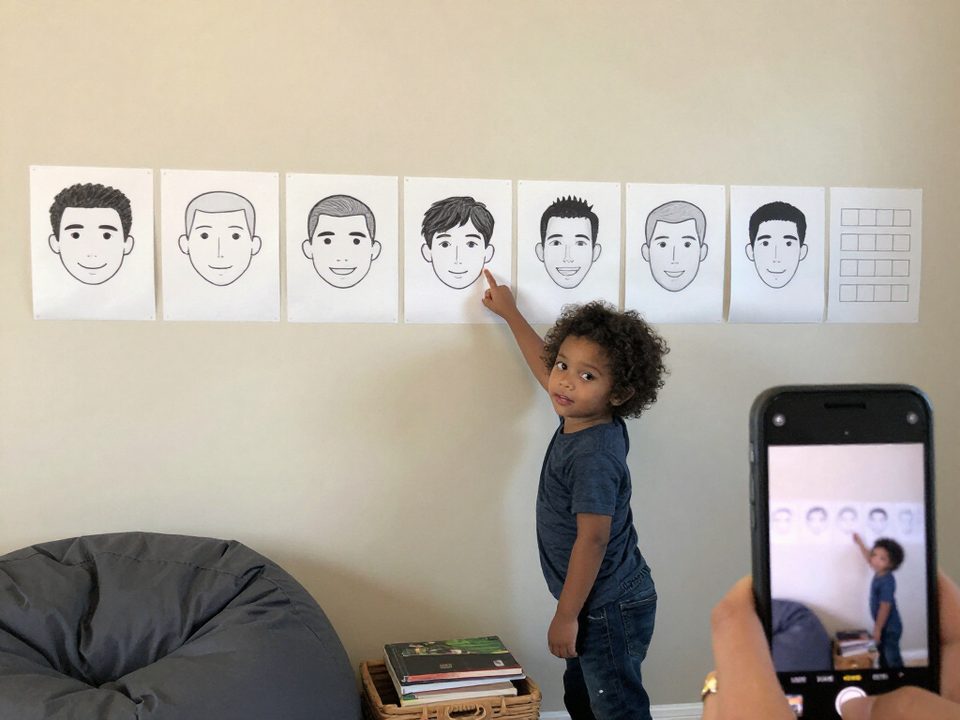
Download the charts
One-page PDFs with a blank name line. Pick paper and ink once, every button changes.
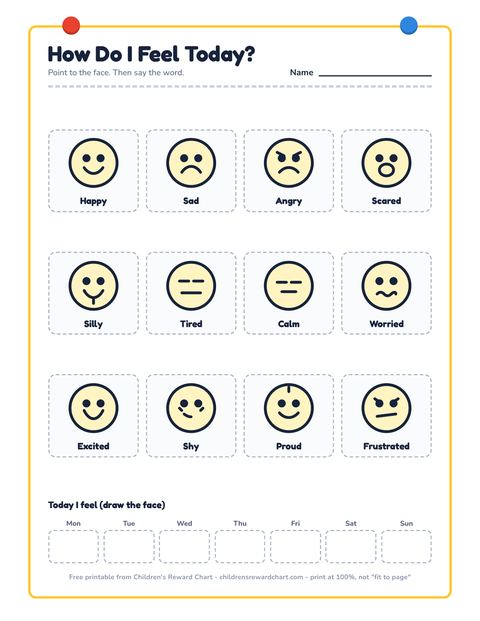
How Do I Feel Today?
12 feeling faces with words, plus a week of 'today I feel' boxes.
Download letter PDF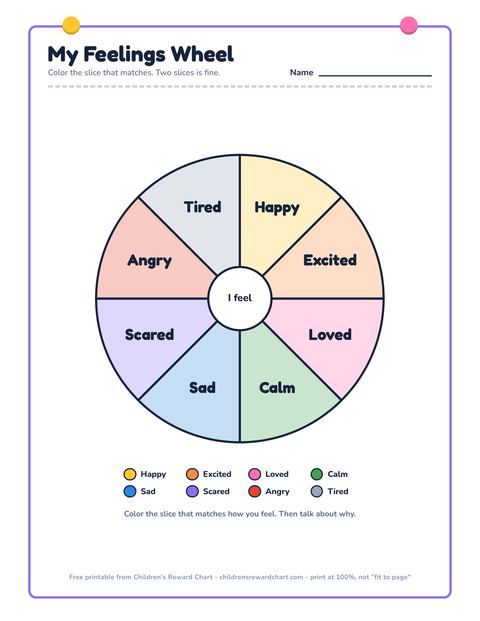

My Feelings Check-In
Weekly feelings check-in: 3 moments a day, 7 days, circles to draw a face in.
Download letter PDF
My Feelings Ladder
Five-step feelings ladder from Calm to Angry, with a clip or a finger.
Download letter PDFWhat a feelings chart is for
A feelings chart gives a child words and colors to show how they feel. It is not a reward chart, so nothing on it earns a sticker.
Put the chart where the child can check in quietly, not on the busiest surface. A calm spot, like a low hook by the door or a bedroom wall, works best for ages 3 to 10.
Use the chart to name a feeling before it becomes a behavior. This helps a child pause and choose what to do next, without medical claims or labels.
The feelings chart
The printable is one page with a row of drawn faces and the feeling word under each face. It has a 'today I feel' line and a blank name line so the child can write or trace there name.
Every chart is a one-page PDF in letter and A4, in a color version and an ink saving black outline version. Print at 100 percent, not "fit to page".
Check in twice a day: at breakfast and after school or before bedtime. A quick, calm check helps the child name the feeling and move on.
If you want more guidance on using check-ins, see this short guide: How are you feeling today chart. You can also grab printable files from the downloads. If you sign up, the builder prints the child’s name on a sticker sheet, a star chart and a chore chart, all made in the browser.
The emotions color wheel
The second printable is an emotions color wheel. It has eight slices in eight colors. The child colors the slice that matches how they feel that moment.
Coloring can be easier than saying the word for some children. It gives a simple choice that still names the emotion. Two adjacent slices are fine when a feeling is mixed.
For a longer mood record, try the mood tracker for kids. The wheel is meant for quick check-ins and simple practice with feelings language.
Colors and emotions
The wheel uses a simple convention: each color links to a feeling and a small idea for what helps. The colors are a convention, not a rule. Let your child pick the match that feels right to them.
| Color on the wheel | Feeling | What helps |
|---|---|---|
| Red | Angry | Deep breaths, a quiet corner |
| Orange | Frustrated | A short break, a toy or task swap |
| Yellow | Happy | Share the feeling, a high five |
| Green | Calm | Keep doing the current activity |
| Blue | Sad | Hug or talk about it |
| Purple | Worried | Name the worry, make a small plan |
| Pink | Excited | Move around, tell someone |
| Gray | Tired or confused | Rest, simplify the task |
Keep the table visible as a quick reference. Encourage your child to try a small strategy that evening or the next day.
Using it without turning it into a test
A feelings chart should stay friendly and low pressure. Avoid asking for an explanation that makes the child defend their choice.
- The parent points to their own feeling too
- Say there are no wrong answers
- Do not offer a sticker for the choice
- Ask 'what would help' instead of 'why did you feel that way'
- Keep the chart up, not hidden away
- Reprint the wheel when colors look worn
If you used a sticker system before, note the difference between this and a chore chart. See how feelings work alongside routines and behavior tools in the behavior charts section or the smiley face chart.
Feelings charts in the classroom
A simple check-in on the way in helps teachers notice a child who needs a quiet minute. Keep it brief and private to avoid singling anyone out.
Use reflection sheets after an incident, and keep a kindness chart for the room to encourage a caring atmosphere. See clasroom tools like the reflection sheets and the kindness page for ideas.
Also in this section: Kindness chart and manners chart. The guide Calm down corner ideas for home and the classroom covers the rest.
More feelings charts
The kindness and manners charts.
Guides on feelings
Short guides that end at a chart you can print tonight.

The 'how are you feeling today' chart: how to use a daily check-in
Use a daily check-in chart to help your child name feelings, and know what to do with the answer.

A mood tracker for kids: what to record and when to stop
Know what to record on a mood tracker, how long to keep it going, and when to stop before it becomes a chore.
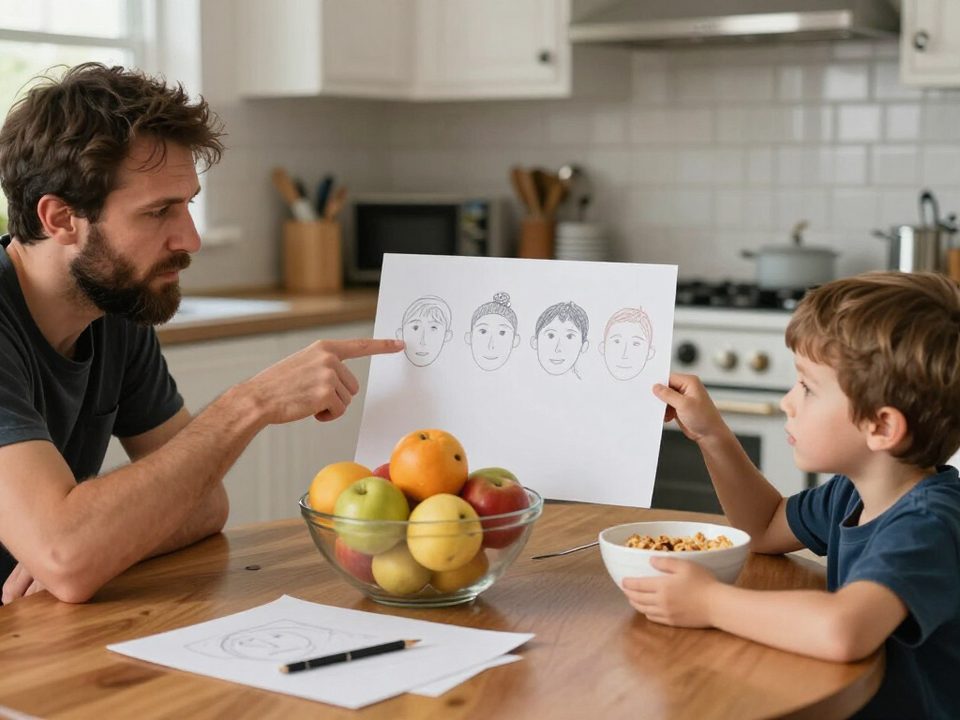
'What emotion am I feeling?' Helping a child name it
Help your child name what they feel, using a simple chart that turns big feelings into words.
Print it, then stick it to the fridge
Sticker paper that fits every chart on this site, and the bits that keep a chart up all week. Links go to Amazon and we may earn a commission.
Goes with a feelings chart
Feelings cards and a calm corner kit for the spot the chart hangs in.
Questions parents ask
What is a feelings chart for kids?
A feelings chart helps a child name an emotion before it becomes a behavior. It is a simple, nonpunitive check-in that teaches words and small coping steps. Use it daily for ages 3 to 10.
How do I use a feelings chart with a toddler?
Keep it very short. Point to two faces and ask which one matches. Let the toddler color a slice on the wheel if they can hold a crayon. Offer a gentle action, like a hug or a short play break.
What do the colors mean on an emotions chart?
Colors link to feelings by a simple convention. Each color names a feeling and a small idea for what helps. Let your child pick the match that feels right, and remind them colors are not rules.
Should a feelings chart have rewards?
No. A feelings chart should not be a reward chart. It helps name emotions, not earn stickers. Keeping it sticker free reduces pressure and keeps check-ins honest.
Can a feelings chart be used in a classroom?
Yes. Use brief check-ins as children arrive, and keep responses private. Pair the chart with reflection sheets after incidents, and use classroom kindness tools to support the group.