The 'how are you feeling today' chart: how to use a daily check-in
A 'how are you feeling today chart' is a daily check-in tool. The routine only works if the adult points to their own face first. Then the child points, and you decide together what might help.

The 'how are you feeling today chart' is a simple tool, but the point is not the chart. The point is the twenty seconds you spend looking at it together. This guide shows you how to use a daily check-in so it actually becomes a habit.
What a feelings check-in is
A feelings check-in is one question and one point. You ask 'how are you feeling today' and the child points to a face on the chart. That is the whole thing. It takes twenty seconds, not twenty minutes.
This is not a reward chart and it is not therapy. It is a daily reading of the weather inside. You are not trying to fix the feeling. You are just noticing it. There are no medical claims here, just a conversation.
The chart gives the child words for what they already feel. You can use one of the feelings charts to start. The routine is what matters more than the paper.
The adult goes first
The check-in only works if the adult goes first. If you point to your own face before asking the child, the power shifts. You are not testing them. You are sharing a routine.
Say: 'I am going to point first. Today I feel tired, so I am pointing at the tired face.' Then you point. The child learns from watching you pick 'tired' that they do not have to pick 'happy' to please you. They learn that all feelings are allowed.
This one move teaches more than any words. The child sees that the chart is for everyone, not just for kids. That is why the adult goes first every single time.
When to do it
Pick one moment and stick to it. The same moment every day is what makes it a routine. You can do it at breakfast, after school, or at bedtime. Here is a simple guide for home and for class.
| Moment | At home | In class |
|---|---|---|
| Morning | At the breakfast table | By the door at arrival |
| After school | At the kitchen counter | Not used, school is over |
| Lunch | Not used, too rushed | After lunch, before work |
| Bedtime | On the bed | Not used, school is done |
| End of day | Not needed, bedtime works | Last 5 minutes of class |
Pick just one of these moments. If you do it at the same time every day, the child will start to expect it. That is the habit. If you miss a day, do not worry. Just do it again the next day at the same time.
The faces on the chart
The feelings chart printable has more than just happy and sad. It has faces for tired, angry, worried, calm, and a few others. There are more faces because children feel more then two things.
The 'today I feel' line is at the bottom. The child can point to one face, or they can point to two. If they point to two, that is fine. You can say 'you look a bit tired and a bit worried' and leave it at that.
You do not need a chart with ten faces. Five is enough for a young child. The point is that the child can find a face that matches their body, not that the chart is perfect. You can print one from the downloads page.
What to say after the child points
Your response after the child points decides if they will point again tomorrow. Keep it open. Do not fix it. Here are eight responses that keep the door open.
1. 'What would help right now?' 2. 'Me too some days.' 3. 'Want to tell me about it or just point?' 4. 'That one again tomorrow?' 5. 'I can sit with you for a minute.' 6. 'Do you want a hug or some space?' 7. 'That is a good one to notice.' 8. 'Okay, I see that face.'
And here are four things not to say. Do not say 'you are fine'. Do not say 'stop crying'. Do not say 'that is not a real feeling'. Do not say 'if you point at the happy face, you get a sticker'. The chart is not a trick.
Using the color wheel instead
Some children will not point at a face. They will color, but they will not talk. For that child, use a color wheel instead. The wheel has colors for feelings, like red for anger and blue for sad.
Ask the child to color in the slice that matches their day. Two slices is fine. They can color one slice blue and one slice yellow. You do not need to ask what the colors mean. The child knows.
Put the wheel on the fridge for a week. At the end of the week, you can look at the colors together. You might see a pattern. You can say 'I see a lot of red on Tuesday' and let the child decide if they want to say more. This is a quieter way to do the same check-in.
The check-in in a classroom
In a classroom, the chart goes by the door. Each child has a clip with their name on it. When they come in, they move their clip to the face that matches their morning. The teacher has their own clip on the chart too.
The teacher's clip is not optional. If the teacher points to 'tired' on a Monday morning, the class sees it. That is the adult going first, even in a group. It takes each child three seconds to move their clip.
If a child puts their clip on the red face, that is a red flag. It does not mean they are in trouble. It means you check in with them later, one on one. You can use the reflection sheets for this. You are not punishing the red face. You are noticing it.
When the answer is always the same
If the child always picks the same face, do not push. If they always pick 'angry', that is information. It does not mean you failed. It means the feeling is big right now.
Change the moment. If you always ask at bedtime and they always say 'angry', try asking at breakfast instead. Or try the color wheel for a week. Keep the chart up on the wall. Do not take it down because it is not working. The chart is working. The answer is just repetitive.
If you are worried about the child, ask for help from a doctor or a school counselor. This chart is a tool, not a diagnosis. It is not a replacement for professional support. But for most days, the same answer just means the child feels safe saying the same thing. That is okay. You can use a mood tracker for kids to see the pattern over time.
Charts that go with this guide
Free one-page PDFs with a blank name line. Pick paper and ink once, every button changes.
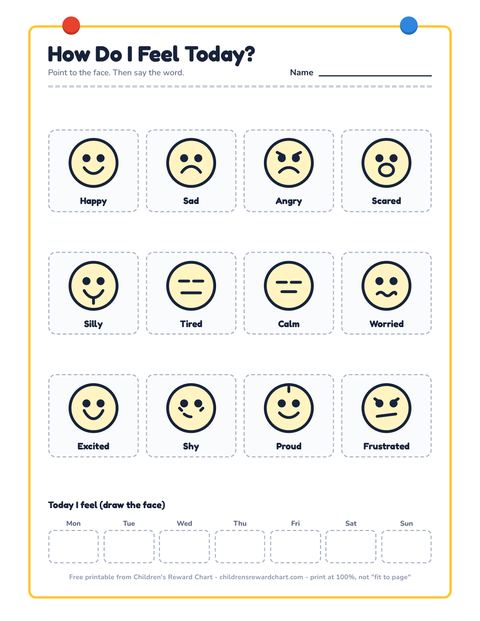
How Do I Feel Today?
12 feeling faces with words, plus a week of 'today I feel' boxes.
Download letter PDF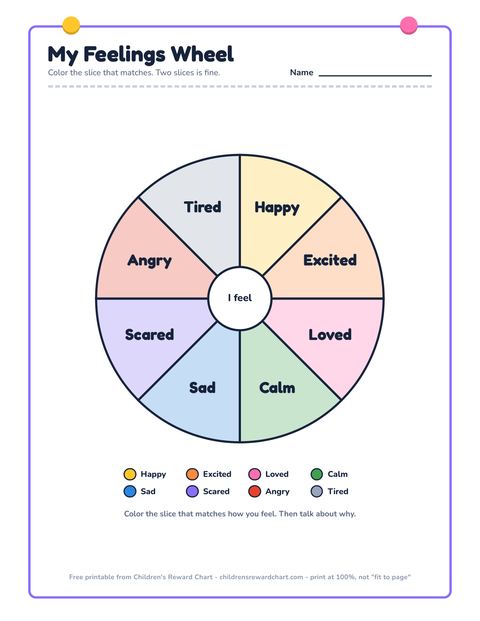

My Feelings Check-In
Weekly feelings check-in: 3 moments a day, 7 days, circles to draw a face in.
Download letter PDF
My Feelings Ladder
Five-step feelings ladder from Calm to Angry, with a clip or a finger.
Download letter PDFStickers and paper for the chart
The reinforcer has to be in the drawer before the first star is earned. Links go to Amazon and we may earn a commission.
Questions parents ask
What is a 'how are you feeling today' chart?
It is a chart with a few faces on it, like happy, sad, tired, and angry. The child points to the face that matches how they feel. It is used for a daily check-in. The adult points first. It takes about twenty seconds a day.
What age can start a feelings check-in?
A child around two years old can point to a face. A three year old can understand 'show me how you feel'. The chart works for ages two to eight. Older kids can use the color wheel or a written version instead.
How often should we do the feelings check-in?
Once a day is enough. Pick the same moment every day, like after breakfast or before bed. Doing it more than once a day can feel like a lecture. Once a day, every day, is the habit that works.
What if my child always picks the same face?
Do not push them to change the answer. Just notice it. You can say 'that one again today' and leave it. You can also change the time of day you ask. If you are worried, ask a doctor for advice. The chart is just a check-in.
Should the feelings chart have rewards?
No. If you give a sticker for pointing at the happy face, the child will learn to lie. The chart is for noticing, not for earning. Keep the chart separate from any routine charts that use rewards.
Read next
Short guides that end at a chart you can print tonight.

A mood tracker for kids: what to record and when to stop
Know what to record on a mood tracker, how long to keep it going, and when to stop before it becomes a chore.
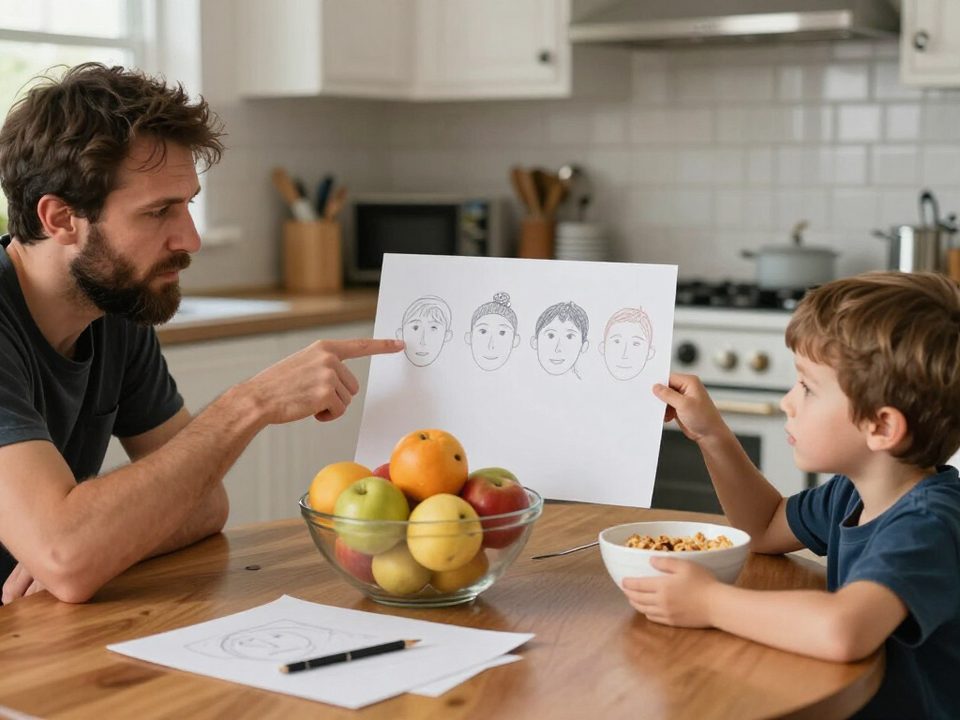
'What emotion am I feeling?' Helping a child name it
Help your child name what they feel, using a simple chart that turns big feelings into words.

Calm down corner ideas for home and the classroom
Set up a calm down corner at home or in class, with ideas that give a child a place to reset.