- Home
- Chore charts for kids
Free printable chore charts for kids
A chore chart for kids is one of the simplest habit tools you can use tonight. This free printable chore chart for kids starts with just three chores, so it survives the week. No complicated systems, no extra supplies. Print it, hang it, and let your child place the first sticker tomorrow morning.

Download the charts
One-page PDFs with a blank name line. Pick paper and ink once, every button changes.

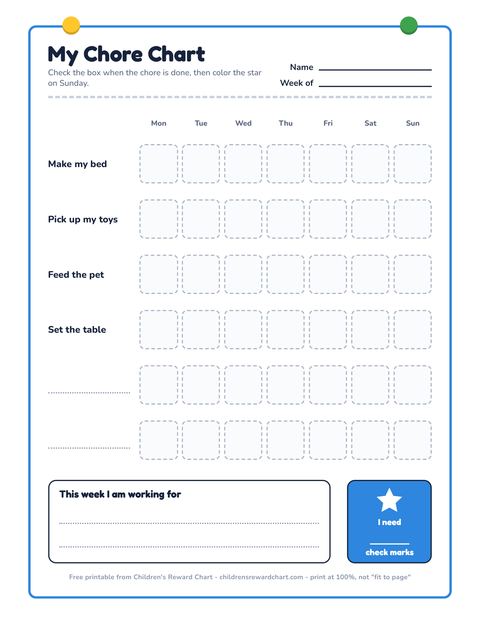
My Chore Chart
Weekly chore chart with 4 common chores filled in and 2 blank lines.
Download letter PDF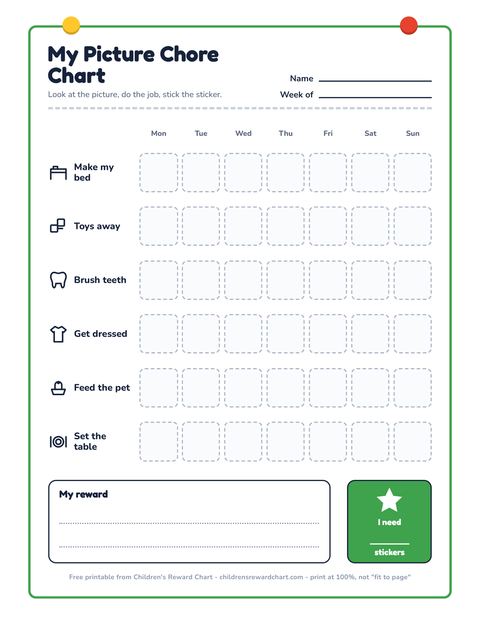
My Picture Chore Chart
Picture chore chart for children who cannot read yet, 6 icon tasks.
Download letter PDFChore charts by age
The number of chores and the reward timing change with age. Each page has its own chart.
Chores and chore chart for 3 year olds
Picture chore chart, 3 tasks
Free printableChores and chore chart for 4 year olds
Picture chore chart
Free printableChores and chore chart for 5 year olds (kindergarten)
Kindergarten chore chart
Free printableChores for 6 year olds
Weekly chore chart
Free printableChores for 7 year olds
Weekly chore chart
Free printableChores for 8 year olds
Weekly chore chart with points
Free printableChores for 9 and 10 year olds
Points chore chart
Free printableChores for 11 and 12 year olds (tweens)
Points + allowance chart
Free printableChore chart for teenagers
Teen responsibility chart
Free printableWhat a chore chart is for
A chore chart builds a daily habit out of chores the child can already do. It is not a punishment log for missed tasks. It is a visual reminder of small wins, one sticker at a time.
Hang the chart at kid height on the fridge or a bedroom door. The child places the sticker on the chart, not you. That small act makes the routine theirs.
Keep the tone positive. The chart shows what the child did, not what they failed to do. That is why it works.
If you want the reasoning behind the layout, start with The best chore chart for kids, by family and by age.
How many chores, and which ones, by age
The number of chores on the chart matters more than the type. Start small and build. Use the table below as a guide.
| Age | Chores at once | Examples | Reward timing |
|---|---|---|---|
| 3 | 1 to 2 | Put toys in bin | Same day |
| 4 | 2 to 3 | Feed pet, set napkin | Same day |
| 5 | 3 | Make bed, sort laundry | Same week |
| 6 to 7 | 3 to 4 | Clear table, sweep | Same week |
| 8 to 10 | 4 to 5 | Fold laundry, load dishes | Points total |
| 11 to 12 | 5 to 6 | Take trash, cook simple | Weekly points |
Setting up the chart in one evening
You can have the chart on the fridge in under ten minutes. Follow these five steps tonight.
- Pick three chores your child can already do.
- Agree on the reward and write it on the chart.
- Print the chart in letter or A4, color or ink saving.
- Hang it at your child's eye level.
- Give the first sticker the next morning after the first chore.
That first sticker is the hook. It shows the child the system works. The reward comes the same week, so the habit has a chance to stick.
Rewards that keep a chore chart going
Small and soon beats big and far away. For young children, a weekly reward like a park visit or a special breakfast works best. For kids 8 and up, a points total that leads to a bigger prize keeps interest alive.
Non-food rewards work well: choosing the family movie, staying up 15 minutes later, pikcing a game for game night. See the rewards page and the reward ideas page for more.
Write the reward on the chart in the blank space. That makes the deal visible and keeps you honest.
Allowance or no allowance
Both ways work, as long as you are consistant. Some families pay for extra jobs, not for family chores. That keeps the chart about contribution, not payment.
If you use allowance, use the allowance chart to track payday. Keep the amount small and the schedule regular. The chart is a habit tool, not a bank.
Printing and hanging it
Every chart is a one-page PDF in letter and A4. Print at 100 percent, not fit to page, so the boxes stay the right size. The ink saving version is great for weekly reprints.
The reward boxes fit a 1.5 inch round sticker or a 1/2 inch star sticker. A magnet sheet or a laminating pouch keeps the chart on the fridge for the week. Use one chart per child and write the name on the blank line.
For more options, see the templates page or the family chore charts page. The downloads page has all the printables in one place.
Also in this section: Chores for 11 and 12 year olds (tweens), Chores for 7 year olds, with a weekly chore chart, Chore chart for teens.
More chore charts
Templates, family grids, allowance and reward coupons.
Chore chart with allowance and payment
Allowance chart + payday tracker
Free printableChores for kids by age (3 to 12)
Age ladder chart, one PDF per age
Free printableFamily chore chart (multiple kids, weekly, monthly)
Family weekly grid, 2 to 4 kids
Free printableChore chart rewards, ideas and chore boards
Reward coupons pack
Free printablePrintable chore chart templates (blank, editable PDF)
Blank + editable fillable PDF, letter + A4
Free printableGuides on chores and rewards
Short guides that end at a chart you can print tonight.
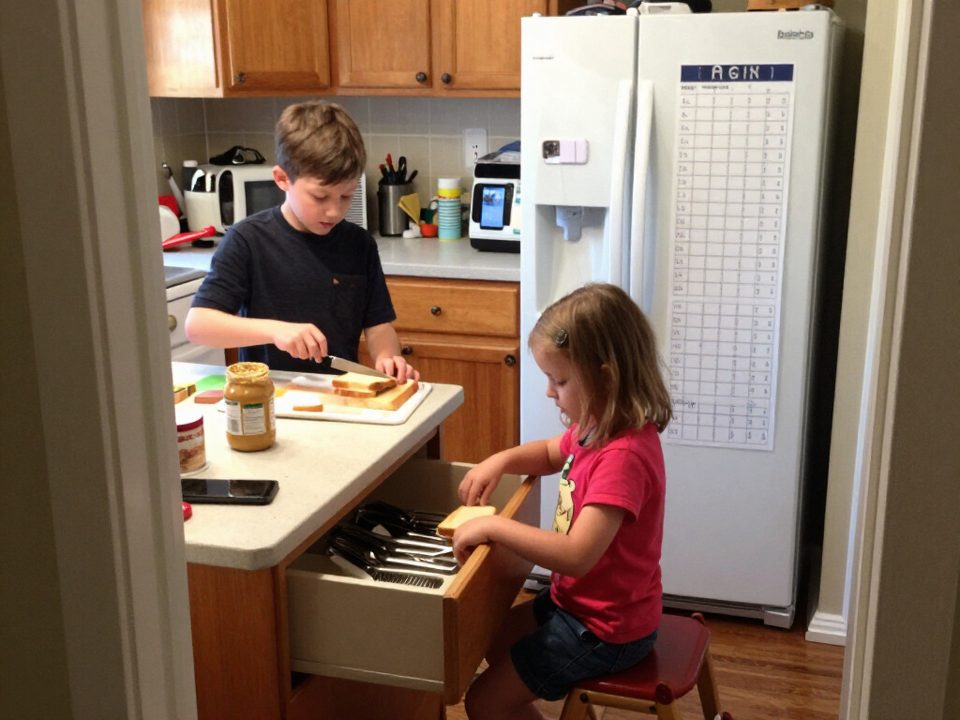
Should kids have chores? What changes at 3, 6 and 10
See what changes for chores at age 3, 6, and 10, and match the right chore chart to your child's stage.

How to make a chore chart that lasts past the first week
Build a chore chart that lasts past the first week, with simple steps you can do tonight.

How to get kids to do chores without nagging
Get kids to do chores without nagging, using a chart that makes the next step obvious.
Print it, then stick it to the fridge
Sticker paper that fits every chart on this site, and the bits that keep a chart up all week. Links go to Amazon and we may earn a commission.
Goes with a chore chart
A magnetic board for when paper has done its six weeks, a timer and the kid-size tools.
Questions parents ask
How many chores should a 5 year old have on a chore chart?
Start with three chores on a 5 year old's chore chart. Pick tasks they can already do, like making the bed or putting toys away. Add a fourth chore only after the first three become routine. Fewer chores mean more stickers and a stronger habit.
Should chores be paid?
That is a family choice. Many parents keep family chores unpaid and pay for extra jobs. If you do pay, use the allowance chart to track it. The important thing is that the chore chart builds the habit, not the payment.
What do I do when my child stops caring about the chart?
Take a break, then restart with a new reward. Sometimes the chore list needs a change, or the reward lost its appeal. Keep the chart simple and bring it back in a week. The habit is the goal, not the paper.
What is the difference between a chore chart and a reward chart?
A chore chart lists specific tasks like making the bed or feeding the cat. A reward chart tracks behaviors like sharing or using kind words. Both use stickers and rewards, but the focus is different. Chore charts build routines, reward charts shape behavior.
Can one chart work for two or three children?
One chart for several children gets messy. Each child needs their own chart with their own name and chores. That way, each child sees their own progress and earns their own reward. Use the family chore chart page for a shared list if you want to split tasks.