- Home
- Chore charts
- Chore chart rewards, ideas and chore boards
Chore chart rewards, ideas and chore boards
A chore board is a simple way to keep track of chores and rewards in one place. These chore chart ideas focus on rewards for chores that cost you time, not money. You can print a free chore board tonight and have it on the fridge before breakfast.
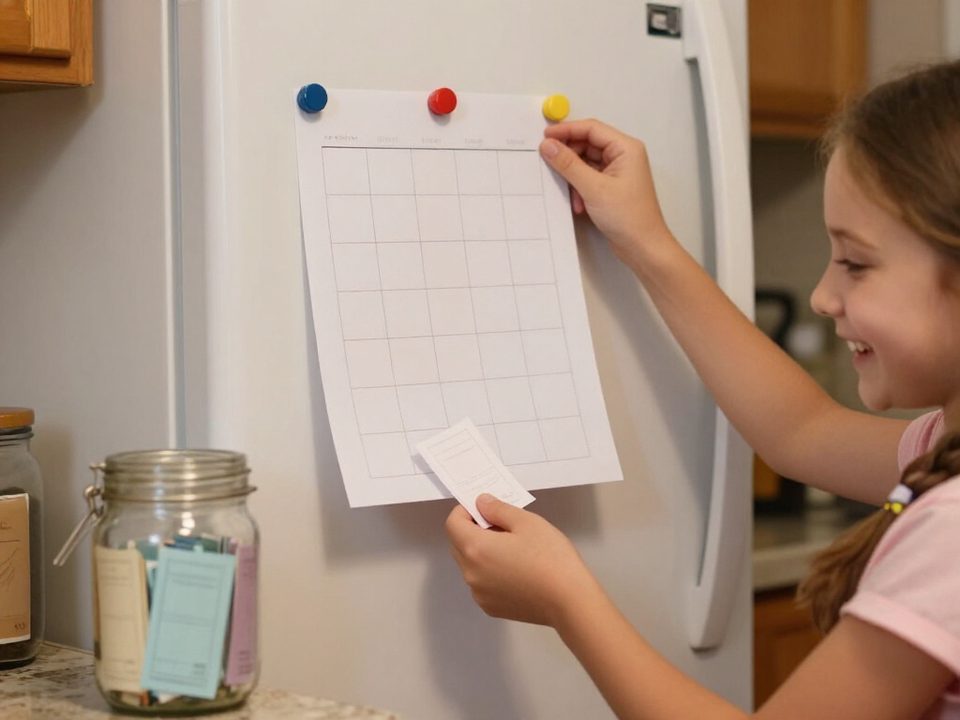
Download the charts
One-page PDFs with a blank name line. Pick paper and ink once, every button changes.
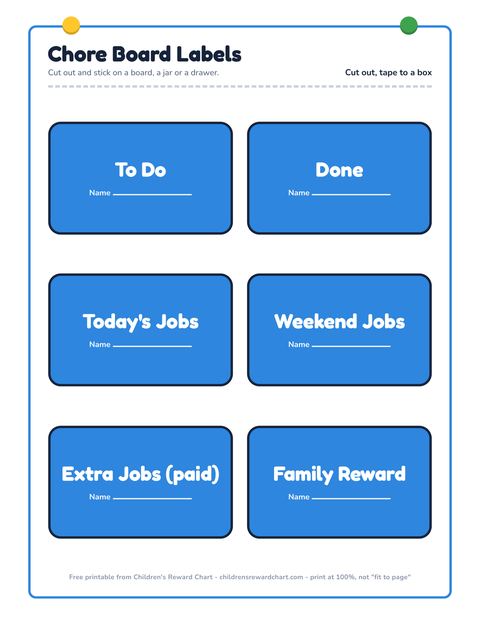
Chore Board Labels
6 labels for a chore board: To do, Done, Extra jobs, Family reward and more.
Download letter PDFRewards for chores that cost time, not money
The best reward for a child is often something you do together. A trip to the park or an extra story costs you nothing but a few minutes. These chore reward ideas are all about your attention, not a toy from a store.
Group the rewards by age so the child feels the prize fits. A 4 year old wants a late breakfast with you. A 10 year old wants control of the playlist on a car ride. Write the reward on a coupon and let the child see it.
For more on this, read How to get kids to do chores without nagging.
- Under 6: extra story at bedtime
- Under 6: choose dinner for one night
- Under 6: stay up 20 minutes later
- Under 6: a board game with a parent
- Under 6: park trip after school
- 6 to 9: control of the playlist in the car
- 6 to 9: a friend over for an hour
- 6 to 9: choose the family movie
- 6 to 9: a late breakfast in bed
- 6 to 9: pick a new library book
- 10 plus: stay up 30 minutes later
- 10 plus: choose the weekend activity
- 10 plus: a walk with just one parent
- 10 plus: make a simple dessert together
- 10 plus: no chores for one evening
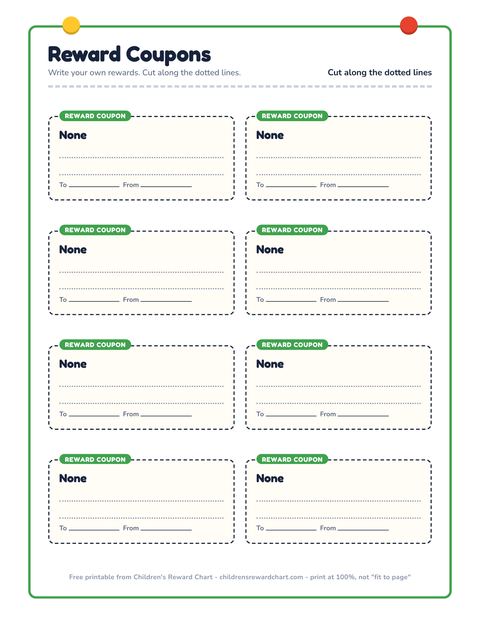
Print these reward coupons from the free printable on this page. Fill in the reward with a marker and let the child decorate the back. The coupon becomes a promise you can keep.
Chore chart ideas that keep the chart alive
A chore chart often dies after two weeks because it becomes boring. The fix is to change one small thing every week. These chore chart ideas keep the child curious and the chart part of your routine.
Rotate one chore weekly so no one is stuck with the same job. Use a mystery reward envelope for a surprise. A bonus row lets a child earn extra for going beyond the list.
- Rotate one chore weekly
- Mystery reward envelope with a hidden coupon
- Bonus row for extra effort
- Let the child decorate the chart with stickers
- Family reward when everyone finishes together
- Take a photo of the finished job and tape it on
- Laminate the chart and use a dry-erase marker
- Add a new chore every month
- Let the child pick the order of chores
- Use a timer for a race against the clock
The photo trick works well for younger kids. They see the bed made or the toys sorted and feel proud. The chart stays alive because it changes with the child.
Using the reward coupons
The printable on this page is a sheet of blank reward coupons. You fill in the reward with a pen, cut them out, and keep them in a jar or envelope. The child picks one coupon on Sunday for the week ahead.
Aim for one to three coupons per week, depending on the child's age. A younger child needs a reward sooner than an older one. Keep the drawn coupons in a jar so the child can see the progres.
Chore boards: magnetic, dry-erase and pocket boards
A chore board on the fridge beats paper when you have more than one child or when the chart runs longer than six weeks. A board is easier to update and harder to lose. The three kinds each suit a different family.
Magnetic boards work well for a single child who likes to move magnets. Dry-erase boards are best for older kids who can write their own checkmarks. Pocket boards let you slide in new chore cards without rewriting.
| Board type | Best for | Downside |
|---|---|---|
| Magnetic | One child, ages 3 to 6 | Magnets can get lost |
| Dry-erase | Older kids, ages 7 to 10 | Smudges if touched |
| Multiple kids | Cards need printing |
See the boards and stickers page for the exact boards and stickers mentioned on this site. You can also print a paper chart and tape it to a cookie sheet for a cheap magnetic board.
Chore and reward chart together
A chore chart and a reward chart work best as a pair. The chore chart tracks the job, and the reward chart tracks the points or stickers. On every chart here, there is a reward line at the bottom for the child's goal.
When the child earns a set number of stickers, the reward line shows what they get. Move to points when the child is older and can save for a bigger reward. This keeps the system simple and honest.
For more reward ideas, see the reward ideas page. You can also pair the chore chart with an allowance chart if you want to add money later. The printable chore chart is free on the templates page.
More chore charts
Every page hands out its own chart. All chore charts.
Chores for 11 and 12 year olds (tweens)
Points + allowance chart
Free printableChores and chore chart for 3 year olds
Picture chore chart, 3 tasks
Free printableChores and chore chart for 4 year olds
Picture chore chart
Free printableChores and chore chart for 5 year olds (kindergarten)
Kindergarten chore chart
Free printableChores for 6 year olds
Weekly chore chart
Free printableChores for 7 year olds
Weekly chore chart
Free printableChores for 8 year olds
Weekly chore chart with points
Free printableChores for 9 and 10 year olds
Points chore chart
Free printableChore chart with allowance and payment
Allowance chart + payday tracker
Free printableChores for kids by age (3 to 12)
Age ladder chart, one PDF per age
Free printableFamily chore chart (multiple kids, weekly, monthly)
Family weekly grid, 2 to 4 kids
Free printableChore chart for teenagers
Teen responsibility chart
Free printablePrintable chore chart templates (blank, editable PDF)
Blank + editable fillable PDF, letter + A4
Free printableGuides on chores and rewards
Short guides that end at a chart you can print tonight.
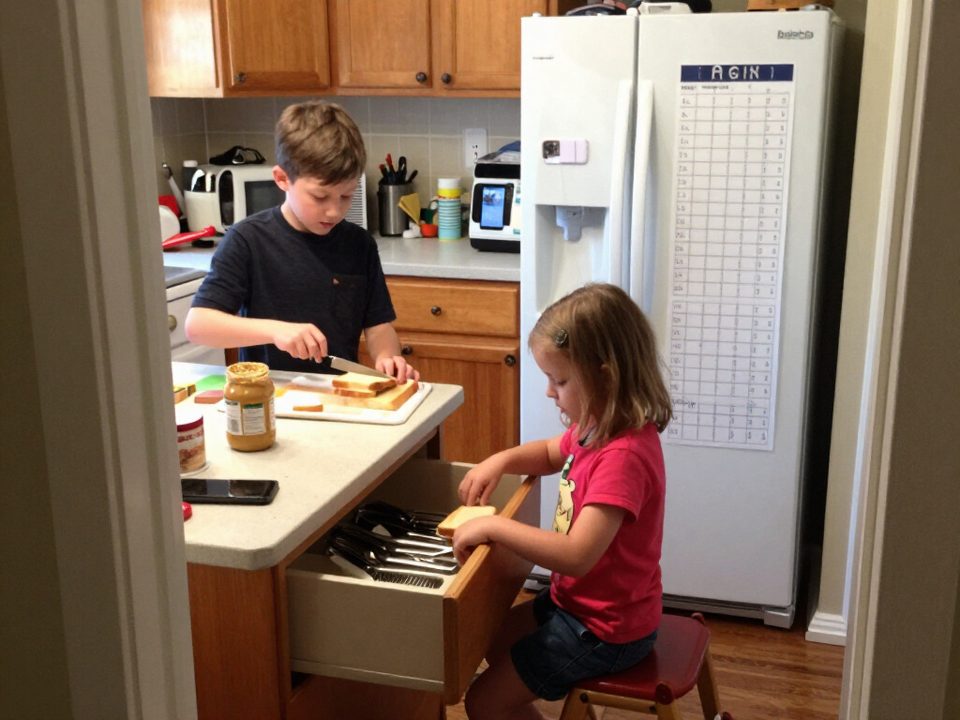
Should kids have chores? What changes at 3, 6 and 10
See what changes for chores at age 3, 6, and 10, and match the right chore chart to your child's stage.

How to make a chore chart that lasts past the first week
Build a chore chart that lasts past the first week, with simple steps you can do tonight.

How to get kids to do chores without nagging
Get kids to do chores without nagging, using a chart that makes the next step obvious.
Print it, then stick it to the fridge
Sticker paper that fits every chart on this site, and the bits that keep a chart up all week. Links go to Amazon and we may earn a commission.
Goes with a chore chart
A magnetic board for when paper has done its six weeks, a timer and the kid-size tools.
Questions parents ask
What are good rewards for chores?
Good rewards cost time, not money. Think of an extra story, a board game with a parent, or choosing dinner for the night. The child values your attention more than a toy. Write the reward on a coupon and let the child pick one on Sunday.
What is a chore board?
A chore board is a visual tool that lists chores and tracks completion. It can be a magnetic board, a dry-erase board, or a pocket board. The board shows what needs to be done and when the child earns a reward. It makes the routine visible and consistent.
Should I use a chore board or a paper chart?
Use a paper chart for one child and a short-term goal under six weeks. Use a chore board for multiple children or long-term tracking. A board is easier to update and more durable. You can also tape a paper chart to a fridge with magnets.
How often should a child get a reward for chores?
A child under 6 should get a reward every day or every other day. A child 6 to 9 can wait a week. A child 10 plus can wait two weeks. Keep the reward small and immediate for younger kids. Adjust the frequency if the child loses interest.