Should kids have chores? What changes at 3, 6 and 10
Yes, kids should have chores starting at age 3. Chores build competence, so a child can make a sandwich at 8 and run a trash night at 10. The guide shows what changes at 3, 6 and 10.
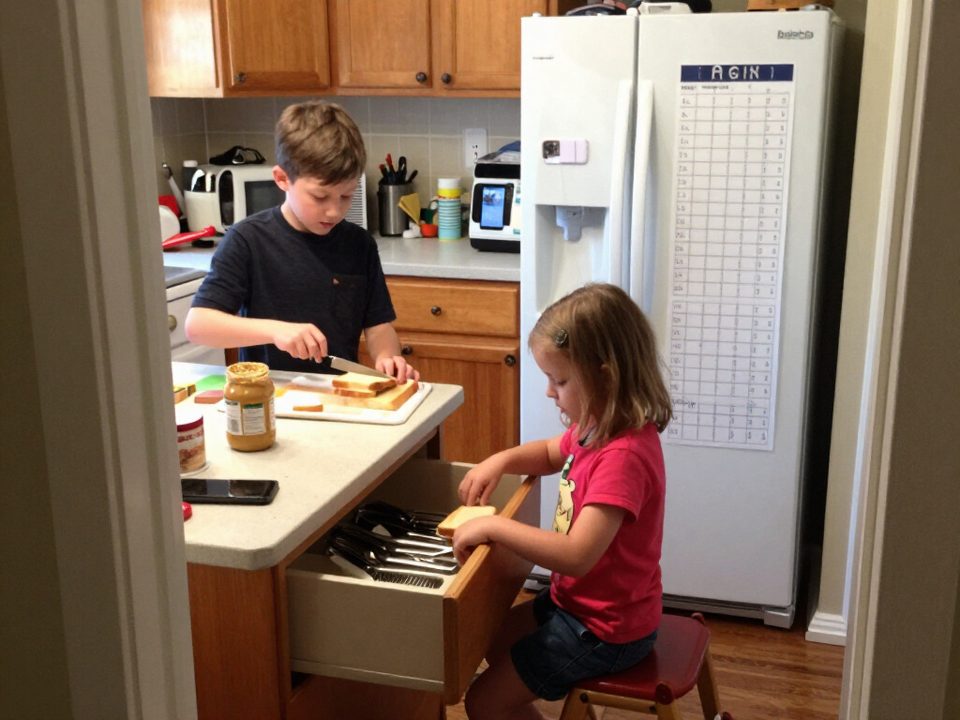
Should kids have chores? Yes, and the reason is not character, it is competence. A child who can make a sandwich at 8 is a child who does not need one made. Start at 3, and the skills build from there.
The short answer
Yes, kids should have chores from age 3. The goal is not to build character or teach responsibility as an idea. The goal is competence: a child who can do real things for themselves.
When your child can pour their own milk, pack their own snack, or load the washer, your job changes. You stop being the doer and become the coach. That shift is the point.
Chores are not a test of willpower. They are practice. A 3 year old practices putting toys away. A 6 year old practices a standard. A 10 year old practices a schedule. No statistics needed to see the result.
At 3: chores are play with a result
A 3 year old can put toys in a bin, match socks, wipe a table, and drop clothes in a hamper. They can feed a pet with you watching. They can water a plant with a small cup.
It takes longer than doing it yourself. That is the point. The extra 5 minutes now buys you years of a child who does not wait to be asked.
Use a picture chart so they see the steps without reading. Print the chart for 3 year olds, tape it low on the fridge, and point to the picture. Do the chore toegther once, then let them lead.
- Put toys in the bin
- Match socks
- Wipe the table
- Drop clothes in the hamper
- Feed a pet with help
Pick two or three of these, not all. A 3 year old handles three boxes better than ten.
At 6: chores are the standard
A 6 year old can own a chore completely. Make the bed, clear their plate, sort laundry, sweep the kitchen floor. They can do it without you standing there, but they need to know what done looks like.
Write the standard down. A bed is made when the pillow is on top and the blanket is straight. The table is cleared when the plate is in the sink and the cup is in the bin. This stops the arguments about done.
The first arguments will happen. That is normal. Point to the written list, not your mood. Use a weekly chart so they see the pattern across days. Find the 6 year old chart and print it tonight.
One rule keeps it fair: if it is not done, it is not done. No partial credit. They learn that done means done.
- Make the bed
- Clear their plate
- Sort laundry
- Sweep the kitchen floor
- Empty the small trash bins
Three chores is enough at this age. Add one when the first three are routine.
At 10: chores are a schedule
A 10 year old can run a schedule. Trash night means the bins go out before dinner. A meal means they can make a sandwich, cut fruit, and pour drinks. They can load the dishwasher and start it.
The reminder rule is simple: you remind once. If it is not done, the consequence is natural, the trash stays, the meal is late. You do not nag.
Points and money can start here. Family chores stay unpaid. Extras, like washing the car or organizing a closet, earn points or a small amount. The allowance chart tracks both.
A 10 year old who runs trash night without being asked is not a miracle. It is a habit built over years. The 9-10 year old chart lays out the week.
- Take out trash and recycling
- Make a simple meal
- Load and start the dishwasher
- Fold and put away laundry
- Clean the bathroom sink and mirror
Let them pick which chores they own. Ownership beats assignment.
What chores teach that school does not
School teaches letters, numbers, and facts. Chores teach the physical, repeatable skills of running a life. Here are eight competences a child builds with chores.
These are not abstract. They are the things a child can do for themselves, and for the family, before they leave elementary school.
- A sandwich: bread, filling, cut, on a plate
- Laundry: sort, wash, dry, fold, put away
- A clean bathroom: sink, mirror, toilet, floor
- A shopping list: check the fridge, write what is missing
- A pet kept alive: food, water, walk, attention
- Time: a 10 minute task, a 30 minute task, a deadline
- A fair split: who does what, and how to trade
- Finishing: the last step, not the first one
Each one is a small win. Together, they make a child who does not panic when a meal needs making or a mess needs cleaning.
The arguments against, answered
You have tried a chart before and watched it fizzle. You are not alone. Here are the common objections and what to do instead.
The fix is usually not more stickers. It is a smaller list, a clearer standard, or a better time of day.
| Objection | What is true in it | What to do instead |
|---|---|---|
| They are too busy | School and activities fill the day | Pick one 10 minute chore before screen time |
| It is faster to do it myself | It is, at first | Do it together for a week, then step back |
| It causes fights | Arguing about done is common | Write the standard down and point to it |
| They should just help without a chart | Intrinsic help is nice, but rare | Charts make the expectation visible and fair |
| School is their job | Learning matters | Chores are part of family life, not a job |
The chart is not the enemy. It is the neutral referee. When the chart says done, you do not have to.
Paid or unpaid
Family chores are unpaid. Everyone who lives in the house helps keep it running. That is the rule. It is not about money, it is about being part of the family.
Extras are paid. A job beyond the regular list, like washing windows or cleaning out the garage, earns points or a small amount. This teaches the link between work and money without turning the family into a workplace.
Use two charts: one for family chores, one for extras. The family chart tracks the unpaid list. The allowance chart tracks points and pay. Keep them separate so the message stays clear.
Starting this week
Do not overhaul everything tonight. Start small and make the first sticker happen tomorrow. Here is the five step plan.
- Pick the age page for your child
- Print the chart at 100 percent, not fit to page
- Choose three chores from the age list
- Do them together once, showing the standard
- Put the first sticker on tomorrow morning
The age page has the right chart for your child. The guide on making a chart covers the common mistakes. Print tonight, start tomorrow.
Charts that go with this guide
Free one-page PDFs with a blank name line. Pick paper and ink once, every button changes.

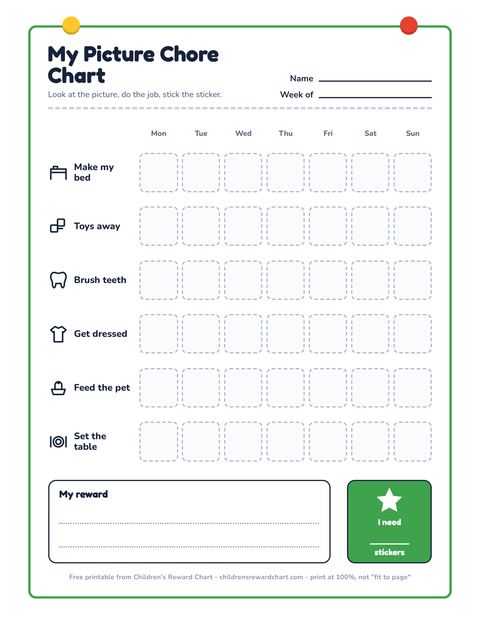
My Picture Chore Chart
Picture chore chart for children who cannot read yet, 6 icon tasks.
Download letter PDF
Stickers and paper for the chart
The reinforcer has to be in the drawer before the first star is earned. Links go to Amazon and we may earn a commission.
Questions parents ask
Should kids have chores?
Yes. Chores build competence, not just character. A child who can make a sandwich, do laundry, and run a trash night is a child who can manage parts of their own life. Start at 3 with simple tasks and build from there.
At what age should kids start chores?
Start at 3. At that age, chores are play with a result. They can put toys away, match socks, and wipe a table. The skill is the habit, not the perfection. Start with two or three tasks and do them together.
How many chores should a child have?
Three chores is a good number for most ages. A 3 year old can handle three simple tasks. A 6 year old can own three routines. A 10 year old can run three bigger jobs. Add one when the current three are routine.
Should kids get paid for chores?
Family chores should be unpaid. Everyone helps the house run. Extras, like washing the car or cleaning the garage, can earn points or a small amount. Use two charts: one for family chores, one for paid extras.
What if my child refuses to do chores?
Remind once, then let the natural result happen. If the trash does not go out, it stays. If the meal is not made, it is late. Do not nag. The chart is the referee. Consistency beats pressure.
Read next
Short guides that end at a chart you can print tonight.

How to make a chore chart that lasts past the first week
Build a chore chart that lasts past the first week, with simple steps you can do tonight.

How to get kids to do chores without nagging
Get kids to do chores without nagging, using a chart that makes the next step obvious.
The best chore chart for kids, by family and by age
Find the best chore chart for your family and your child's age, with options that fit different routines.