- Home
- Chore charts
- Chores for 9 and 10 year olds
Chores for 9 and 10 year olds
A 9 or 10 year old can run a job on a schedule without being asked. These chores for 10 year olds move charts from daily boxes to ‘done by when’ and trust.
Download the charts
One-page PDFs with a blank name line. Pick paper and ink once, every button changes.
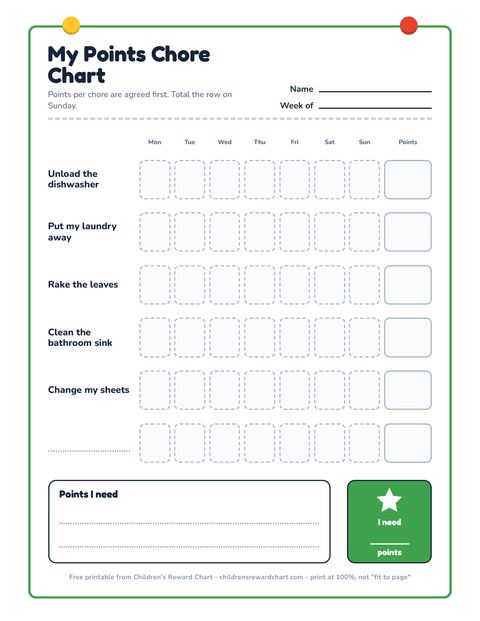
My Points Chore Chart
Points chore chart with weekly totals for 9 and 10 year olds.
Download letter PDF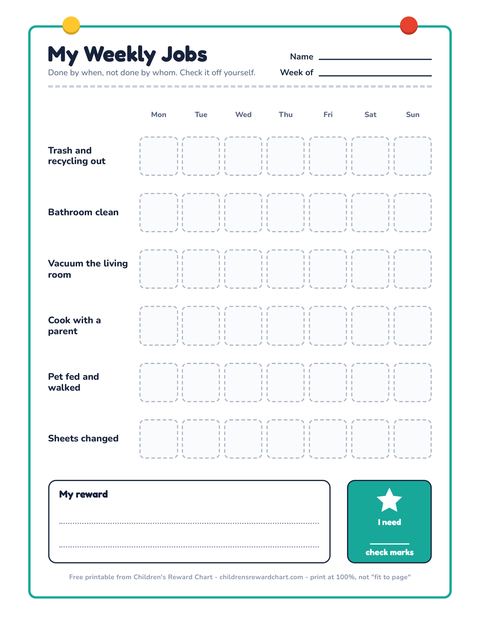
My Weekly Jobs
Weekly jobs chart for 9 and 10 year olds: 6 scheduled jobs, no stickers.
Download letter PDFChores for 9 and 10 year olds
Use clear, scheduled jobs so the child knows when work is due. These chores for 10 year olds and chores for 9 year olds should fit the week and skills.
Grab the printable one-page charts if you want a quick sheet to hang. The site has color and ink saving PDFs, letter and A4, and a name line for each child.
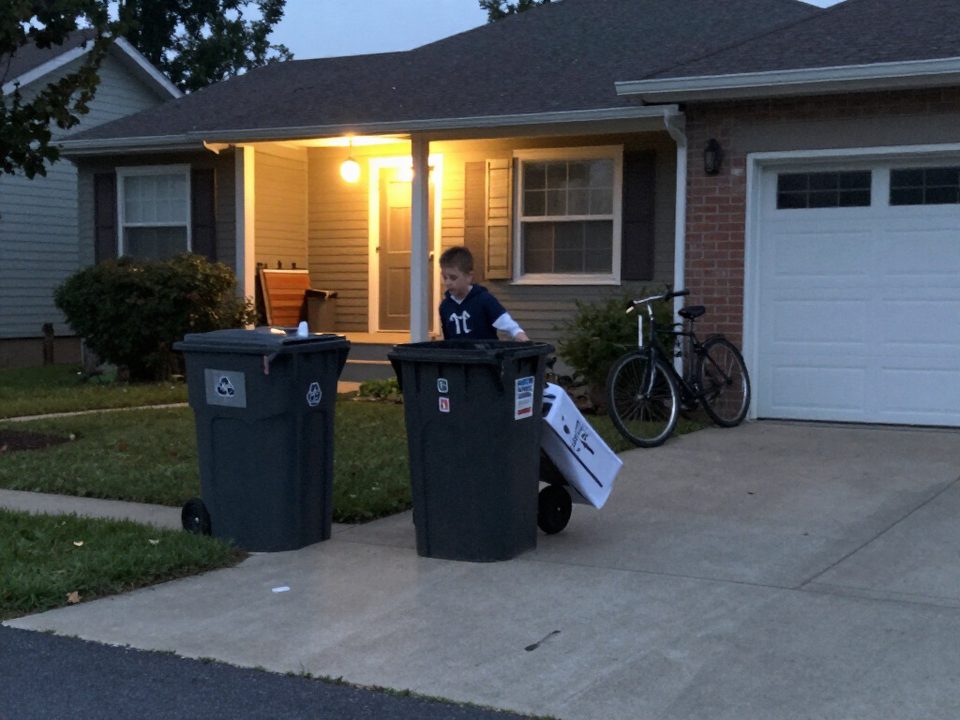
- Trash and recycling, Tuesday night (collection night)
- Empty dishwasher, Monday evening
- Wipe kitchen counters, every day after dinner
- Clean the bathroom, Saturday
- Vacuum the living room, Sunday
- Fold and put away laundry, Thursday
- Cook one simple meal with a parent, Wednesday
- Wash the car with a parent, Saturday
- Change bed sheets, Sunday
- Mow the lawn with supervision, Saturday
- Feed and walk pets, every day
- Pack school bag and lunch, every school evening
- Bring bins to curb, Monday night
- Clean pet area or litter, Saturday morning
If a child manages a few of these regularly, swap daily boxes for due-by-when slots. That teaches scheduling and responsibility.
From daily boxes to done-by-when
At this age the chart chnages format. Replace repeated daily boxes with a clear column that says when the job must be done, not how many times.
Add a points column so the child records completion. The child fills the points or checks the box without reminders, and the parent checks on a set day, not constantly.
Every chart here is a one-page PDF in letter and A4, in color and an ink saving version. Print at 100 percent, not "fit to page". If you need a simple setup, read how to make a chore chart.
The rule about reminders
The real reward for a 9 year old is being trusted. The chart means you do not nag, and trust is the point of the system.
If the child misses a job the first time, let the natural result happen: trash stays in the house, or homework runs late. No long lecture, just a short fix.
After a missed job, meet briefly, note what went wrong, and reset the plan. Keep it short and practical so the child learns the schedule.
Behavior charts for 9 and 10 year olds
Searches pull in behavior charts for 9 and 10 year olds because parents want both chores and behavior tracking. At this age the child must help write the goal so it feels fair.
Keep goals concrete: speak politely at dinner, complete asigned job by the set day, and record wins. Use the behavior hub for ideas and the tracking sheets to print and try the main chore pages and tracking templates.
Points, money and screens
Turn points into rewards you and your child agree on. Convert points to one-off treats, extra minutes of a hobby, or a screen session. Make the conversion clear before they start.
Screen time works as a reward, but it also removes the payoff for the job itself. Try short, earned screen sessions and keep them predictable to avoid arguments.
Allowance should be separate from family chores that keep the house running. For tips on tying money to extra tasks, see the allowance guide at allowance.
More chore charts
Every page hands out its own chart. All chore charts.
Chores for 11 and 12 year olds (tweens)
Points + allowance chart
Free printableChores and chore chart for 3 year olds
Picture chore chart, 3 tasks
Free printableChores and chore chart for 4 year olds
Picture chore chart
Free printableChores and chore chart for 5 year olds (kindergarten)
Kindergarten chore chart
Free printableChores for 6 year olds
Weekly chore chart
Free printableChores for 7 year olds
Weekly chore chart
Free printableChores for 8 year olds
Weekly chore chart with points
Free printableChore chart with allowance and payment
Allowance chart + payday tracker
Free printableChores for kids by age (3 to 12)
Age ladder chart, one PDF per age
Free printableFamily chore chart (multiple kids, weekly, monthly)
Family weekly grid, 2 to 4 kids
Free printableChore chart rewards, ideas and chore boards
Reward coupons pack
Free printableChore chart for teenagers
Teen responsibility chart
Free printablePrintable chore chart templates (blank, editable PDF)
Blank + editable fillable PDF, letter + A4
Free printableGuides on chores and rewards
Short guides that end at a chart you can print tonight.
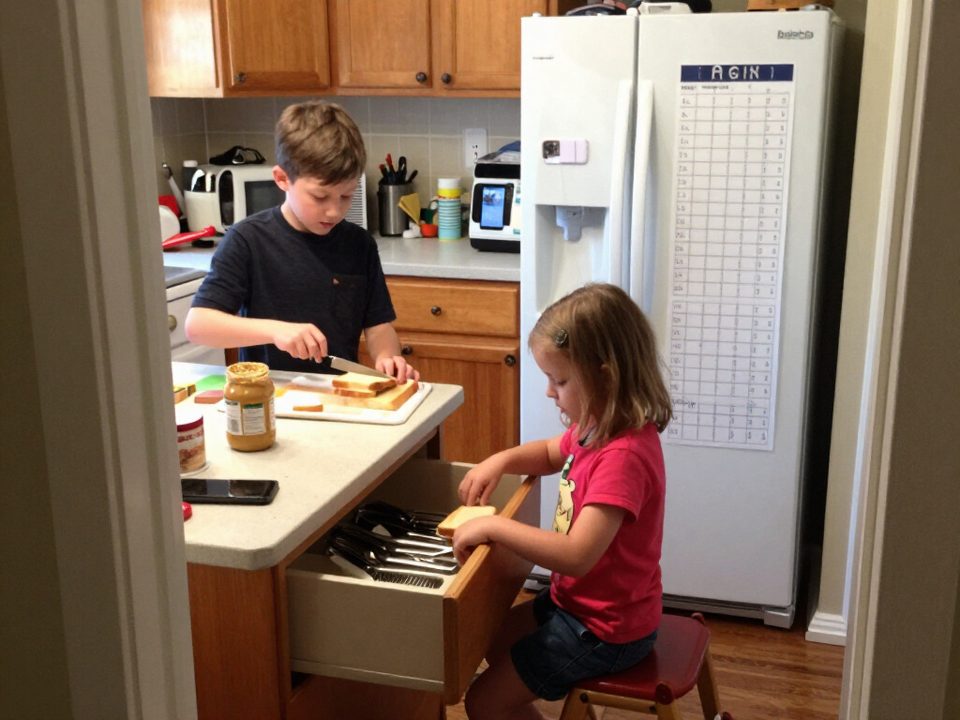
Should kids have chores? What changes at 3, 6 and 10
See what changes for chores at age 3, 6, and 10, and match the right chore chart to your child's stage.

How to make a chore chart that lasts past the first week
Build a chore chart that lasts past the first week, with simple steps you can do tonight.

How to get kids to do chores without nagging
Get kids to do chores without nagging, using a chart that makes the next step obvious.
Print it, then stick it to the fridge
Sticker paper that fits every chart on this site, and the bits that keep a chart up all week. Links go to Amazon and we may earn a commission.
Goes with a chore chart
A magnetic board for when paper has done its six weeks, a timer and the kid-size tools.
Questions parents ask
What chores should a 10 year old do?
A 10 year old can handle cooking a simple meal with a parent, vacuuming, emptying the dishwasher, taking out trash on collection night, daily pet care, changing sheets, and supervised mowing. Pick a few consistent jobs and put them on a weekly schedule so the child learns a routine.
How many chores should a 9 year old have each week?
Aim for four to eight regular chores that include daily small tasks and one or two bigger weekly jobs. Keep chores predictable and manageable so the child completes them without constant reminders. Adjust as they prove they can run a job on schedule.
Should a 10 year old be reminded to do chores?
Start with reminders while teaching the schedule, then pull back. By design, the chart moves to done-by-when so the child takes responsibility. If reminders are still needed, shorten the list or simplify the timing.
What is a fair allowance for a 10 year old?
Allowance depends on family values and what you want it to teach. Keep family chores separate from paid extra work. Discuss expectations with your child, link allowance to agreed tasks beyond regular responsibilities, and review as they grow.