- Home
- Chore charts
- Chores for 6 year olds, with a weekly chore
Chores for 6 year olds, with a weekly chore chart
Looking for chores for 6 year olds that actually stick? At this age, your child can read, so the chart stops being pictures and starts being words. The right chores for 6 year olds come with a standard written right on the page, so you stop repeating yourself.
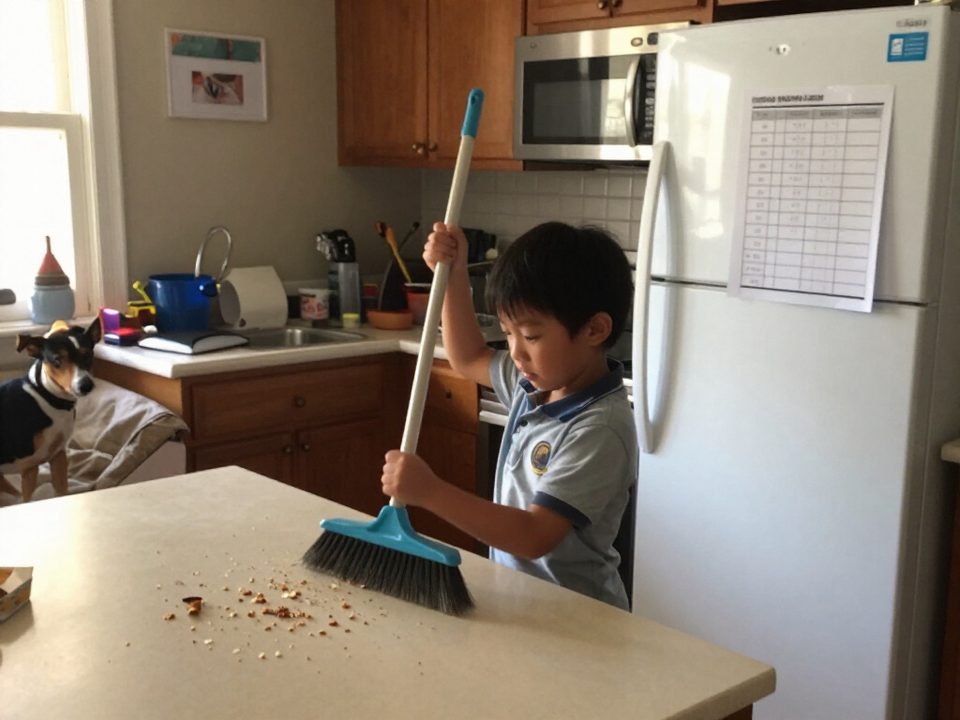
Download the charts
One-page PDFs with a blank name line. Pick paper and ink once, every button changes.


My Monthly Chore Chart
Monthly chore chart for a 6 year old, 5 chores across 31 days.
Download letter PDFChores for 6 year olds
These chores for a 6 year old are sized for small hands but real work. Each one has a standard your child can check alone. Write the standard on the chart and the chart does the reminding.
Pick two or three to start. Add more when the first ones feel routine.
If you want the reasoning behind the layout, start with The best chore chart for kids, by family and by age.
- Make the bed: pillow on top, comforter flat
- Sweep the kitchen floor: no crumbs under the table
- Pack the school bag the night before: homework and water bottle inside
- Match the socks: fold pairs into balls
- Feed the pet: bowl full, water fresh
- Put clean clothes in drawers: shirts with shirts, pants with pants
- Water plants: soil damp, not dripping
- Wipe the bathroom sink: no toothpaste spots
- Set the table for dinner: plate, fork, spoon at each seat
- Put toys away in bins: lids on, nothing on the floor
- Empty the small trash bins: tie the bag, put a new one in
- Sort laundry into piles: lights, darks, towels
Print the chart at 100 percent, not fit to page. The boxes fit a 1.5 inch round sticker or a 1/2 inch star sticker, so your child can mark each one.
Writing the standard on the chart
Arguments about done end when the standard is wrtiten down. A 6 year old can read "pillow on top, comforter flat" and check it without asking you. The chart becomes the place the standard lives, instead of your voice repeating it.
Phrase each standard in three to six words your child knows. Use the same words every time. If the bed means pillow on top, then that is the whole test.
Here are example rows for your chart:
| Chore | Standard | Check |
|---|---|---|
| Make bed | Pillow on top, comforter flat | Child checks |
| Feed pet | Bowl full, water fresh | Child checks |
| Sweep floor | No crumbs under table | Parent checks |
| Pack bag | Homework and bottle inside | Child checks |
Write the standard in the blank line under each chore name. Your child can read it out loud before starting. That simple act makes the job theirs, not yours. See more chore chart templates for blank versions.
A week on the chart
The weekly chart has five preset chores and one blank row. You fill the blank row with a job your family needs that week, like wiping the sink or sorting laundry. The child reads the chart each morning and checks off each box when the work is done.
The child checks the box. You check the work later, after the sticker is on. That delay teaches them to meet the standard, not just please you.
Sunday night, count the check marks together. If the week went well, the reward line gets a sticker or a small treat. If not, the week resets Monday with a clean chart. For reward ideas, see reward charts.
Chores that are still too much at 6
Some jobs need more strength, judgment, or safety awareness then a 6 year old has. Wait on cooking on the stove, anything with bleach, taking out heavy trash, and bathing a younger sibling. These are not failures, they are just not ready.
Give your child a piece of those jobs instead. They can stir cold ingredients, wipe the counter after you clean, carry a light bag to the bin, or hand you the towel for the baby. They get the feeling of helping without the risk.
Rewards, allowance and what to do with a bad week
A small weekly reward works best at 6. Think of a family movie night, a trip to the park, or picking the dinner menu. Keep it simple and consistent, not big or fancy. The reward is a thank you for the work, not a bribe.
Allowance can start at 6 for extras only, like a small toy or a treat at the store. Keep it separate from the chore chart. Chores are about being part of the family, not earning money. For more on this, see allowance charts.
A bad week is a reset, not a punishment. If the chart is empty by Sunday, talk about what got in the way. Then start fresh Monday. The goal is a habit, not perfection. For family-wide routines, check family chore charts.
More chore charts
Every page hands out its own chart. All chore charts.
Chores for 11 and 12 year olds (tweens)
Points + allowance chart
Free printableChores and chore chart for 3 year olds
Picture chore chart, 3 tasks
Free printableChores and chore chart for 4 year olds
Picture chore chart
Free printableChores and chore chart for 5 year olds (kindergarten)
Kindergarten chore chart
Free printableChores for 7 year olds
Weekly chore chart
Free printableChores for 8 year olds
Weekly chore chart with points
Free printableChores for 9 and 10 year olds
Points chore chart
Free printableChore chart with allowance and payment
Allowance chart + payday tracker
Free printableChores for kids by age (3 to 12)
Age ladder chart, one PDF per age
Free printableFamily chore chart (multiple kids, weekly, monthly)
Family weekly grid, 2 to 4 kids
Free printableChore chart rewards, ideas and chore boards
Reward coupons pack
Free printableChore chart for teenagers
Teen responsibility chart
Free printablePrintable chore chart templates (blank, editable PDF)
Blank + editable fillable PDF, letter + A4
Free printableGuides on chores and rewards
Short guides that end at a chart you can print tonight.
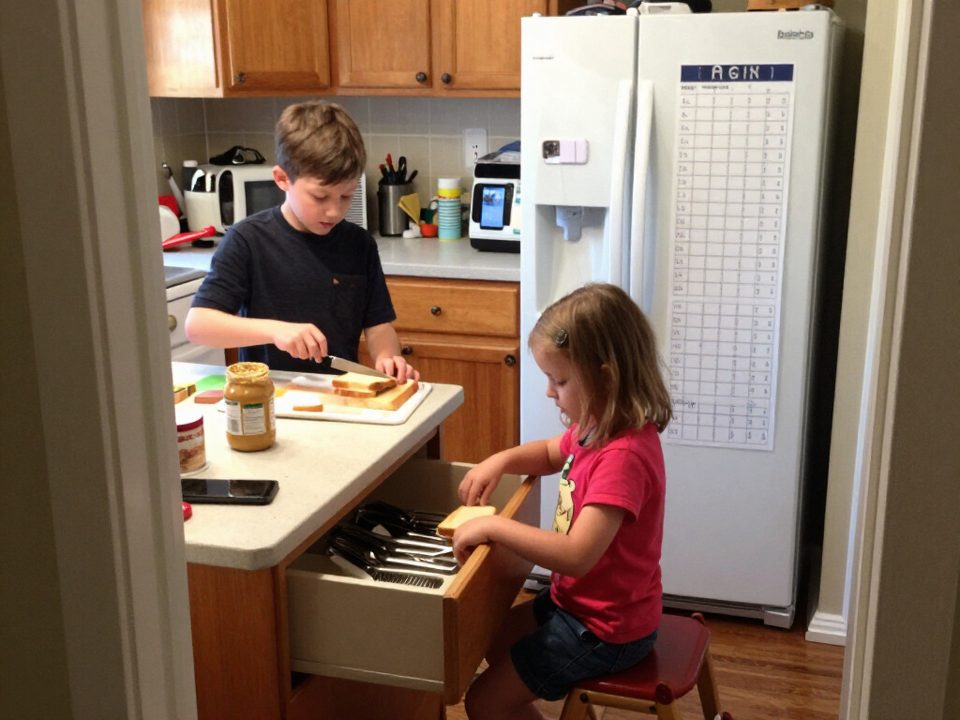
Should kids have chores? What changes at 3, 6 and 10
See what changes for chores at age 3, 6, and 10, and match the right chore chart to your child's stage.

How to make a chore chart that lasts past the first week
Build a chore chart that lasts past the first week, with simple steps you can do tonight.

How to get kids to do chores without nagging
Get kids to do chores without nagging, using a chart that makes the next step obvious.
Print it, then stick it to the fridge
Sticker paper that fits every chart on this site, and the bits that keep a chart up all week. Links go to Amazon and we may earn a commission.
Goes with a chore chart
A magnetic board for when paper has done its six weeks, a timer and the kid-size tools.
Questions parents ask
What chores are appropriate for a 6 year old?
Chores that match their motor skills and reading ability. Make the bed, feed a pet, sweep the floor, pack a school bag, match socks, and put away clean clothes are all good. Write a short standard for each so they can check their own work.
How many chores should a 6 year old do each day?
Two to three chores a day is enough. Start with one easy job and one harder job. Add more when those feel routine. A weekly chart with five preset chores and one blank row gives structure without overload.
Should a 6 year old get an allowance for chores?
You can, but keep it separate from the chart. Chores teach responsibility and family contribution. Allowance can be for extras like a small toy. If you tie money to every sticker, the child may stop helping when the pay stops.
What if my 6 year old does the chore badly?
Let them finish, then show the standard again. Say "the standard says pillow on top," and point to the chart. Ask them to fix just that part. Do not redo the chore yourself. The chart is the teacher, not your voice.