- Home
- Chore charts
- Chores for 8 year olds, with a points chore
Chores for 8 year olds, with a points chore chart
Chores for 8 year olds work best when stickers stop and points start. At 8, a child can add, so every chore on this chart carries a number, and the reward is priced in points the child totals up themselves.
Download the charts
One-page PDFs with a blank name line. Pick paper and ink once, every button changes.


My Monthly Chore Chart
Monthly chore chart for an 8 year old, 8 chores across 31 days.
Download letter PDFChores for 8 year olds
Here are 12 chores that fit an 8 year old. Each one has a points value. Keep the list short at first, then add jobs as the habit sticks.
Pick the chores that match your child's day. A chore done well matters more than a long list.
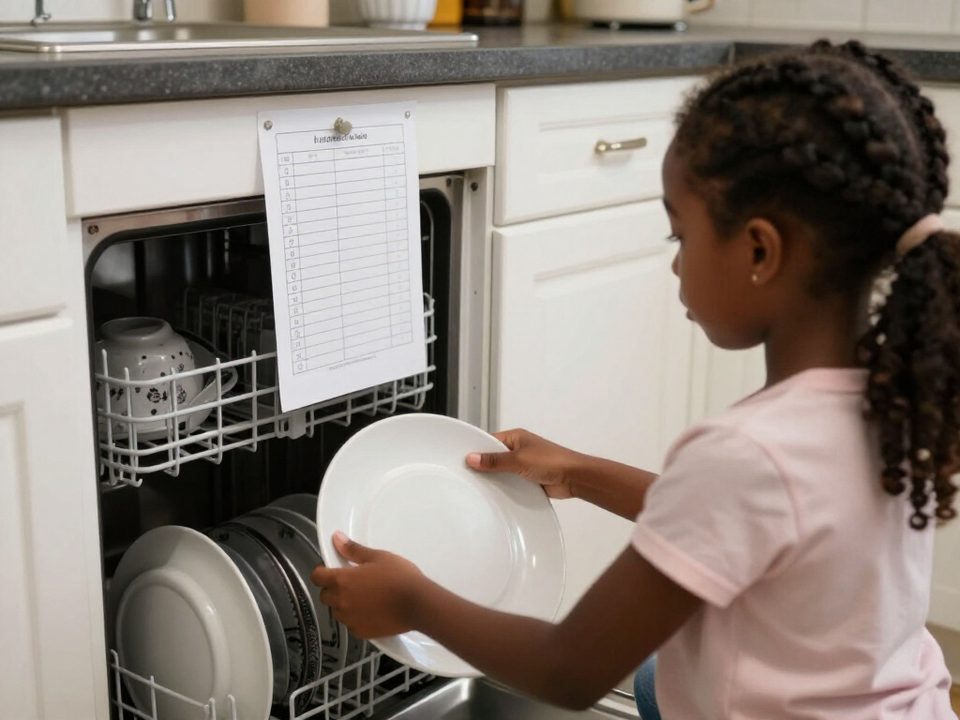
- Load the dishwasher (2 points)
- Vacuum one room (3 points)
- Take the trash out (1 point)
- Make breakfast for themselves (2 points)
- Clean their room (3 points)
- Walk the dog with a parent (2 points)
- Fold and put away own laundry (3 points)
- Wipe the bathroom sink (2 points)
- Set the table for dinner (1 point)
- Empty the lunchboxes (1 point)
- Water the plants (1 point)
- Sort recycling (2 points)
Print the chart at 100 percent, not fit to page. The boxes fit a 1.5 inch round sticker or a 1/2 inch star sticker.
You can also use the free printable templates to make your own list with different chores.
How the points column works
Each chore has a number next to it. On Sunday, the child adds the points from the week. The reward line says how many points it costs, so the child knows exactly what they are working toward.
Numbers work at 8 because stickers feel babiysh. An 8 year old wants to feel grown up, and adding points feels like a real job. Keep the values small so the math is easy: 2, 3, and 1 are enough.
The child does the adding, not you. That is the point. When they total the row themselves, they own the result. The reward is priced in points the child totals up themselves.
This is simple operant conditioning, but it also teaches a skill. The child learns that effort has a value, and that value adds up.
Setting up the points chart
Set up takes ten minutes tonight. Follow these steps, and you will have a chart ready for Monday morning.
- Pick 5 chores together from the list above.
- Agree on the points for each chore.
- Agree on what 20 points buys (a movie, a trip to the park, extra screen time).
- Print the chart in color or ink saving.
- First total is next Sunday. Let the child count the points.
Write the child's name on the blank line. Post the chart where the child can see it, like the fridge or their door.
For more on making a chart that lasts, read our guide to making a chore chart.
Chores for 8 year olds to earn money
Family chores are unpaid. Those are the ones on the points chart, because everyone helps the house run. Paid chores are extras, above the regular list, and they go on the allowance chart.
Good paid extras for an 8 year old: washing the car, raking leaves, cleaning the baseboards, or organizing a closet. These are jobs you would do yourself but can hand over for a small fee.
Keep the two charts separate. The points chart builds responsibility. The allowance chart builds money sense. Mixing them confuses the message.
For more on the split, see our family chore chart and decide together what counts as a family job.
When the points stop mattering
Every chart goes stale. The signs are clear: the child forgets to add points, or they do a chore but skip the sticker. That is not failure, it is a signal.
Change the reward, not the chores. If 20 points no longer excites them, raise it to 30 or pick a new reward. Sometimes a week off is enough to reset the habit.
If the chart still feels flat, move to the 9 to 10 year old chart with more jobs and bigger responsibilities. The points system can grow with them.
More chore charts
Every page hands out its own chart. All chore charts.
Chores for 11 and 12 year olds (tweens)
Points + allowance chart
Free printableChores and chore chart for 3 year olds
Picture chore chart, 3 tasks
Free printableChores and chore chart for 4 year olds
Picture chore chart
Free printableChores and chore chart for 5 year olds (kindergarten)
Kindergarten chore chart
Free printableChores for 6 year olds
Weekly chore chart
Free printableChores for 7 year olds
Weekly chore chart
Free printableChores for 9 and 10 year olds
Points chore chart
Free printableChore chart with allowance and payment
Allowance chart + payday tracker
Free printableChores for kids by age (3 to 12)
Age ladder chart, one PDF per age
Free printableFamily chore chart (multiple kids, weekly, monthly)
Family weekly grid, 2 to 4 kids
Free printableChore chart rewards, ideas and chore boards
Reward coupons pack
Free printableChore chart for teenagers
Teen responsibility chart
Free printablePrintable chore chart templates (blank, editable PDF)
Blank + editable fillable PDF, letter + A4
Free printableGuides on chores and rewards
Short guides that end at a chart you can print tonight.
Should kids have chores? What changes at 3, 6 and 10
See what changes for chores at age 3, 6, and 10, and match the right chore chart to your child's stage.

How to make a chore chart that lasts past the first week
Build a chore chart that lasts past the first week, with simple steps you can do tonight.

How to get kids to do chores without nagging
Get kids to do chores without nagging, using a chart that makes the next step obvious.
Print it, then stick it to the fridge
Sticker paper that fits every chart on this site, and the bits that keep a chart up all week. Links go to Amazon and we may earn a commission.
Goes with a chore chart
A magnetic board for when paper has done its six weeks, a timer and the kid-size tools.
Questions parents ask
What chores are appropriate for an 8 year old?
At 8, a child can handle chores with multiple steps. Good options include loading the dishwasher, vacuuming one room, folding laundry, wiping the bathroom sink, and making their own breakfast. Keep the list to 5 chores at first, and add more as they get faster and more reliable.
How many chores should an 8 year old do?
Start with 3 to 5 chores per day. That is enough to build a habit without overwhelming them. You can add more as they master the first ones. The goal is consistency, not a long list. A child who does 3 chores well is better off than one who does 8 poorly.
How much should an 8 year old get paid for chores?
That depends on your family. A common approach is to pay for extra jobs, not regular family chores. For an 8 year old, a small amount per extra chore, like 50 cents or a dollar, works. Use the allowance chart to set a clear rate and track it weekly.
How do points work on a chore chart?
Each chore has a points value, like 2 for loading the dishwasher or 3 for vacuuming. The child adds up their points at the end of the week. The reward line shows how many points a prize costs. The child chooses what to spend their points on, which gives them control and motivation.