- Home
- Chore charts
- Allowance chore chart: chores for kids to ea
Allowance chore chart: chores for kids to earn money
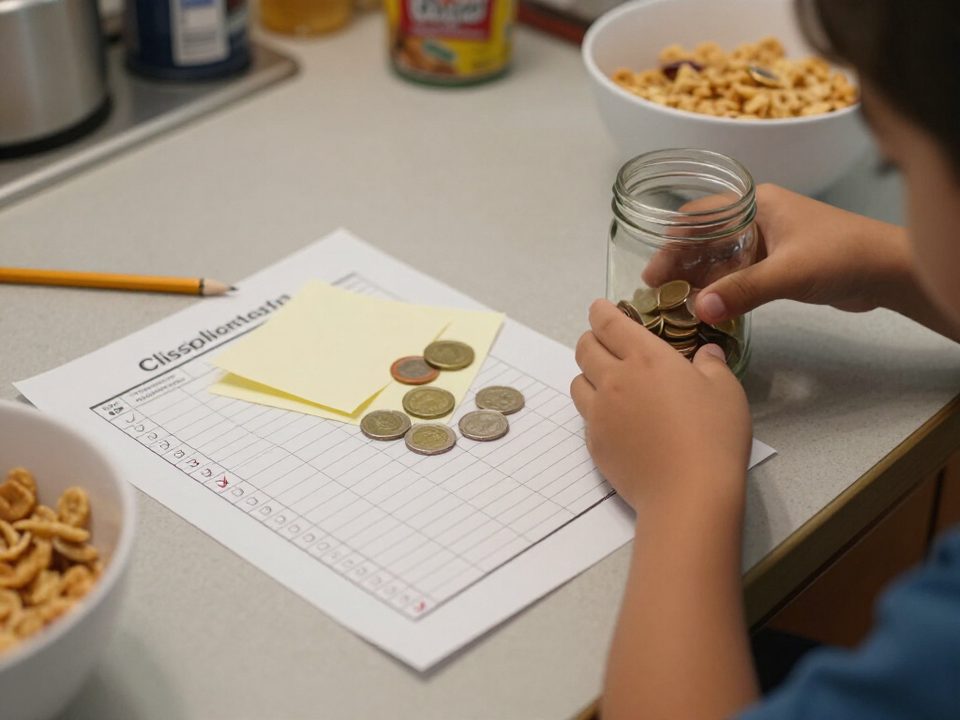
Use chores for kids to earn money that actually adds up. This allowance chore chart shows a job value next to each task, plus a weekly payday tracker so the child can watch savings grow.
Download the charts
One-page PDFs with a blank name line. Pick paper and ink once, every button changes.
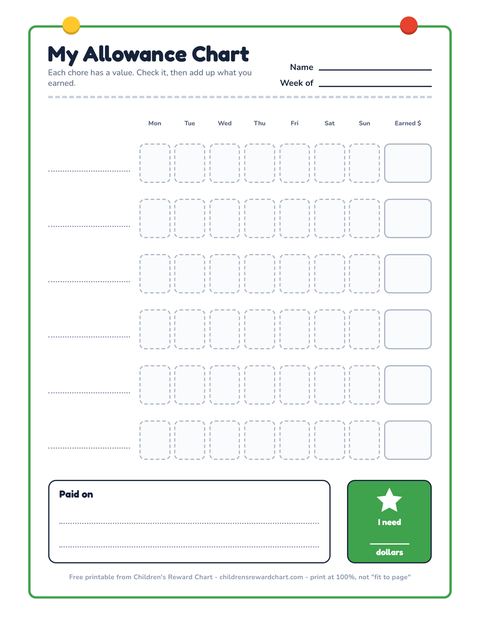
My Allowance Chart
Allowance chart: chores with a dollar value and a weekly earnings box.
Download letter PDF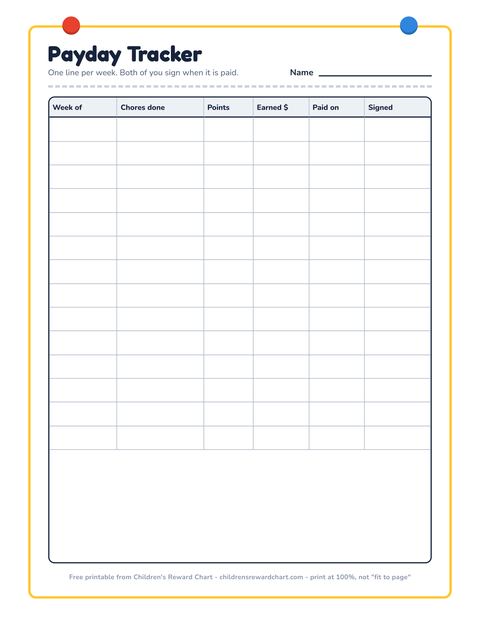
Payday Tracker
Weekly allowance payday log: chores done, points, amount earned, paid, signed.
Download letter PDFPaid chores and family chores are different lists
Keep two lists: what every child does as family responsibility, and paid extras. Family chores are daily or weekly tasks expected of everyone. Paid extras are optional jobs that earn money.
Mixing them backfires. If you pay for family work, the child treats every task like a business. If you never pay for extras, the child never sees the link between effort and reward.
How to get kids to do chores without nagging is the guide that pairs with this chart.
- Family chores: put away toys, clear the table, make the bed, feed a pet as part of routine
- Paid extras: deep clean a closet, wash the car, weed a garden bed, clean the oven racks
For more ways to split tasks by age, try a matching printable from the chart collection on this site. See the free otpions at Chore charts.
Chores for kids to earn money
Offer extras that feel like real work, not punishment. Keep the list varied so the child can pick tasks they enjoy or want to try.
- Wash the car, small value
- Weed a garden bed, small value
- Sort the recycling shed, small value
- Clean the oven racks, moderate value
- Wash first floor windows, small value
- Organize a closet, moderate value
- Walk a neighbor's dog with a parent, small value
- Wash outdoor furniture, small value
- Clean out the garage corner, moderate value
- Detail bicycle cleaning, small value
- Help wash walls or baseboards, small value
- Assemble a simple yard project with adult help, moderate value
If you want ideas tailored to age, choose a chart for younger kids or older children. See 8 year old chores and 9 to 10 year old chores.
How the allowance chart works
The system uses two charts: an allowance chart and a payday tracker. The allowance chart lists each job, its value, a check column, and a running total.
The payday tracker records the date, earned, saved, and spent on a single row each payday. Payday stays on the same day every week, even when the total is zero. This helps the child learn patterns and see money add up.
| Allowance chart | Columns |
|---|---|
| Job, value, check box, running total | Job name, a small round value listed in words, space for a check, space for the weekly sum |
| Payday tracker | Date, earned, saved, spent |
Print the charts and put them on the fridge. You can have the child check completed jobs and you or the child add the totals. The site offers these free printables as one-page PDFs in letter and A4, color and ink saving versions.
Setting the values
Keep values small and round and state them in words on the chart. The point is to make totals meaningful, not large. Aim so a full week of extras buys one item the child wants.
Renegotiate at birthdays when needs change. Do not print dollar figures on the chart if you want the child to focus on counting and choice instead of exact amounts.
Our charts print at 100 percent, not fit to page, and include a blank name line. The reward boxes match a one and a half inch round sticker or a half inch star sticker, which helps you mark earned tasks. Sign-up opens a builder that prints the child name on a sticker sheet, a star chart and a chore chart, made in the browser.
Mistakes that make an allowance chart fail
Avoid a few common traps. A clear rule set and consistent payday keep the system honest and simple.
- Paying for family chores
- Paying late or inconsistently
- Docking money for behavior
- Letting the total roll over forever with no plan
- Values set too high so chores feel optional work
- No obvious way for the child to spend or save
If you want a chart that separates family responsibilities from paid extras, see the family chore printables and reward ideas on this site. Check Family chores and Reward ideas.
More chore charts
Every page hands out its own chart. All chore charts.
Chores for 11 and 12 year olds (tweens)
Points + allowance chart
Free printableChores and chore chart for 3 year olds
Picture chore chart, 3 tasks
Free printableChores and chore chart for 4 year olds
Picture chore chart
Free printableChores and chore chart for 5 year olds (kindergarten)
Kindergarten chore chart
Free printableChores for 6 year olds
Weekly chore chart
Free printableChores for 7 year olds
Weekly chore chart
Free printableChores for 8 year olds
Weekly chore chart with points
Free printableChores for 9 and 10 year olds
Points chore chart
Free printableChores for kids by age (3 to 12)
Age ladder chart, one PDF per age
Free printableFamily chore chart (multiple kids, weekly, monthly)
Family weekly grid, 2 to 4 kids
Free printableChore chart rewards, ideas and chore boards
Reward coupons pack
Free printableChore chart for teenagers
Teen responsibility chart
Free printablePrintable chore chart templates (blank, editable PDF)
Blank + editable fillable PDF, letter + A4
Free printableGuides on chores and rewards
Short guides that end at a chart you can print tonight.
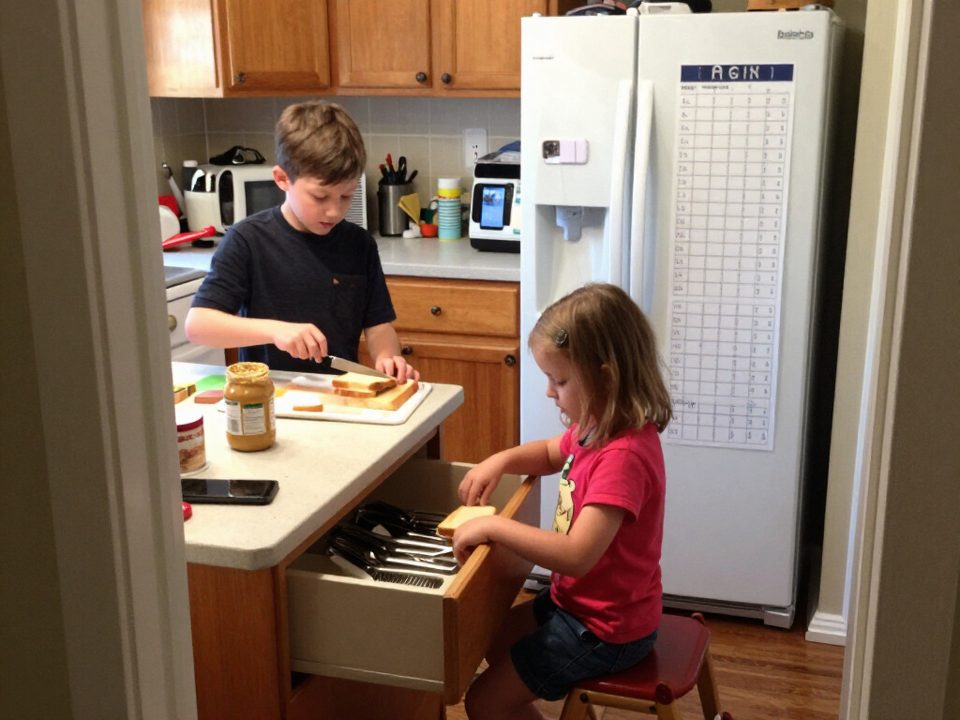
Should kids have chores? What changes at 3, 6 and 10
See what changes for chores at age 3, 6, and 10, and match the right chore chart to your child's stage.

How to make a chore chart that lasts past the first week
Build a chore chart that lasts past the first week, with simple steps you can do tonight.

How to get kids to do chores without nagging
Get kids to do chores without nagging, using a chart that makes the next step obvious.
Print it, then stick it to the fridge
Sticker paper that fits every chart on this site, and the bits that keep a chart up all week. Links go to Amazon and we may earn a commission.
Goes with a chore chart
A magnetic board for when paper has done its six weeks, a timer and the kid-size tools.
Questions parents ask
Should kids be paid for chores?
Pay for extras, not family duties. Paid chores teach that work earns pay. Family chores teach responsibility and cooperation without payment. This split keeps expectations clear and avoids confusion about what money is for.
What chores can kids do to earn money?
Choose extras that match the child skill and safety. Ideas include car washing, garden weeding, closet organizing, and window washing. Let the child choose some tasks so they feel ownership and practice counting earned rewards.
How does an allowance chart work?
The chart lists jobs with a stated value, a check box, and a running total. The payday tracker records the weekly date, what was earned, saved, and spent. Payday is the same day each week so the child sees regular progress.
How much allowance should I pay per chore?
Keep each value small and round, and suited to the task effort. The weekly full total should buy one desired item. Revisit values at birthdays or when tasks change so the system stays realistic.