How to get kids to do chores without nagging
Nagging turns you into the reminder. A chore chart placed where the chore happens becomes the reminder instead. Start with easy chores, add a fixed time, and use the Sunday count to keep it alive.

How to get kids to do chores without nagging starts with one idea: stop being the reminder. A chart by the chore, a timer on the table, and a Sunday count can replace every verbal nudge. Nagging works once, then the child waits for the third ask.
Why nagging works once and then never again
The first time you ask, the child hears you. The second time, they know you will ask again. By the third ask, they are not listening to the words, they are waiting for the tone that means you are serious.
Nagging is a reminder system, and you are the reminder. A chart is a reminder system that does not need a parent. When the chart is the source of truth, you step out of the loop.
The chart replaces your voice with a place the child looks. The trash chart by the trash, the laundry chart on the basket. The child checks the chart, not your mood.
This is the core of how to make a chore chart that survives the first week.
Put the chart where the chore happens
A chart on the fridge is for you, not for the child. The child needs to see the chart at the moment of the chore. Hang the trash chart on the trash can lid, the laundry chart on the basket, the table chart on the table.
Hang it at kid height. If they have to stand on a stool to read it, they will not read it. One chart per room if needed, each with one or two chores.
The chart is the first thing they see when they enter the room. That visual cue does the reminding.
For a list of chores by age, see chore charts by age.
Make the first week easy on purpose
The first week is not about the chores. It is about the habit of looking at the chart. Pick three chores the child already does, like putting a cup in the sink or hanging a coat.
The point is that the chart gets checked and the box gets checked. Success builds the habit. You can add harder chores later.
Easy chores make the chart the hero, not the task. The child sees that checking the chart leads to a reward, and that feeling carries the week.
If you are starting from zero, the guides on whether kids should have chores can help you choose the first three.
Replace the reminder with a time
A verbal reminder is a reaction. A fixed time is a routine. After breakfast, before screens, right after school, the same order every day. The time becomes the cue.
Use a timer if the chore has a time limit. Set it for 5 minutes of cleaning, and the timer is the reminder. When it rings, the chore is done, no words needed.
The timer is a neutral voice, not a parent's nag. It does not get tired or annoyed.
Link the chore chart to a routine chart so the child sees the whole day in order. The morning routine chart ends with a box for the chore.
What to say instead of the reminder
When the child asks what to do, or when you see the chore not done, use a line that points at the chart, not at the child. These lines are short, calm, and repeatable.
The goal is to make the child look at the chart, not at you. After a few days, they will start to check it on there own.
- What does the chart say?
- Check the chart, then do the first box.
- When the box is checked, the tablet is yours.
- The timer is set. Start when you hear it.
- The chart shows three chores. Which one first?
- You know the rule: chart first, then screens.
- I will not remind you again. The chart will.
- After breakfast, the chart is your next step.
Chores kids refuse, and why
Refusal is often a sign that the chore itself is the problem, not the child. The fix is to change the chore, not to raise your voice. The table below shows common refusals and what to change.
| Refusal | Usually means | Change |
|---|---|---|
| Too hard | The chore is beyond their skill | Pick an easier part, like sorting socks |
| Too vague | They do not know where to start | Break it into steps on the chart |
| No end | They do not know when it is done | Set a timer for 5 minutes |
| No reward | The payoff feels too far away | Use a daily reward, not a weekly one |
| Unfair split | They see a sibling doing less | Rotate the worst job each week |
| A bad day | They are tired or upset | Skip the day, do not make it a battle |
Siblings and the fairness problem
When two kids share chores, the fairness fight is always close. A family chart can settle it. One chart lists every chore and who does it each day. Rotate the worst job each week so no one is stuck with it.
Use points by age. A 6 year old earns 1 point per chore, a 10 year old earns 2 points per chore. The points go into a shared reward jar, which makes the team effort visible.
The family chart makes fairness a fact, not a feeling. The child can see the rotation and the point totals.
For a full family system, see the family chore chart.
The Sunday count
A chart that lasts six weeks needs a weekly reset. On Sunday, count the boxes checked that week. The child sees the total, and the reward is given. The chart resets to blank on Monday.
The reward can be a small treat, a special activity, or a privilege. The rewards guide has ideas that do not involve money.
The Sunday count is the moment the child sees the payoff for the week. It is also the time to change the chart. If a chore was refused all week, replace it. If a chore was too easy, add a harder one.
Keep the same chart for six weeks. Then, if the habit is solid, you can switch to a new set of chores or add an alowance chart if you want.
Charts that go with this guide
Free one-page PDFs with a blank name line. Pick paper and ink once, every button changes.
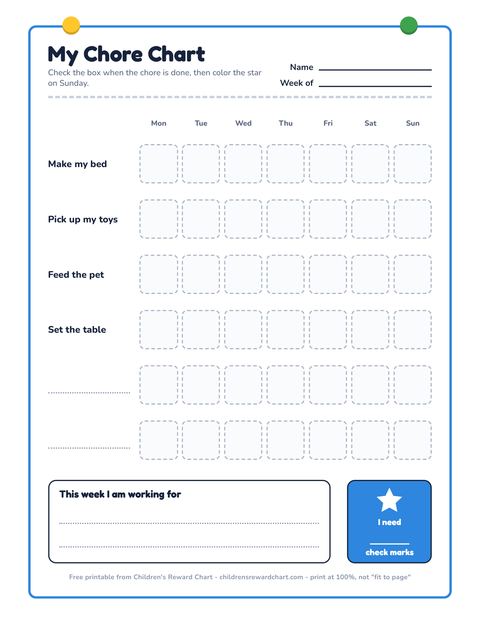
My Chore Chart
Weekly chore chart with 4 common chores filled in and 2 blank lines.
Download letter PDF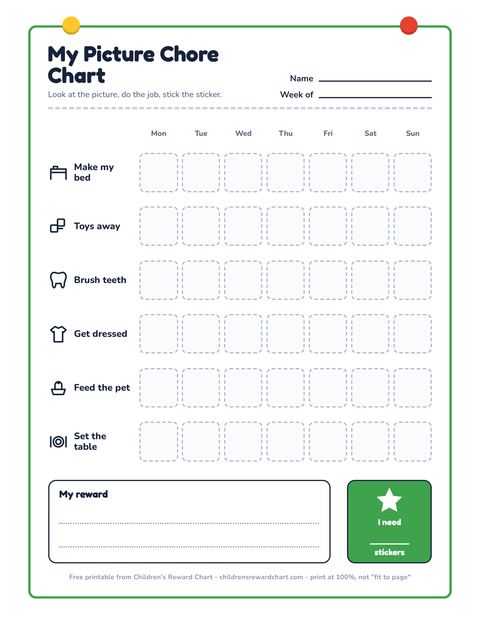
My Picture Chore Chart
Picture chore chart for children who cannot read yet, 6 icon tasks.
Download letter PDF
Stickers and paper for the chart
The reinforcer has to be in the drawer before the first star is earned. Links go to Amazon and we may earn a commission.
Questions parents ask
How do I get my kids to do chores without nagging?
Stop being the reminder. Put a chart where each chore happens, at kid height. Use a timer for time limits. Pick a fixed time each day. On Sunday, count the boxes and give a reward. The chart and the timer replace your voice.
What do I do when my child refuses to do chores?
Look at the refusal table. If the chore is too hard, too vague, or has no end, change the chore. If it is about fairness, rotate the worst job. If it is a bad day, skip it. Do not turn it into a power struggle.
Should I remind my child about chores?
Only for the first few days, while they learn the routine. After that, use the chart and the timer as the reminder. If you keep reminding, the child learns to wait for your voice. The goal is for the chart to be the cue.
At what age can kids do chores without being asked?
Most children can do simple chores by age 4 or 5, but doing them without being asked takes longer. Usually by age 7 or 8, with a consistent chart and routine, they will check the chart on their own. The habit matters more than the age.
Does a chore chart stop the nagging?
Yes, if you use it correctly. The chart replaces your voice. You point to it, not at the child. The timer replaces the countdown. The Sunday count replaces the weekly reminder. The nagging stops because the system does the reminding.
Read next
Short guides that end at a chart you can print tonight.
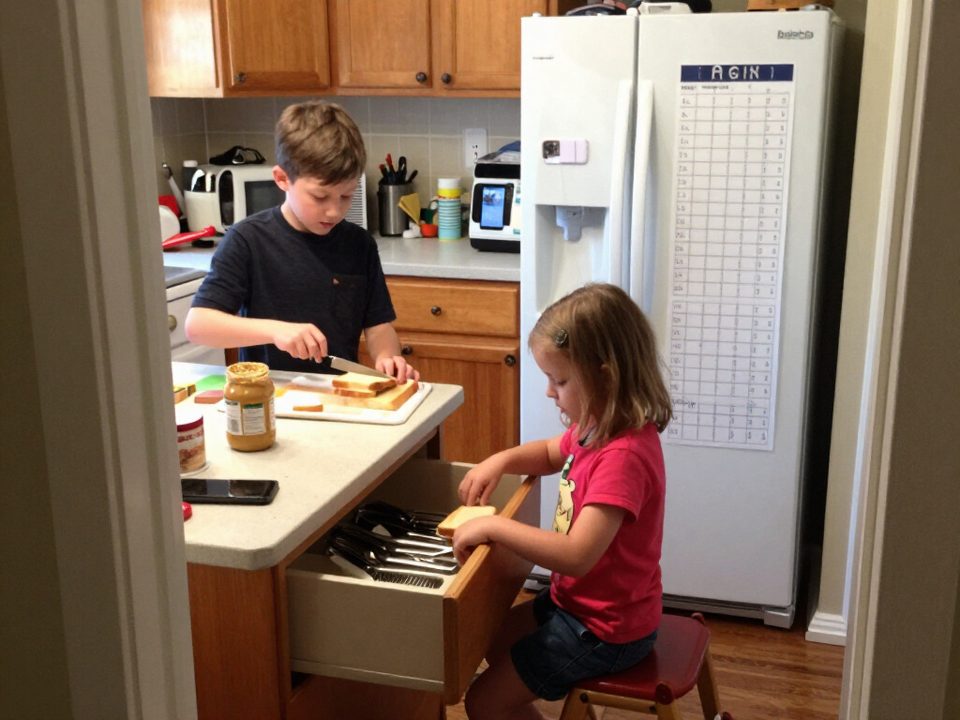
Should kids have chores? What changes at 3, 6 and 10
See what changes for chores at age 3, 6, and 10, and match the right chore chart to your child's stage.

How to make a chore chart that lasts past the first week
Build a chore chart that lasts past the first week, with simple steps you can do tonight.
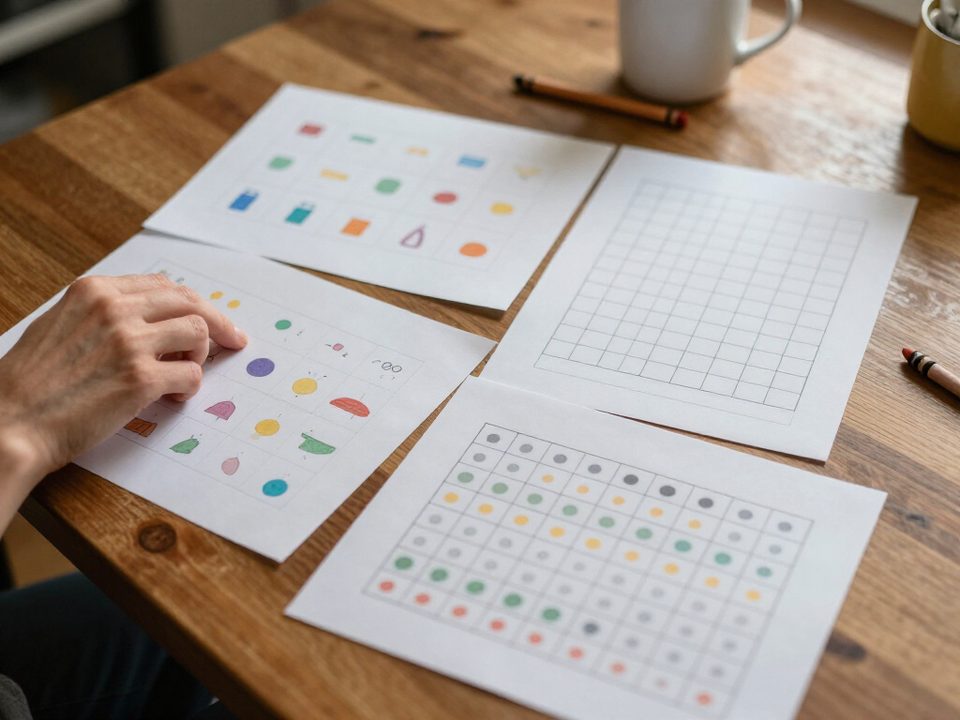
The best chore chart for kids, by family and by age
Find the best chore chart for your family and your child's age, with options that fit different routines.