- Home
- Reward and star charts
- Reward ideas and reward systems for kids
Reward ideas and reward systems for kids
A reward system for kids is the simplest way to turn good choices into a habit. This page gives you a full menu of reward ideas, a sticker price for each one, and a free printable chart to start tonight.
Download the charts
One-page PDFs with a blank name line. Pick paper and ink once, every button changes.

Reward Coupons
8 cut-out reward coupons: stay up late, pick the movie, park trip and more.
Download letter PDF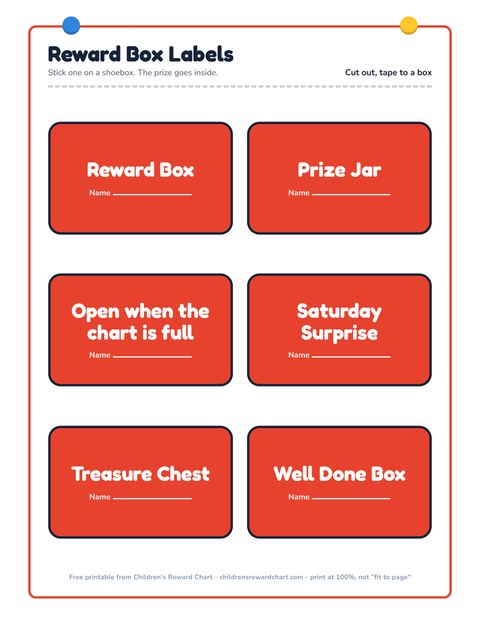
What a reward system is
A reward system is a chart plus a menu. The chart tracks stickers or stars. The menu decides what those stickers buy. Most parents set up the chart and forget the menu, then the chart fizzles by day three.
Pick the reward before the first sticker goes on. Let your child choose from a short list. Keep the reward small and soon, not big and distant. A reward tonight beats a prize in a month.
Every reward on your menu should be one of three kinds: time, choice, or privilege. Time is an extra story or ten more minutes at the park. Choice is picking dinner or the family movie. Privilege is the front seat or control of the playlist.
Two kinds of rewards to avoid leaning on: food and screens. A cookie now and then is fine, but it does not build the habit. Screen time works, but it gets expensive fast. Save those for special days, not the daily menu.
Reward ideas for kids that cost nothing
Here are 20 reward ideas sorted by age. They cost no money, just a few minutes of your time or a little extra freedom. Print this list and circle three your child likes.
- Under 5: an extra story, choosing the song at bath time, a sticker on the hand, a silly dance party, the first pick of the bedtime book
- 5 to 8: choosing dinner, a later bedtime by 10 minutes, a park trip after school, a friend over for an hour, the front seat on the next drive, a family game of their choice, a picnic on the floor, control of the car playlist
- 9 plus: a day off one chore, a phone call to a grandparent, an extra 15 minutes before lights out, choosing the family movie, a solo walk to the corner store with a parent watching
Pricing the menu in stickers
A reward is only as good as its price. Too cheap and it is gone in a day. Too expensive and your child gives up. Use this simple sticker menu and adjust it as you learn what motivates your child.
The prices below are starting points. A 1.5 inch round sticker or a 1/2 inch star sticker counts as one. You can change the price anytime, just tell your child before the next sticker goes on.
| Costs | Reward examples | Who picks |
|---|---|---|
| 5 stickers | Extra story, later bedtime | Parent |
| 10 stickers | Choose dinner, park trip | Child |
| 20 stickers | Friend over, front seat | Child |
| 50 stickers | Day off a chore, movie night | Child and parent |
Keep the menu on the fridge next to the chart. When your child earns a sticker, they can see what they are working toward. That is the whole trick: the menu makes the chart mean something.
The reward jar and marble jar systems
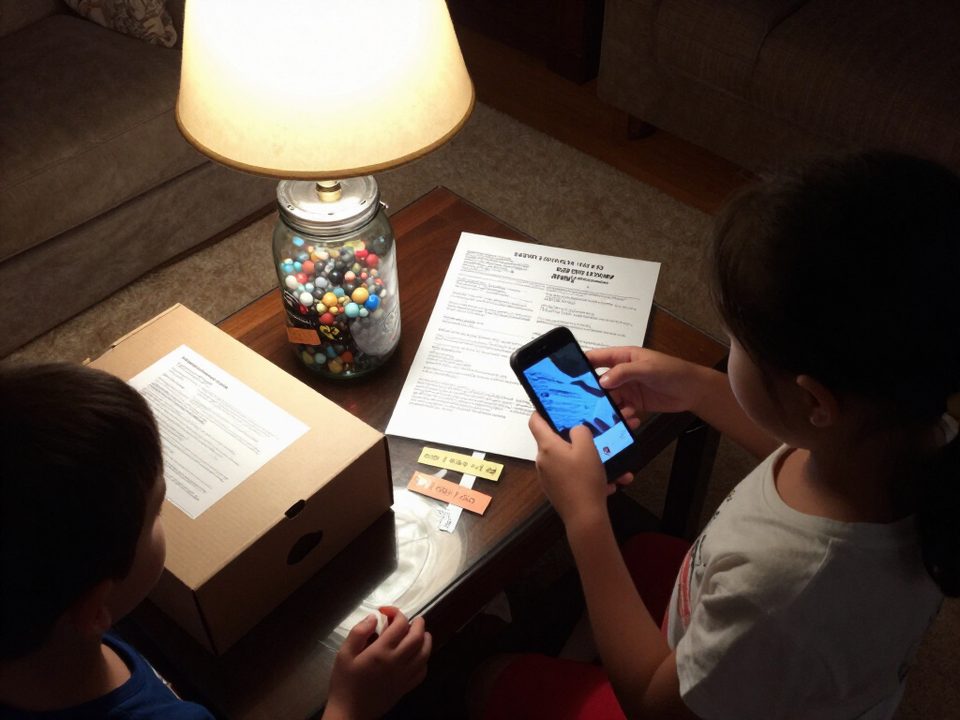
A reward jar works the same way as a chart, but the reward is a marble or a pom pom dropped into a jar. Every good choice earns one marble. When the jar is full, the child gets the agreed reward.
A jar beats a chart when you have more than one child or a whole clasroom. It also works well for a child who likes to see the pile grow. The clink of the marble is the reward in the moment.
A magnetic reward jar sticks on the fridge. Use a clear jar so the child can see the marbles climb. You can buy a jar with a magnet or just tape a regular jar to the fridge. The visual is what matters.
For more on the boards and sticker paper that make the jar and chart last, see our boards page.
Reward coupons and the reward box
This page hands out two free printables. The first is reward coupons. You write the reward on the line, like "one extra story" or "choose dinner." Your child draws one from a jar when they earn enough stickers.
The second printable is reward box labels. Print the labels and tape them to a shoebox. Fill the box with small prizes: a new pencil, a pack of stickers, a tiny toy. Your child picks one when they fill the chart.
Use coupons for rewards that cost your time, and the box for small things you can buy in a pack. Both printables work with the sticker chart or star chart on this site.
Incentive charts and when a reward system should end
An incentive chart is the same thing as a reward chart, just for a school goal. It tracks homework, reading, or practicing an instrument. The menu works the same way, with small rewards for a set number of stickers.
A reward system should not last forever. Once the habit sticks, start fading it. Skip a day of stickers, then a week. The child learns the behavior is its own reward.
The last reward is the chart coming down. When your child has done the chore or habit without stickers for two weeks, take the chart down together. Celebrate that. You do not need to replace it with a new system.
For more on when to use a chart and when to stop, read the incentive chart guide.
More reward and star charts
Every page hands out its own chart. All reward and star charts.
Bedtime sticker chart and sleep chart
Bedtime routine + dry night
Free printableHomework chart
Homework tracker
Free printableReading chart and reading log for kids
Reading log 20 books
Free printableStar chart for kids
Star chart 10, 20, 30 stars
Free printableSticker charts (blank, 10 to 100 squares)
Sticker chart 10/20/50/100
Free printableReward stickers that fit these charts
None (Amazon layer)
Free printableFree printable reward chart templates
Blank + editable
Free printableGuides on rewards and stickers
Short guides that end at a chart you can print tonight.

Why stickers work on a chart, and when they stop
Understand why stickers work on a chart, and what to do when they stop working.

Incentive chart vs reward chart: which one to print
Compare an incentive chart and a reward chart, and decide which one to print for your child.

Reward chart ideas: 30 goals and rewards by age
Choose from 30 reward chart ideas by age, with goals and rewards that actually motivate.
Print it, then stick it to the fridge
Sticker paper that fits every chart on this site, and the bits that keep a chart up all week. Links go to Amazon and we may earn a commission.
Goes with a reward chart
The jar, the prize box and the stars the chart is working toward.
Questions parents ask
What are good reward ideas for kids?
Good reward ideas are time, choice, or privilege. An extra story, choosing dinner, a later bedtime, a friend over, or a day off a chore. Pick three your child likes and price them in stickers. Avoid food and screens as daily rewards.
What is a reward system for kids?
A reward system is a chart plus a menu. The chart tracks stickers or stars for good behavior. The menu lists what the stickers buy. The child earns stickers and trades them for a reward. The menu is what keeps the chart working.
How does a reward jar work?
A reward jar is a clear jar with marbles or pom poms. Each good choice earns one marble. When the jar is full, the child gets a reward you agreed on. A magnetic jar sticks on the fridge. The visual pile motivates the child.
Should rewards be food or toys?
Avoid food as a daily reward. It can create an unhealthy link between food and feelings. Toys are fine if they are small and from a reward box. The best rewards are time and choice, like an extra story or picking dinner. They build connection, not clutter.
How do I stop a reward system without a fight?
Fade it slowly. Skip a day of stickers, then a week. Tell your child the chart is retiring because they have done so well. Take the chart down together and celebrate. If the habit slips, bring the chart back for a week. No shame, just restart.