Incentive chart vs reward chart: which one to print
An incentive chart counts toward a goal set by someone else, like a class or a coach. A reward chart counts toward a goal the child chose. Print the same free chart and use it either way.

An incentive chart and a reward chart look almost the same, but the difference matters. The incentive chart is the one to print when the goal belongs to someone else. The reward chart is the one to print when the goal belongs to your child. This guide helps you decide which one fits tonight.
The difference is who owns the goal
An incentive chart counts toward a goal set by someone else. A teacher, a coach, or a reading program decides the target and the reward. The child works to meet that outside goal.
A reward chart counts toward a goal the child set. The child picks the reward and helps choose the habit. The child owns the goal, so the chart feels more personal.
Both charts count marks. Both use stickers or stars. Both build a visible line from effort to result. The choice is about who owns the goal, not about the paper.
For a child who needs to finish a class reading log, print an incentive chart. For a child who wants to earn a trip to the park, print a reward chart. The same printable can do both jobs.
What an incentive chart looks like
An incentive chart has a target number, a program goal, and the same target for everyone. Every child sees the same line to the same prize. The chart is a tool for a group or a program.
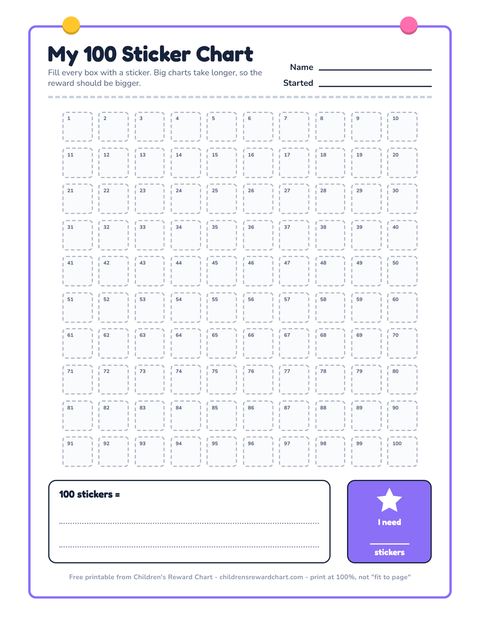
The 100 square chart works well as an incentive chart. Each square is one mark. When the class fills all 100 squares, the class earns the agreed reward.
School reading programs often use incentive charts. The teacher sets a goal like 20 books or 50 minutes. Each child marks a square for each book or each reading session.
A class incentive chart can be posted on the wall. The whole class watches the squares fill. The goal is shared, so the chart builds group effort.
- A target number set by the teacher or program
- The same goal for every child in the group
- A fixed end date or deadline
- A reward chosen by the adult or program
What a reward chart looks like
A reward chart starts with the child's habit and the child's reward. The child helps choose the behavior, like making the bed or putting away toys. The child picks the reward from a list of ideas.
A weekly chart works well for a reward chart. It has seven days and a few chores or habits. The child sees a short path to the reward.
The reward line is the key. It says what the child will get after enough marks. Keep it small and immediate for young children.
A reward chart is personal. It can have the child's name on the blank line. It can focus on one habit at a time, not a long list.
- The child's own habit, like brushing teeth or cleaning up
- A reward the child chose, like a sticker book or a movie night
- One week at a time, so the goal feels close
- The child's name on the chart
Which one to print
Use the table below to pick the right chart for your situation. The link takes you to the printable that fits. Print at 100 percent, not fit to page.
The same chart can work both ways. The situation decides which one to print.
| Situation | Why | Link | |
|---|---|---|---|
| Reading program at school | Incentive chart | Goal set by the program | /reward-charts/reading/ |
| Class goal for all students | Incentive chart | Same target for everyone | /classroom/reward-systems/ |
| Habit at home | Reward chart | Child owns the goal | /reward-charts/ |
| Sibling fight over chores | Reward chart | Each child sets own goal | /chore-charts/ |
| Coach's target for the team | Incentive chart | Coach sets the target | /classroom/ |
| Summer project | Reward chart | Child picks the reward | /reward-charts/sticker-chart/ |
For a reading program, print the reading chart and use it as an incentive. For a habit at home, print a reward chart and let the child choose the reward.
If you need reward ideas, see the reward ideas page. Keep the reward small and immediate.
Using the same chart both ways
The 100 square chart can be a class incentive chart and a summer reward chart. The paper is the same. The difference is who sets the goal and who chooses the reward.
As a class incentive chart, the teacher sets the target. The class fills 100 squares for a pizza party or extra recess. The reward is the the same for every child.
As a summer reward chart, the child sets the goal. The child chooses a reward, like a trip to the pool or a small toy. The chart counts the child's own effort.
What changes is the reward line. On an incentive chart, the reward is decided by the adult or program. On a reward chart, the child writes or draws the reward they want.
Incentive charts for students
Incentive charts for students work well in a classroom. A class points chart can be posted on the wall. The whole class works toward a shared goal.
An individual chart in a folder works for a student who needs a personal target. The teacher sets the goal, like finishing homework for a week. The student marks each day.
Be fair to the child who is never the problem. That child still needs a goal and a reward. The chart should not only punish the disruptive child.
For classroom ideas, see the classroom reward systems page. For a whole class chart, use the classroom page.
Mistakes with incentive charts
Incentive charts fail when the goal is too far away. A young child cannot wait a month for a reward. Keep the target close, like 10 squares for a 3 year old.
The same target for every age is a mistake. A 3 year old needs a shorter path than a 10 year old. Adjust the number of squares to the child's patience.
A prize the child did not want will not motivate. Ask the child what they want, or offer a choice. The reward line should be something the child cares about.
No marks for a week kills the chart. If a child misses a day, still give a mark for trying. The chart should build momentum, not punish.
Comparing children on the same chart is a mistake. Each child should have a personal goal. The chart is not a competition.
No end date makes the chart drag. Set a clear end, like 20 squares or one month. When the chart ends, celebrate and start a new one.
- A target too far for the child's age
- The same target for every age
- A prize the child did not want
- No marks for a week
- Comparing children on the same chart
- No end date
Ending either chart
End the chart when the target is reached or the habit is formed. A chart that goes on forever loses its power. Celebrate the finish with a small reward.
The fade is the slow step. After the chart ends, keep the habit going without marks. Remind the child of the success, not the chart.
The next chart can be a new goal. If the child set a reward chart for bedtime, the next chart might be for picking up toys. Keep the same printable and change the reward line.
For more on why stickers work, see the why stickers work guide. The simple act of marking a square is powerful.
Charts that go with this guide
Free one-page PDFs with a blank name line. Pick paper and ink once, every button changes.

Class Points
Class points chart: 5 goals, Monday to Friday, totals and class reward box.
Download letter PDF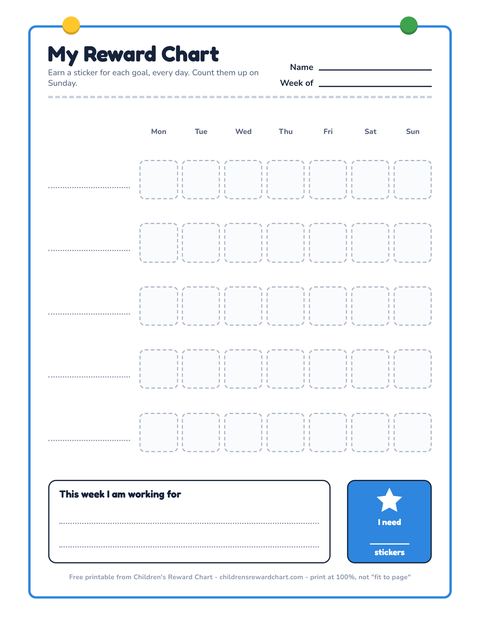
My Reward Chart
Weekly reward chart in blue: 5 goals, 7 days, reward and target boxes.
Download letter PDFStickers and paper for the chart
The reinforcer has to be in the drawer before the first star is earned. Links go to Amazon and we may earn a commission.
Questions parents ask
What is an incentive chart?
An incentive chart is a printable chart that counts marks toward a goal set by someone else. A teacher, coach, or program decides the target and the reward. The child works to meet that outside goal. It is often used in classrooms for group or individual targets.
What is the difference between an incentive chart and a reward chart?
An incentive chart counts toward a goal set by someone else, like a class reading program. A reward chart counts toward a goal the child set, with a reward the child chose. The difference is who owns the goal. Both use stickers or marks.
Are incentive charts good for students?
Yes, incentive charts can help students focus on a shared or individual target. They work best when the goal is clear and the reward is meaningful. Avoid comparing students and keep the target close. Use them for specific behaviors or academic goals.
How many squares should an incentive chart have?
The number of squares depends on the child's age and the goal. A 3 year old might use a 10 square chart. A 10 year old can handle 100 squares. The 100 square chart works for a long class goal. Keep the target close enough to stay motivating.
Can I use one chart for the whole class?
Yes, a single chart for the whole class works well for a shared goal. Print a 100 square chart and post it on the wall. The class fills the squares together. Use it for a class reward, like extra recess or a movie. Just make sure every child contributes.
Read next
Short guides that end at a chart you can print tonight.

Why stickers work on a chart, and when they stop
Understand why stickers work on a chart, and what to do when they stop working.

Reward chart ideas: 30 goals and rewards by age
Choose from 30 reward chart ideas by age, with goals and rewards that actually motivate.

Reward chart not working? Eight fixes in order
Fix a reward chart that has stalled, with eight fixes you can try in order.