- Home
- Behavior charts
- Behavior chart for kids with adhd
Behavior chart for kids with ADHD
An ADHD reward system that pays out twice a day works better than one that waits all week. This behavior chart for ADHD scores four blocks a day and pays at lunch and bedtime. A reward that arrives in three hours changes what happens in the next hour.
Download the charts
One-page PDFs with a blank name line. Pick paper and ink once, every button changes.

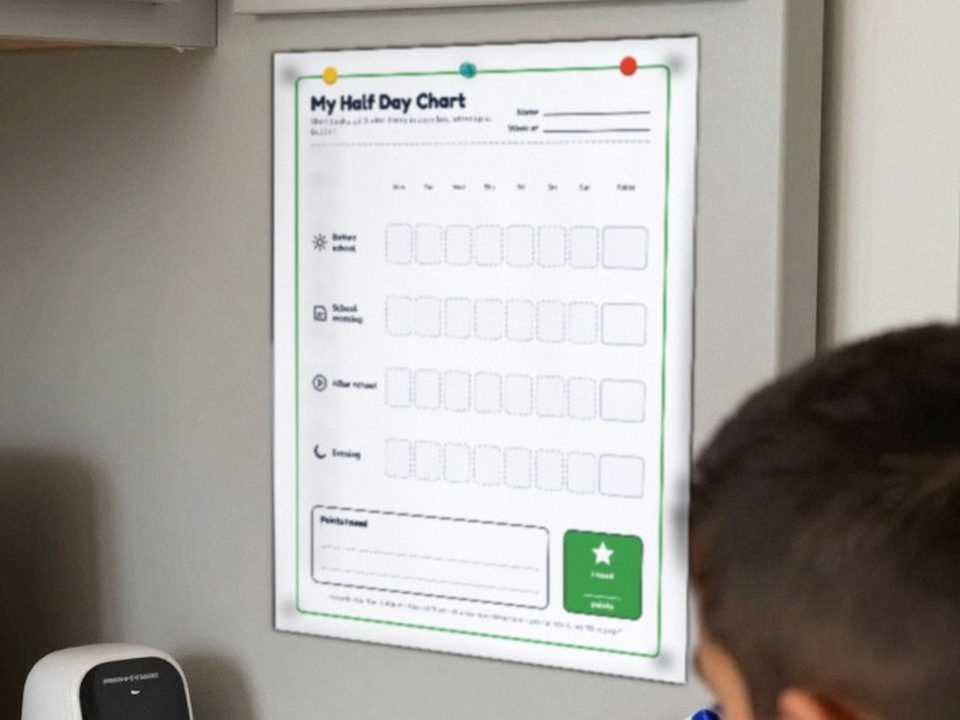
My Half Day Chart
Short-interval behavior chart: 4 blocks a day, 7 days, points column.
Download letter PDF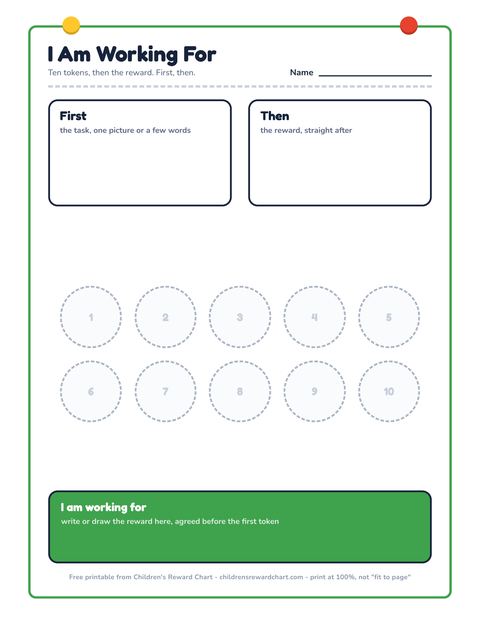
Why the usual chart fails and what to change
A chart that pays once on Friday asks a child with ADHD to wait too long. The week is too long and even the day is too long. So this chart shortens the interval to a few hours.
The printable scores four blocks a day: morning, midday, afternoon, and evening. Each block has one goal. The child earns points in a block, and those points turn into small rewards at lunch and at bedtime.
This page is about the chart and how to use it. It is not a medical tool. If you have questions about your child's care, talk to a professional.
The core idea is simple: a reward that lands the same day is a reward a child can feel. That is what keeps a child engaged.
The short-interval chart
The printable is a one-page PDF. It has four blocks a day across seven days, with a points column for each block. Their are two payout lines at the bottom: one for lunch and one for bedtime.
Score each block with 2 points, 1 point, or 0. Two points means the child did the goal without a reminder. One point means they did it with a reminder. Zero means the block did not happen.
Add the points at lunch and at bedtime. The payout lines show what the points buy at those times. The chart comes in letter and A4, in color and in an ink saving black outline version.
Print at 100 percent, not fit to page. The boxes fit a 1.5 inch round sticker or a 1/2 inch star sticker. There is a blank name line at the top.
An ADHD reward system that pays out twice a day
The payout schedule is what makes this chart different. You are not saving points for a distant prize. You are cashing them in within hours.
Keep the rewards small and immediate. A handful of goldfish, 10 minutes of a favorite show, or a sticker on a board. The point is the timing, not the size.
Here is a sample schedule for a school day.
| Time | What the points buy | Example |
|---|---|---|
| Lunch | A small edible or screen time | 5 minutes of a tablet game |
| After school | A quick activity with you | 15 minutes of catch outside |
| Bedtime | A sticker or a small treat | One star on the token board |
| Sunday | A bigger family prize | Picnic at the park |
The Sunday row is optional. If you use it, keep it modest. A trip to the library or a family movie works well.
You can swap the examples for anything your child loves. The key is to have the reward ready before the payout time. If you need ideas, browse our reward ideas page.
A token system for ADHD
A token system for ADHD is a board that shows progres in a physical way. The printable has 10 tokens and a picture of the reward at the end. The child earns tokens in minutes, not days.
Each token stands for a short completed task or a block done well. When the board fills up, the reward happens. This works because the child can see the tokens pile up.
Use the token board when the chart feels too abstract. It works well for children under 7, or for a specific setting like school.
For a classroom version, see our classroom behavior charts. For younger kids, the toddler and preschool charts are a good fit.
Mistakes that make the chart stop working
Most charts fizzle because of a few fixable errors. Check this list before you start and again after the first week.
- Intervals too long: a week is too long, even a day can be too long.
- More than one goal per block: pick one behavior per block.
- Points taken away: never subtract earned points.
- The reward not ready: have it at the table before payout time.
- The chart out of sight: hang it where the child can see it.
- No reset after a bad block: start fresh at the next block, no grudges.
If you avoid these, the chart has a real chance. If you slip, reset at the next block.
For more on how to frame rewards, read about positive reinforcement examples and the difference between positive and negative reinforcement. You can also see behavior chart examples for other styles.
More behavior charts
Every page hands out its own chart. All behavior charts.
ABC behavior chart (antecedent behavior consequence)
ABC data sheet + if/then chart
Free printableBehavior chart for adults (habit and accountability)
Adult habit chart
Free printableReward chart for autistic children (visual, token board)
Token board 5 and 10
Free printableChristmas behavior chart (countdown to the 25th)
Countdown chart
Free printableColor coded behavior chart (and the clip chart debate)
Color chart + alternatives
Free printableKindergarten behavior chart
hub set
Free printableFree printable behavior chart templates
Blank + editable PDF
Free printableSmiley face behavior chart
Smiley chart, daily
Free printableBehavior chart for toddlers and preschoolers
Picture behavior chart
Free printableBehavior tracking sheets, logs, point sheets and frequency charts
Tracking sheet pack
Free printableGuides on behavior and rewards
Short guides that end at a chart you can print tonight.

Positive reinforcement examples for kids, at home and in class
See real examples of positive reinforcement at home and in class, then print a chart that puts one into action tonight.
Positive vs negative reinforcement: what each one looks like with a child
Learn what negative reinforcement actually looks like with a child, and how to tell it apart from punishment, so you can choose the right chart.
Behavior chart examples for home, with the goals that work
Browse behavior chart examples that work at home, with the goals that keep a child engaged past the first week.
Print it, then stick it to the fridge
Sticker paper that fits every chart on this site, and the bits that keep a chart up all week. Links go to Amazon and we may earn a commission.
Goes with a behavior chart
Smiley stickers, a timer for the short intervals and the magnets that keep it on the fridge.
Questions parents ask
What kind of reward chart works for ADHD?
A chart with short intervals works best. Score blocks of a few hours, not full days or weeks. Pay out at lunch and bedtime. One goal per block keeps it clear. The child sees the reward coming soon, so they stay engaged.
How often should a child with ADHD get a reward?
Twice a day is a good starting point. A small reward at lunch and another at bedtime. This matches the four block system. The reward arrives within hours of the behavior. That timing makes the connection clear.
What is a token system for ADHD?
A token system uses a board with 10 tokens. The child earns a token for a short completed task. When the board fills, they get a chosen reward. Tokens are earned in minutes, not days. It works well for younger children or for school settings.
Should I take away points for bad behavior?
No. Never take away earned points. Once a point is earned, it belongs to the child. Taking points away teaches that effort can be erased. Instead, start the next block fresh. Focus on what the child can earn next, not what they lost.