Classroom behavior charts, whole class and individual
A classroom behavior chart should show good news only. This page gives you two free printables: one for the whole class and one for each student. The whole-class chart marks the room, and the individual chart stays in a folder.
Download the charts
One-page PDFs with a blank name line. Pick paper and ink once, every button changes.

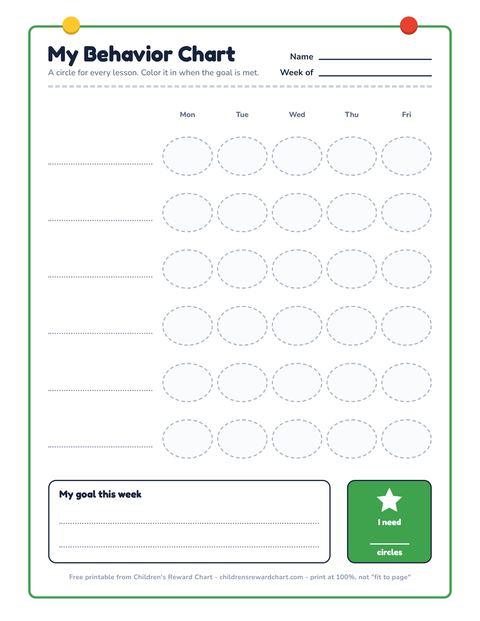
My Behavior Chart
Individual student chart: 6 lessons a day, Monday to Friday, goal box.
Download letter PDFThe whole-class chart
The first printable is a whole-class behavior chart. It has one line per student and one box per day. You mark it once at the end of the day, not during the day. This chart is for a class goal, like everyone cleaning up or lining up quietly.
When the class meets the goal, you fill in the box. When the row is full, the class earns a room reward, like extra recess or a dance party. This chart is not for shaming. A public chart that shows bad days makes kids feel small. Keep it positive or keep it private.
There is a longer guide on this: Classroom reward ideas that cost nothing.
The individual behavior chart
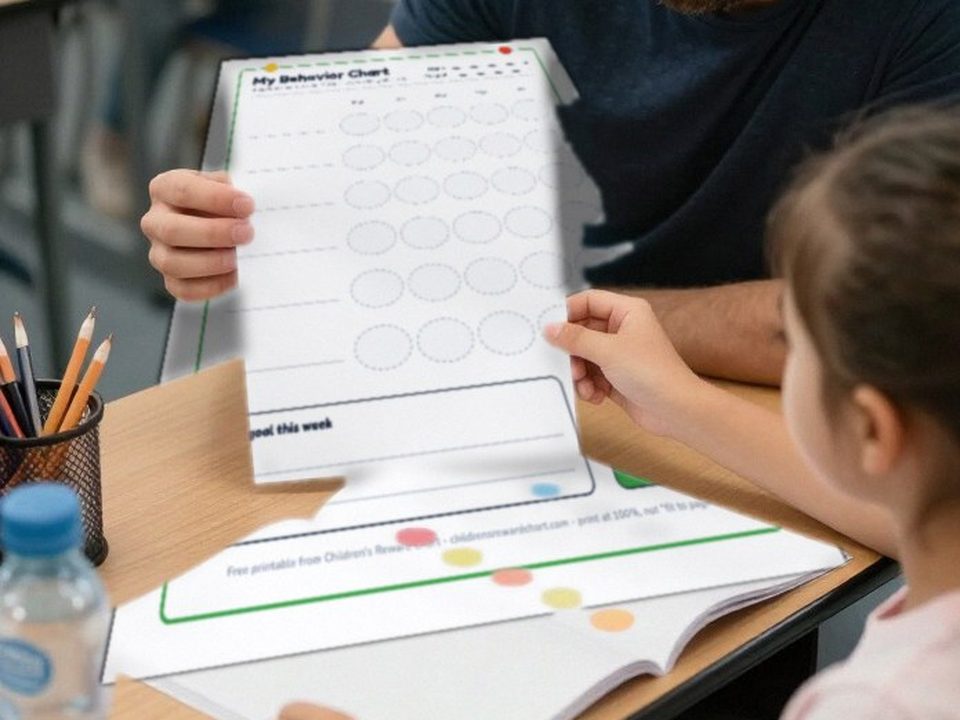
The second printable is an individual behavior chart. It has a circle for each lesson of the day. The child colors the circle when they meet their goal. This chart lives in the child's own folder, not on the wall.
A bad day stays between the teacher, the child, and home. On Friday, the child takes the chart home with a short note. For a student who needs more support, use the daily point sheet from the tracking sheets page. That sheet tracks each hour and gives the child a fresh start every period.
Writing goals a class can meet
Goals work when they are specific and doable. Write them as actions, not feelings. Keep the list short so the class can remember it. Here are five wanted behaviors for a room:
- Ready in 30 seconds
- Hands up to speak
- Quiet transitions
- Everyone joined in
- Kind words
Pick one goal for the week. Practice it in the morning and remind kids before each transition. When the class meets the goal, mark the chart. You can swap goals each week or keep the same one until it is easy.
Preschool behavior charts
Preschoolers need pictures, not words. A chart with a sun, a star, or a smiley face works better than a list of rules. Give a sticker for each session, not each day. A morning session and an afternoon session are two chances to earn a sticker.
Let the child stick the sticker on the chart. That small act builds ownership. For a printable with pictures and a simple layout, see the kindergarten chart. It has big boxes and a blank name line, so it works for ages 3 to 5.
Clip charts and color charts
Clip charts and color charts are common in classrooms. The case for them is that they are easy and give quick feedback. The case against them is that they make bad days public. A child who moves down feels seen by everyone, and that can cause shame.
If you use one, follow two rules. First, every child starts fresh each day. Second, only move clips up, never down. For a color coded chart that works this way, see the color coded page. It lets you mark good choices without calling out mistakes.
Marking it in ten seconds
The end of the day is the best time to mark the whole-class chart. It takes ten seconds. You look at the goal, decide if the class met it, and fill the box. Do this with the class watching, so they see the result of there day.
Use dry-erase pockets to make the chart reusable. Slide the printable in, mark with a dry-erase pen, and wipe clean the next day. For a class reward, keep a jar on your desk. Add a marble or a pom-pom for each filled box. When the jar is full, the class earns the reward. See reward systems for more ideas.
More classroom charts
Every page hands out its own chart. All classroom.
Student certificates and good behavior awards
Certificate pack
Free printableStudent behavior reflection sheets and reports
Reflection sheets by grade
Free printableClassroom reward coupons (printable)
Coupon sheets
Free printableClassroom birthday chart (printable 12-month chart and board ideas)
12-month birthday chart, 4 and 6 lines
Free printableClassroom reward systems, charts and ideas
Class points chart
Free printableGuides for the classroom
Short guides that end at a chart you can print tonight.


Print it, then stick it to the fridge
Sticker paper that fits every chart on this site, and the bits that keep a chart up all week. Links go to Amazon and we may earn a commission.
Goes with the classroom charts
Pocket charts, sticker rolls, certificate paper and dry-erase pockets for a room of 25.
Questions parents ask
What is the best behavior chart for a classroom?
The best chart is one you can mark quickly and that keeps bad days private. A whole-class chart for the room and an individual chart in a folder work well. Choose a chart with clear goals and a simple marking system, like one box per day.
Should behavior charts be public in the classroom?
Public charts should only show positive behavior. If a chart shows mistakes, it can shame a child. Keep individual charts private, in a folder or on a desk. A whole-class chart can be public because it shows the class working together, not singling out any child.
How do I use an individual behavior chart for one student?
Meet with the child to pick one goal, like raising a hand or staying in the seat. Each lesson, if the child meets the goal, they color a circle. At the end of the day, send a short note home. On Friday, the child takes the chart home to share.
What goals should be on a classroom behavior chart?
Goals should be specific and doable for the whole class. Use actions like ready in 30 seconds, hands up, quiet transitions, everyone joined in, or kind words. Keep the list to five or fewer. Pick one goal for the week and practice it daily.