Should students be rewarded for good behavior?
Yes, reward a new behavior for the first six weeks, then fade the reward so the routine itself becomes the habit. Rewards work for starting, not for sustaining, good behavior.

Should students be rewarded for good behavior? The honest answer is yes for a new behavior and no for a habit. A reward is the push that gets a routine going in September, but by November the routine should be its own reason to continue.
Yes for a new behavior, no for a habit
Think of a classroom in September. The students are learning where to put their backpacks, how to line up, and when to raise a hand. These are new behaviors, and a reward makes the learning visible and fast. A sticker or a star says: that is exactly right, do it again.
By November, the same behaivors should be automatic. The line forms without a reminder, the hand goes up before the voice. That is a habit, and a habit does not need a reward. In fact, a reward can make a habit feel like a transaction: what do I get for doing what I already do?
The line between the two is time. Reward the first six weeks of a routine, then fade the reward and let the routine stand on its own. That is the whole guide in one sentence.
The case for rewards
Rewards get a bad name when they are used forever, but for a new behavior they are the clearest signal a teacher has. Here is why they work in the first weeks of school.
- Visible: a sticker chart shows progress at a glance
- Fast: the reward comes right after the behavior
- Fair when whole-class: everyone works toward the same goal
- Works for the child who has never been noticed
- Cheap: paper, stickers, and a printer are enough
Notice the last one. A classroom reward system does not need a prize shelf or a treasure box. A printed chart and a sheet of stickers cost almost nothing and take five minutes to set up. You can find ready-made charts for classroom behavior that fit a standard sticker.
The case against
The arguments against rewards are real, and they mostly come from rewards that never fade. Here is what can go wrong when a reward system runs too long.
- The child who only works for the reward
- The quiet child who never gets one
- Public rankings that shame instead of encourage
- Candy as a reward, which ties behavior to sugar
- Rewards for things that should just happen, like using the bathroom
The last one is the easiest to fix. Do not reward a child for putting a coat on or sitting down. Reward the behaviors that are new and hard, not the ones that are already expected. For more on what to avoid, see classroom reward ideas that keep the focus on behavior, not trinkets.
What the research question actually asks
The research question is not: do rewards work? The question is: what kind of reward, for what behavior, and for how long? In plain words, reinforcement is a reward that follows a behavior and makes that behavior more likely. Bribery is a reward offered before the behavior, often to stop something bad.
A sticker after a child raises a hand is reinforcement. A teacher saying: if you stop shouting, I will give you a sticker, is bribery. The first builds a skill, the second builds a negotiation.
The term operant conditioning describes this: behavior followed by a consequence gets stronger. That is true for a new behavior. But once the behavior is routine, the consequence can become the routine itself. The classroom runs, the work gets done, and the child feels the pride of doing it well. That pride is the real reward, and it does not come from a chart.
Six weeks on, then fade
A fade schedule is simple. For the first two weeks, give a reward every time the behavior happens. A sticker for each hand raised, each line formed, each quiet transition. The child sees the connection clearly.
For weeks three and four, move to a Friday reward. The week's stickers add up to a single treat: extra recess, a favorite job, a note home. The daily sticker is gone, but the weekly goal keeps the behavior going.
For weeks five and six, make the reward occasional and unpredictable. A surprise sticker on a Tuesday, a certificate on a random Thursday. Then take the chart down. The routine has become the habit, and the habit is its own reward.
You can follow this same fade with a classroom reward system or a simple color-coded chart that works for the whole class.
Whole-class versus individual
Individual rewards can single out the same children every day, and the quiet child who behaves well never gets noticed. Whole-class rewards keep everyone on the same team, but they can feel slow for the child who is ready to earn. Here is a quick comparison.
| Reward type | Rewards | Risks |
|---|---|---|
| Individual | Fast, personal, clear | Public comparison, jealousy |
| Whole-class | Builds teamwork, no shaming | Slow, less personal |
| Mix of both | Flexible, fair | More planning, tracking |
The mix is often the best. Use a whole-class chart for routines like lining up or cleaning up, and a private note or sticker for a child who is struggling with a specific behavior. The classroom reward systems guide has examples of both.
Rewards that are really recognition
The best rewards are the ones that fade into recognition. A certificate that says: you learned to line up quietly, is not a bribe. It is a record of growth. The child can take it home and show it, and the pride lasts longer than a sticker.
A note home to a parent is the same. The teacher writes: your child raised a hand all week, and the parent reads it at dinner. That is recognition, not a transaction. It fades well because it does not need to be repeated every day.
A job, like being the line leader or the paper passer, is another recognition reward. The child earns the job by showing the behavior, and the job itself becomes the reward. For printable certificates, see classroom certificates.
A classroom in September and in March
In September, the classroom has a chart on the wall with a row of names and a column of stickers. The teacher says: remember, we earn a star when we walk in quietly. The children watch the chart fill up, and they whisper to each other about who is close to the next row.
In March, the chart is down. The wall is bare where it used to be. The children walk in quietly because that is what the class does. The teacher does not say anything about stars. She says: good morning, and the class settles into the day. The routine is the reward.
That is the goal. The chart is a scaffold, not a crutch. When it comes down, the behavior stays because it has become part of the room. You can use a downloadable chart to start, and then let it go.
Charts that go with this guide
Free one-page PDFs with a blank name line. Pick paper and ink once, every button changes.


Class Points
Class points chart: 5 goals, Monday to Friday, totals and class reward box.
Download letter PDF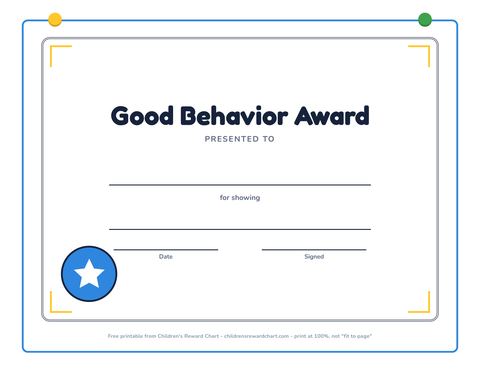
Stickers and paper for the chart
The reinforcer has to be in the drawer before the first star is earned. Links go to Amazon and we may earn a commission.
Questions parents ask
Should students be rewarded for good behavior?
Yes, for a new behavior, for the first six weeks. A reward makes the behavior clear and gives the child a reason to repeat it. After that, fade the reward so the behavior becomes a habit. Rewarding a habit too long turns it into a transaction.
Do classroom reward systems work?
They work when they are short and specific. A reward system that runs for six weeks can help a class learn a routine. A system that runs all year can create dependence. The test is whether the behavior continues after the chart comes down.
What are the downsides of rewarding students?
The main downside is a child who only works for the reward. Public rankings can shame quiet children, and candy rewards tie behavior to sugar. Rewards for things that should just happen, like using the bathroom, make the child expect payment for normal actions.
How long should a class reward system run?
Run it for about six weeks. Give daily rewards for the first two weeks, then weekly rewards, then occasional surprises. Take the chart down at six weeks. If the behavior slips, bring the chart back for a short reset, not for the whole year.
Is recognition better than rewards?
Recognition is a reward that fades well. A certificate, a note home, or a special job says: I saw what you did, and it mattered. Recognition does not need to be repeated every day, and it builds pride instead of dependence.
Read next
Short guides that end at a chart you can print tonight.
