When to start potty training, and when the chart comes out
Start potty training when your child shows most of the readiness signs, not at a set age. The reward chart comes out on day one of training, not during the readiness stage. Waiting for readiness makes training shorter and easier.

When to start potty training is a question every parent asks, but the answer is not on a calendar. Readiness is a list of things your child already does, not a birthday. So here is the list, and here is when the chart comes out.
Readiness is a list, not an age
Forget the potty training age for a moment. Your child will tell you they are ready by what they do, not by how old they are. Some children are ready at 2, others at 3, and some not until closer to 4. All of those are normal.
Look for most of these signs before you start. You do not need every single one, but you want the majority. If you see only one or two, wait a few weeks and check again.
Here are the 8 signs of potty training readiness:
- Stays dry for two hours or more during the day
- Tells you after they have gone, like saying 'I peed'
- Hides to poop or goes into another room
- Hates a wet or dirty diaper and asks to be changed
- Can pull pants down and up by themselves
- Sits still for a minute or two when asked
- Follows two-step instructions, like 'get the book and sit here'
- Shows interest in the toilet or in you using it
Ages vary widely, so do not compare your child to a neighbor's child. The best age to potty train is the age when your child shows most of these signs. That might be 2, it might be 3, or it might be somewhere in between.
For boys, the signs are the same. There is no separate readiness checklist for boys versus girls. The only difference is in the mechanics, which we will get to shortly.
What happens if you start too early
Starting before your child is ready usually means a longer training period and more accidents. Your child may not have the bladder control or the awareness to know they need to go. They may also simply refuse to sit on the potty, which turns every attempt into a battle.
How can you tell if you started too early? If after a week of trying, your child is fighting the potty, having many accidents, or crying at the sight of the potty chair, that is a clear sign. Another sign is if your child can hold urine for less than an hour during the day.
Pausing is fine. Their is no rule that says once you start, you must finish. Put the potty away for a month, then try again. Many parents do this and it works much better the second time.
The reward chart is not a tool to force readiness. It is a tool to reward the behavior of using the potty once the child can actually do it. So if you are in the too-early stage, the chart stays in the drawer.
What happens if you wait too long
Waiting too long has its own problems. A bigger child has a bigger opinion, and they may decide they simply do not want to use the potty. They can also hold their urine for longer, which means they may have fewer accidents but also fewer opportunities to practice.
Some daycare centers have deadlines for when a child must be out of diapers. If you have that deadline, you may need to start before your child shows every sign. That is okay, just know that it may take longer.
The honest middle is this: waiting until your child shows most of the signs is ideal. But life is not always ideal. If you need to start earlier because of daycare or your own schedule, you can, but keep your expectations low and be patient.
If you wait until 3 or 4, the chart still works. The child understands the reward system better, and they may be more motivated by the stickers. The same readiness list applies, just at an older age.
Boys and girls
The sitting-first rule applies to both boys and girls. Have your child sit on the potty to pee, not stand. This is simpler, and it works for poop too. For boys, you can introduce standing later, once they are comfortable with sitting.
There are no medical claims here, just practical advice. Boys and girls learn at the same pace when they are ready. The only difference is in the themed charts you can choose from.
Our potty training charts come in themes that appeal to different kids. Some have dinosaurs, some have princesses, some have trucks or animals. Pick a theme your child loves, and they will be more excited to earn stickers.
For a boy who loves cars, a car-themed chart works. For a girl who loves unicorns, a unicorn chart is better. The theme is not a reward in itself, but it makes the chart feel like a game.
The week before: no chart yet
The week before you start, do not bring out the chart. The goal is to build comfort with the potty, not to earn rewards yet. Put the potty chair in the room where your child plays. Let them sit on it fully clothed if they want.
Read a potty book together, like one of the potty training books we recommend. Let your child watch you use the toilet, so they see what it is for. Take them shopping for underwear and let them pick a few pairs.
This week is about making the potty a normal, boring object. Your child should not feel any pressure. The chart stays in the drawer until day one.
Day one: the chart comes out
On the morning you start, bring out the chart and the stickers. Show your child the empty boxes and explain that every time they try to use the potty, they get a sticker. The first try might be just sitting on the potty for a few seconds, and that is fine.
The sticker goes on within seconds of the try, not later. This is the key to making the chart work. The reward is immediate, so the child connects the action with the sticker.
You can use a sticker chart that has a specific potty theme. Or you can use a printable chart that you print at home. The boxes on every chart fit a 1.5 inch round sticker or a 1/2 inch star sticker.
The reward line is the bottom of the chart, where you write what the child earns after a certain number of stickers. Choose a small reward like a favorite snack or a trip to the park. Do not make it expensive or complicated.
For more ideas on what to put in the reward line, see our guide to potty training rewards. And if you want to make your own chart, we have a step-by-step guide.
Nights are a separate project
Nighttime dryness is a different skill and it often comes months later. Do not use the same chart for daytime and nighttime. Instead, start a separate nighttime chart once your child has been dry at night for a few mornings in a row. That chart can reward waking up dry, and it may take a while, so be patient.
When to stop and try again
If after two weeks of consistent effort your child is still having many accidents and resisting the potty, it is okay to stop. There is no shame in pausing. The chart goes away, and you try again in a month or two.
When you try again, use a new theme. A fresh chart with a different design can feel like a new game to your child. You can also try a different reward, like a diferent sticker shape or a larger reward for the reward line.
The two-week rule is a guideline, not a strict deadline. If you see progress, keep going. If you see nothing but battles, stop. Your child will not be in diapers forever, and the chart will come back when they are ready.
Charts that go with this guide
Free one-page PDFs with a blank name line. Pick paper and ink once, every button changes.
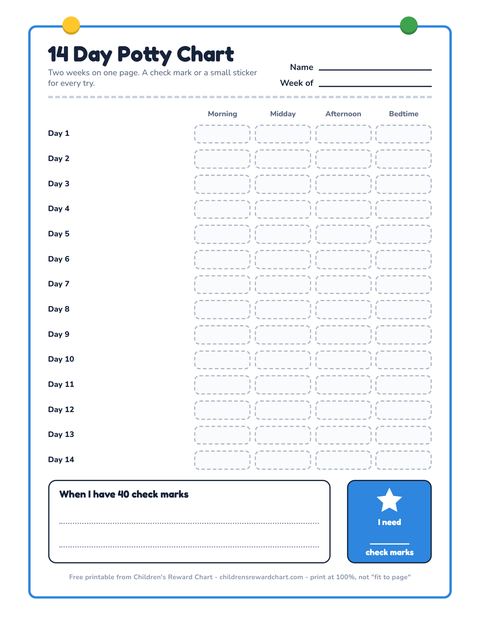
14 Day Potty Chart
14-day potty chart with four boxes a day: morning, midday, afternoon, bedtime.
Download letter PDF

Stickers and paper for the chart
The reinforcer has to be in the drawer before the first star is earned. Links go to Amazon and we may earn a commission.
Questions parents ask
What age should I start potty training?
There is no single best age. Most children show readiness between 2 and 3, but some are ready earlier or later. Look for the signs of readiness, not the birthday. If your child is 3 and not ready, that is normal. Wait until they show most of the signs.
What are the signs a child is ready for potty training?
The main signs are: staying dry for two hours, telling you after they go, hiding to poop, hating a wet diaper, pulling pants down, sitting for a minute, following two-step instructions, and showing interest in the toilet. Wait until your child shows most of these.
Should I start potty training with a chart?
No. The chart is for week one of training, not for the readiness stage. In the week before, just introduce the potty and read books. On day one, bring out the chart and give a sticker for every try. The chart rewards the behavior, so it only works once the child is actually trying.
Is it bad to start potty training late?
No, starting late is not bad. It can actually be easier because the child is more capable and may understand the reward system better. The only downside is if a daycare has a deadline. If you start late, use the same readiness list and the same chart method.
When do you potty train at night?
Nighttime training is separate from daytime. Wait until your child has been dry at night for several mornings in a row, which often happens months after daytime training. Then start a nighttime chart that rewards waking up dry. Be patient, as nighttime dryness can take longer.
Read next
Short guides that end at a chart you can print tonight.
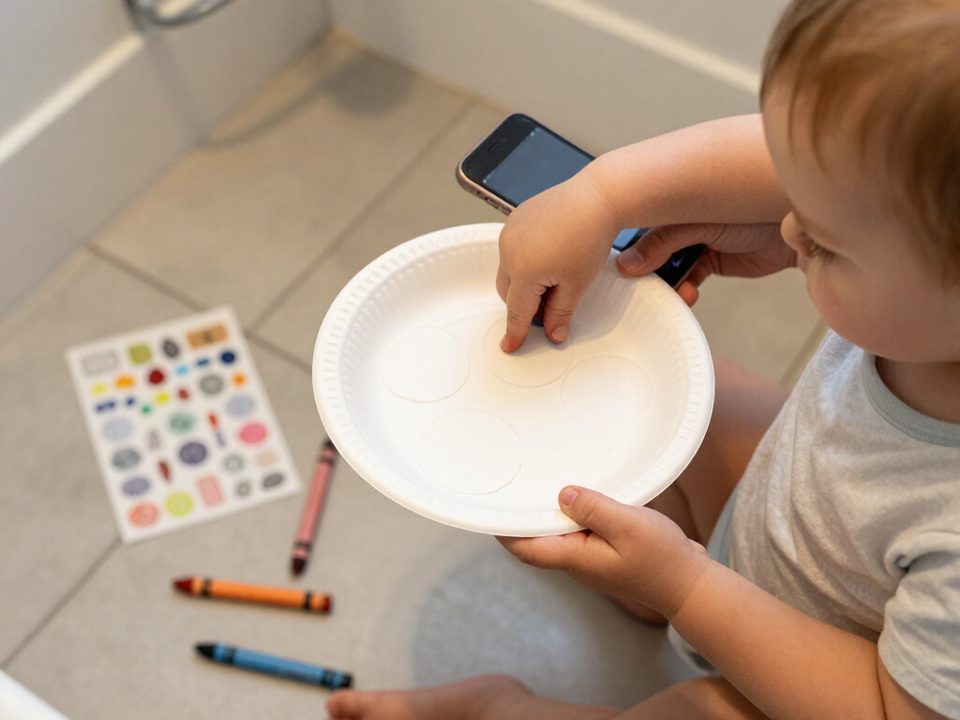
Homemade potty chart ideas that work in a week
Make a homemade potty chart that works in a week, using stickers and a few simple rules.

Best potty training rewards, by age and by stage
Pick the best potty training rewards by age and stage, and know which ones keep momentum without overpromising.

How to make a potty training chart in ten minutes
Make a potty training chart in ten minutes, with a blank name line and boxes that fit standard stickers.