Best potty training rewards, by age and by stage
The best potty training reward is the one that matches the stage: a sticker for a sit in week one, a bigger prize for a success in week two, and nothing at all by week four. Change the reward as the skill improves, and the chart will carry the habit.

Potty training rewards work best when they change as your child improves. A sticker for a sit in week one is a bribe by week four. So here is a reward schedule by stage, not a list, starting with the very first try.
Rewards by stage, not by list
Most potty training reward lists fail because they treat every week the same. A child who just sat on the potty for the first time needs a different reason to try again than a child who has been dry for three days. The reward must match the effort, or it stops meaning anything.
Think of training in four stages: the sit, the success, the dry stretch, and the fade. In stage one, you reward the try. In stage two, you reward the success. In stage three, you reward a longer dry period. In stage four, you stop the rewards and let pride take over.
The key is to reward the try in the beginning and the success later. If you keep rewarding a bare sit in week four, your child will sit, do nothing, and still expect a prize. The reward has to grow with the skill.
Stage 1: rewarding the sit
In the first week, the goal is simply to get your child on the potty. Every time they sit, even for a few seconds, put a sticker on the chart within seconds. The sticker is the reward, not the promise of one later. It has to be immediate.
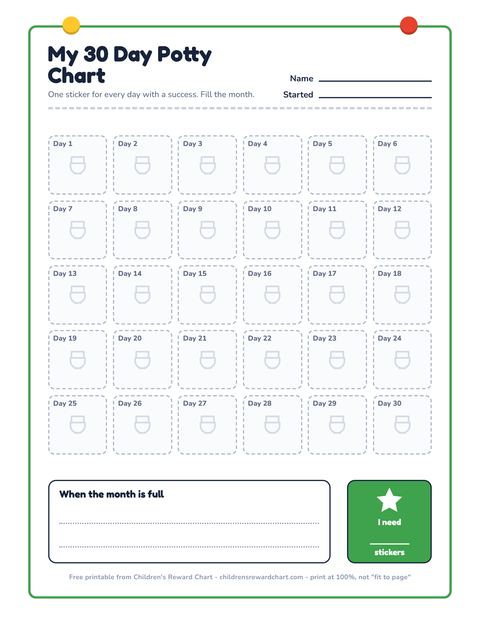
Use a simple sticker chart with a blank name line. Let your child place the sticker themselves. That small act of sticking is half the fun.
If the sit was a real try, add one of these instant extras:
1. A high five and a silly dance
2. One small Lego piece in a jar
3. A mini book read right there
4. A bubble blow together
5. A favorite song played on your phone
These extras are small, but they tie the sit to a happy moment. Keep them quick and consistent.
Stage 2: rewarding the success
Once your child is sitting regularly, the sit itself no longer earns anything. Now the reward is for the success: a pee or a poop in the potty. This is the stage where a bigger sticker or a small prize works.
Use the big stickers on your chart, or let your child pick a new one from a special box. A phone call to grandma or grandpa is a powerful reward too. Let your child make the call and say, "I peed in the potty!"
Another strong reward is letting your child choose their own underwear. Take them to the store, let them pick a pack with their favorite characters, and keep it for this stage. The underwear is the prize, and the potty is the way to get it.
Stage 3: rewarding a dry morning or afternoon
By stage three, your child is having real successes, but staying dry between trips is the new challenge. This is the time for a longer reward for a longer thing. A dry morning or a dry afternoon earns a reward, not each pee.
Use a chart with a reward line, like the printable charts that have a row for a star or a sticker at the end. Decide together what the reward will be when the line is filled: a small toy, a trip to the park, or an extra bedtime story.
Keep a small toy box with cheap items like stickers, mini cars, or bubbles. Let your child pick one when they meet the dry goal. The reward is for the stretch, not for each success, so it stays special.
Stage 4: stopping the rewards
The final stage is fading out the rewards, and it should take about one week. Start by giving the reward every other success, then every third, then not at all. Tell your child ahead of time: "You are so good at this, you dont need the chart anymore."
On the last day, take the chart down together. Let your child see their full chart and feel proud of what they did. You can say, "Look what you made!" and then put it away or hang it in their room as a memory.
The pride of being done is the real reward. If your child asks for a sticker, remind them that they are a big kid now. The habit is the prize, not the sticker.
Rewards by age
Age matters because a 2 year old and a 4 year old want diferent things. The table below is a quick guide to what works and what falls flat at each age.
| Age | Reward that works | Reward that does not |
|---|---|---|
| 18 months to 2 | Immediate sticker, clapping | Waiting for a prize later |
| 2 to 3 | Sticker on chart, small toy | A reward for a dry diaper |
| 3 to 4 | Phone call, underwear choice | Candy or sweet treats |
| 4 plus | Privilege like staying up late | Babyish stickers or toys |
Candy, and why to avoid it if you can
Food rewards for potty training are a bad idea for most kids. They teach your child to expect a treat for a normal body function, which can lead to battles over candy and a habit that is hard to break. The excitement of a sticker or a phone call works just as well without the sugar.
If you already started with candy, you can still fix it. Use one small piece, like a single M&M, only in stage 2, and only for a success. Fade it out quickly, within a week or two, and replace it with a non-food reward.
The goal is to make the potty itself the good thing, not the candy. If you skip candy from the start, you avoid the whole problem.
Nighttime rewards
Nighttime training is different, and it needs its own chart. A dry night is a longer goal, so the reward should be a morning sticker on a nighttime chart. Let your child put the sticker on as soon as they wake up, before anything else.
Use totals, not streaks. A streak breaks and discourages a child. Instead, count the dry nights in a week and reward when the total reaches a number you set, like 3 dry nights out of 7. This keeps the reward achievable.
Nighttime rewards can be simpler: a sticker, a small treat, or extra time playing with a toy. The chart itself is the main reward, so keep it visible and fun.
Charts that go with this guide
Free one-page PDFs with a blank name line. Pick paper and ink once, every button changes.


Stickers and paper for the chart
The reinforcer has to be in the drawer before the first star is earned. Links go to Amazon and we may earn a commission.
Questions parents ask
What are the best rewards for potty training?
The best rewards are immediate, small, and tied to the stage. In week one, a sticker for a sit. In week two, a big sticker or a phone call for a success. In week three, a small toy for a dry stretch. By week four, no reward, just pride.
Should I give candy for potty training?
It is better to avoid candy. Food rewards can create a habit that is hard to break and may lead to battles. If you already use candy, keep it to one small piece only in stage 2, and fade it out within a week or two.
How often should I reward during potty training?
Reward every time in the first week, for every sit. In stage 2, reward every success. In stage 3, reward a dry morning or afternoon, not each pee. In stage 4, reward less and less until you stop.
When should I stop potty training rewards?
Stop when your child is consistently successful, usually after 2 to 3 weeks of dry days. Fade the rewards over one week, then take the chart down. The pride of being done is the final reward.
What rewards work for a 2 year old?
For a 2 year old, immediate and tangible rewards work best: a sticker on a chart, a small toy, or a high five. Avoid waiting for a prize later, as a 2 year old cannot connect a reward in an hour to a potty success now.
Read next
Short guides that end at a chart you can print tonight.
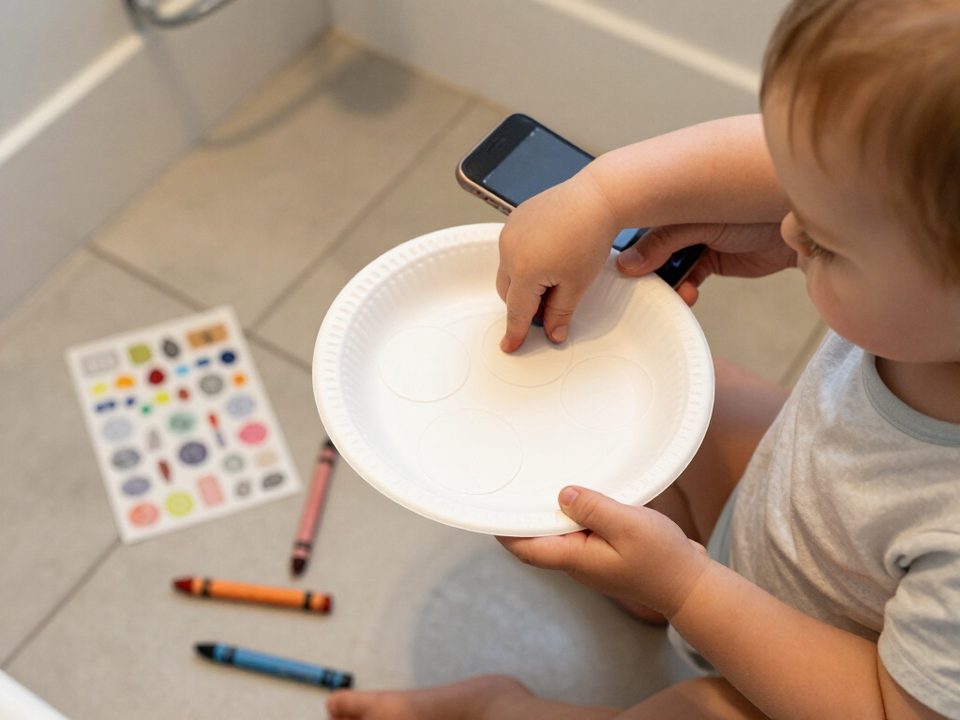
Homemade potty chart ideas that work in a week
Make a homemade potty chart that works in a week, using stickers and a few simple rules.

How to make a potty training chart in ten minutes
Make a potty training chart in ten minutes, with a blank name line and boxes that fit standard stickers.

When to start potty training, and when the chart comes out
Know when to start potty training, and when to bring out the chart so it helps, not pressures.