Homemade potty chart ideas that work in a week
A homemade potty chart works when your child helps build it. Give them one simple job, like drawing circles or picking stickers, and hang the chart where they will see it every time they sit.
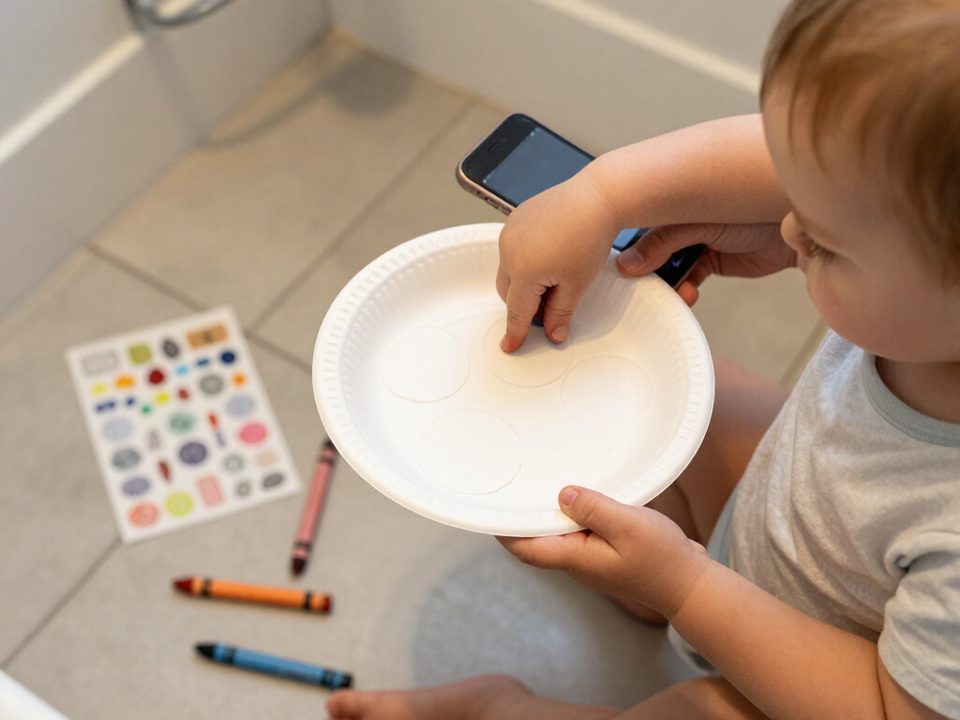
A homemade potty chart can turn a week of frustration into a week of progress, if you build it the right way. The secret is a chart your child helps make, so it feels like theirs. These homemade potty chart ideas work because a 2 year old has a real part in every single one.
What every potty chart needs
A chart that works has a few fixed parts. You need a box for every try, even the ones where nothing happens. You need a bigger mark, like a star or a special sticker, for a real success.
Add a reward line at the bottom for a small treat after a set number of tries. Write the child's name at the top in big letters. Hang it at their eye level, right next to the potty, so they can reach it from the seat.
The chart tracks the try, not the result. A child who sits for two seconds gets a box filled. That builds the habit, and the habit brings the success.
The try is what earns the mark. A child who sits gets credit, even if the potty stays dry. This keeps the chart positive and keeps them coming back.
The child's part
A chart the child helped make gets used. It is no longer your chart for them. It is their chart, and they will want to see it work.
A 2 year old can draw the circles with a crayon, even if they are wobbly. They can choose the sticker sheet from the store. They can stick the tape on the back of the paper, or press the chart flat against the wall.
Give them one job and let them own it. Do not fix their circles or redo there tape. The chart is supposed to look like a kid made it, because a kid did.
Let the child choose the color of the paper or the stickers. That one choice makes the chart theirs from the start.
Idea 1: the paper plate chart
Take a plain paper plate and draw a spiral from the edge to the center. Draw a circle at the end for the reward spot. This is the whole chart.
Tape the plate to the bathrom wall at child height. Every time your child sits on the potty, they color in one section of the spiral with a crayon or a marker. When they reach the center, they get the reward.
The child's part is coloring the sections. You draw the spiral, and they fill it in. A paper plate lasts about a week, which is exactly long enough for a new habit to stick.
The plate fills up fast, so the reward comes quickly. That speed keeps a toddler interested.
Idea 2: the paper chain
Cut strips of construction paper, about 1 inch by 6 inches. Have your child decorate them with crayons or stamps if they want.
Each time your child sits on the potty, they get one strip. Help them loop it into a ring and tape or glue the ends together. Hook the next ring through the first one to build a chain.
Hang the chain across the bathroom mirror or along the wall. Pick a length, like 10 links, and when the chain reaches that length, the child gets a reward.
The child's part is decorating the strips and handing them to you to tape. They can also count the links with you each night.
The chain grows visibly every day, which gives a toddler a clear picture of their progress.
Idea 3: the jar of stickers
Get a clean jar with a lid. Let your child pick out a sheet of stickers from the store, any kind they like.
Every time they sit on the potty, they peel a sticker and stick it on the outside of the jar. The jar fills up with color, and the child can see it fill.
Put a small toy inside the jar, visible but out of reach. When the jar is covered in stickers, open the jar and let them take the toy out.
The child's part is peeling the sticker and placing it on the jar. That little action is a big deal for a 2 year old.
The toy inside is the finish line. They can see it, and they know what they are working toward.
Ideas 4 to 8, quicker ones
These five ideas take five minutes to set up. Each one gives the child a clear job to do.
The child's part is listed with each one, so you know exactly what to hand over.
- The tape line on the wall: put a strip of painter's tape on the wall. Every sit, the child adds a sticker along the line. Reward at the end.
- The drawn path to a castle: draw a winding path on paper with a castle at the end. The child moves a toy car one space per sit.
- A photo chart: print a photo of your child smiling. Tape it to the wall and let them draw a happy face on the photo frame each time they sit.
- The sticky note chart: stick 10 sticky notes on the fridge. The child pulls one off and crumples it after each sit. All gone means a reward.
- The bell chart: put a small bell on the bathroom counter. After each sit, the child rings it and you draw a star on a whiteboard.
The printed chart as the base
You do not have to start from scratch. Print a free chart from the site and use it as the base for your homemade version. The child can color in the borders, add their name, or stick extra stickers on the corners.
The 14 day chart works well for a week of focus. There are also themed charts with trucks or princesses, and girls versions if that is what your child likes.
Every chart has boxes that fit a 1.5 inch round sticker or a 1/2 inch star sticker. You can also just draw a checkmark in each box with a crayon. Print at 100 percent, not fit to page, so the boxes stay the right size.
The printed chart gives you structure, and the child gives it personality. Decorate it together once, then hang it up.
You can also download blank charts to draw on freely, or grab sticker sheets that fit the boxes exactly.
Rewards and what to do with accidents
Rewards should be small and instant. A single sticker, a mini cookie, or five minutes of a favorite song works. The reward is for the try, not for a dry potty.
Save the big sticker, like a shiny star, for a real success. That bigger mark feels special because it is rare.
Accidents get nothing. No scolding, no lecture, no sad face. Just clean up and say, "We will try again next time." The chart stays up, and the next try starts fresh.
Never take a sticker away for an accident. That teaches a child that the chart is unsafe, and they will stop trying.
For a full list of reward ideas that fit a chart, see the potty training rewards guide.
Charts that go with this guide
Free one-page PDFs with a blank name line. Pick paper and ink once, every button changes.
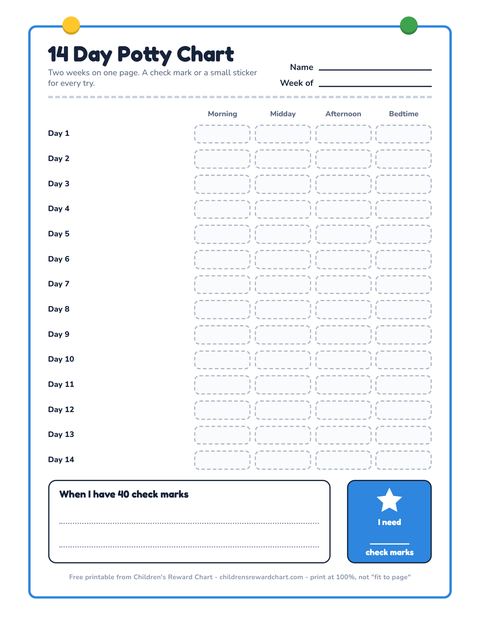
14 Day Potty Chart
14-day potty chart with four boxes a day: morning, midday, afternoon, bedtime.
Download letter PDF
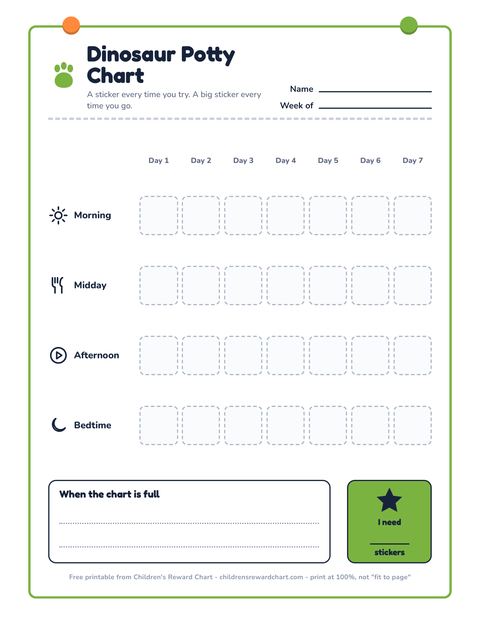
Stickers and paper for the chart
The reinforcer has to be in the drawer before the first star is earned. Links go to Amazon and we may earn a commission.
Questions parents ask
How do I make a homemade potty chart?
Use paper, a marker, and a sticker sheet. Draw a grid with a box for each sit, a bigger box for a success, and a reward line at the bottom. Write the child's name at the top. Tape it to the wall at their eye level.
What should be on a potty chart?
A box for every try, a bigger mark for a success, a reward line, and the child's name. Hang it where the child can see it from the potty. The chart should track sitting, not results.
Can my toddler help make the potty chart?
Yes, and they should. A 2 year old can draw the circles, choose the sticker color, stick the tape, or decorate the edges. Give them one job and let them own it. The chart will work better because they made it.
How long should a homemade potty chart last?
One week is the sweet spot for a new chart. A paper plate or sticky note chart naturally runs out in about seven days. If the child is still engaged, print a fresh one and start again with a new reward.
What rewards go with a potty chart?
Small and instant rewards work best. A sticker, a mini treat, or a few minutes of a favorite activity. Give the reward for the try, not for a dry potty. Save a bigger sticker for a real success.
Read next
Short guides that end at a chart you can print tonight.

Best potty training rewards, by age and by stage
Pick the best potty training rewards by age and stage, and know which ones keep momentum without overpromising.

How to make a potty training chart in ten minutes
Make a potty training chart in ten minutes, with a blank name line and boxes that fit standard stickers.

When to start potty training, and when the chart comes out
Know when to start potty training, and when to bring out the chart so it helps, not pressures.